|
??ZIMBABWE - Country Profile
|
Updated: Feb 2005?? |
|
|
|
National Strategic Framework
Status
Completed. (Period 2000-2004)
National policies
- National HIV/AIDS policy launched in 1999 covering human rights, public health, care for PLWA, gender, Information, Education and Communication (IEC) Programme and research.
- An AIDS levy exclusively for HIV/AIDS raises about Z$20 million dollars per year. 3% of both companies and employees in Zimbabwe.
Ministry of Health and Child Welfare
AIDS and TB Unit
Contact person: Dr Owen Mugurungi
Harare, Zimbabwe
Tel: +263 4 726 803 / +263 4 703 330 / +263 4 730 011
Fax: +263 4 795 191
National AIDS Council (NAC):
Contact person: Dr. David Chitate, Director a.i.
P.O. Box MP 1311, Mount Pleasant
Harare, Zimbabwe
Tel: +263 4 791 171/2
Email: [email protected] / [email protected]
Coordinates, facilitates, sustains and monitors an expanded national multisectoral response to HIV/AIDS.
HIV/AIDS Organisations:
-
Actionaid
P.O. Box 2451, Causeway
Harare, Zimbabwe
Tel: +263 4 70 3336
Fax: +263 4 788 124
· Co-ordination of HIV/AIDS programmes in African countries.
-
AIDS Counselling Trust (ACT)
Contact person: Prisca Munonyara
P.O. Box 7225
Harare, Zimbabwe
Tel: +263 4 79 2340
Fax: +263 4 797 041
Email: [email protected]
· Counselling; home-based care; training; materials development; information, education and communication.
-
Africare
Contact person: Cassie Chipere - Officer in charge
Tel: +263 4 745 859/61
Fax: +263 4 498 108
Email: [email protected]
Website: www.africare.org
· Capacity building of communities to ensure the sustainability in the implementation and management of HIV/AIDS programmes in all Africare Zimbabwe projects.
-
The Centre
Contact person: Lynde Francis
P.O. Box A930, Avondale
Harare, Zimbabwe
Tel: +263 4 732 966
Fax: +263 4 732 965
Email: [email protected]
Website: www.kubatana.net
· Self-help drop-in centre; counselling; research; training project for people with HIV/AIDS.
- Family AIDS Caring Trust (FACT)
Contact person: Jephias Mundondo
P.O. Box 970
Mutare, Zimbabwe
Tel: +263 20 63673 / +263 20 66015
Fax: +263 20 65281
Email: [email protected]
· Education for young people, workers, churches, women, sex workers and the wider community, care; children's care; training; peer education; advocacy.
- Farm Orphan Support Trust (FOST)
Contact person: Lynn Walker
Agriculture House, Marlborough Drive / Adylinn Road
P.O. Box WGT 390, Westgate
Harare, Zimbabwe
Tel: +263 4 309 800
Fax: +263 4 309 869
Email: [email protected]
· Orphan care and support; awareness; training; evaluation and monitoring; nutrition support; educational support; psychosocial support.
- Gweru Women's AIDS Prevention Association (GWAPA)
Contact person: Mrs Govathson
Tel: +263 54 20749
Fax: +263 54 23254
Email: [email protected]
· Focuses on AIDS education and prevention. Members are all disadvantaged women; living with AIDS, single, widowed, divorced.
- Mashambanzou Care Trust
Contact person: Sr M. McAllen, Co-ordinator, Patrick Smet, Networking Officer
Tel: +263 4 610 937 / +263 4 610 079
Fax: +263 4 610 079
Email: [email protected]
· An interdenominational organisations providing care and support for people affected by HIV/AIDS in the high-density areas of Harare, and helps empower the local community to deal with the AIDS pandemic.
- Matabeleland AIDS Council (MAC)
Contact person: Danmore Sithole, Director; Linda Ncube, Information Officer
Tel: +263 9 62370
Fax: +263 9 61540
Email: [email protected] / [email protected]
· Supports People Living with HIV and their families to control the spread of HIV in Matabeleland; counselling, information and education.
-
National AIDS Council (NAC)
Contact person: Dr. Magure
P.O. Box MP 1311, Mount Pleasant
Harare, Zimbabwe
Tel: +263 4 791 171/2
Email: [email protected]
· Coordinates; facilitates; sustains and monitors an expanded national multisectoral response to HIV/AIDS.
-
Population Services International (PSI)
30 The Chase West
Emerald Park Offices, Block E
Emerald Hill, Harare
Zimbabwe
Contact Person Karin Hatzold
Tel: +263 4 334 631
Fax: +263 4 339 632
Email: [email protected]
Website: www.psi.org
· Uses social marketing to deliver health products, services and information that enable low-income and other vulnerable people to lead healthier lives.
-
Southern African AIDS Training Programme (SAT)
Contact person: Sihle Mpofu / Benitta Mabvira
Tel: +263 4 781 123/9
Email: [email protected]
Website: www.satregional.org
· Supports community responses to HIV and AIDS through in-depth partnership, networking, skills exchange and lesson sharing in HIV prevention, HIV and AIDS care and support throughout the region.
-
Southern Africa AIDS Information Dissemination Service (SAfAIDS)
Contact person: Sarah Page
Tel: +263 4 307 898
Fax: +263 4 336 195
Email: [email protected]
Website: www.safaids.org.zw
· Building capacity of its partner organisations; providing assistance to other organisations in mainstreaming HIV/AIDS into their development and workplace policies.
- UN Theme Group on HIV/AIDS, Chair
Contact person: Mr J. Victor Angelo
Resident Coordinator, UNDP Resident Representative
Tel: +263 4 708 101
Email: [email protected]
Website: www.undp.org
· Supports an expanded response and policy advice on preventing transmission of HIV, providing care and support, reducing the vulnerability of individuals and communities to HIV/AIDS.
- UNAIDS Country Coordinator
Contact person: Ms Hege Waagan a.i.
Tel: + 263 4 792 681/6
Fax: + 263 4 250 691
Email: [email protected]
Website: www.unaids.org
· UNAIDS, leads, strengthens and supports an expanded response aimed at preventing transmission of HIV, providing care and support, reducing the vulnerability of individuals and communities to HIV/AIDS.
- Zimbabwe AIDS Network (ZAN)
Contact person: Mrs M. Masunda (Chairperson) / Kate Mhambi (National Coordinator)
Tel: +263 4 703 819 / +263 4 700 832 / +263 4 700 924
Fax: +263 4 700 330
Email: [email protected] / [email protected] / [email protected]
Website: www.zan.co.zw
· A National Network for NGOS with AIDS programmes. Its seeks to develop the capacity of its members, as well as lobbying and advocacy. It promotes information sharing and effective mobilisation and use of resources and provides a forum for coordination and information exchange.
-
Zimbabwe AIDS Prevention Project (ZAPP)
Contact person: Ronald Sagonda - Acting Administrator
Tel: +263 4 770 610/1
Fax: +263 4 770 170 / +263 4 749 865
Email: [email protected]
· ZAPP seeks to provide qualitative VCT services to clients and assess the acceptability of short course AZT prevention regimen on HIV infected pregnant women.
- Zimbabwe National Family Planning Council (ZNFPC)
Contact person: Godfrey Tinarwo, Executive Director
Tel: +263 4 620 281/5 / +263 4 661 962/4 / +263 4 661 748 / +263 4 668 770
Fax: +263 4 661 748 / +263 4 668 770
Email: [email protected]
· Coordinates the provision of sustainable, accessible family planning and selected reproductive health services and information to men, women and special needs groups. Also seeks to ensure adequate supply and effective logistics management of contraceptives and condoms for pregnancy and STI/HIV prevention.
- Zimbabwe National Network for People living with HIV/AIDS (ZNNP+)
Contact person: Jefter Mxotshwa, Director
Tel: +263 4 778 109
Email: [email protected]
· ZNNP+ is involved in nationwide HIV/AIDS programmes, including, provision of holistic home-based care, access to affordable treatment and support, nutritional advice, pre- and post-test counselling, and advocacy and awareness.
|
| Country Indicators |
|
| Demographic data |
Year |
Estimate |
Source |
| Total population (thousands) |
2004 |
12,932 |
UN population division database |
| Female population aged 15-24 (thousands) |
2004 |
1617 |
UN population division database |
| Population aged 15-49 (thousands) |
2004 |
6212 |
UN population division database |
| Annual population growth rate (%) |
1992-2002 |
1.5 |
UN population division database |
| % of urban population |
2003 |
34.7 |
UN population division database |
| Average annual growth rate of urban population |
2000-2005 |
1.79 |
UN population division database |
| Crude birth rate (births per 1,000 pop.) |
2004 |
31.5 |
UN population division database |
| Crude death rate (deaths per 1,000 pop.) |
|
28.5 |
UN population division database |
| Maternal mortality rate (per 100,000 live births) |
2000 |
1100 |
WHO (WHR2004)/UNICEF |
| Life expectancy at birth (years) |
2002 |
37.9 |
World Health Report 2004, WHO |
| Total fertility rate |
2002 |
4 |
World Health Report 2004, WHO |
| Infant mortality rate (per 1,000 live births) |
2000 |
71 |
World Health Report 2004, WHO |
| Under 5 mortality rate (per 1,000 live births) |
2000 |
108 |
World Health Report 2004, WHO |
|
For consistency reasons the data used in the above table are taken from official UN publications
| Socio-economic data |
Year |
Estimate |
Source |
| Gross national income, ppp, per capita (Int.$) |
2002 |
2120 |
UN population division database |
| Gross domestic product, per capita % growth |
2001-2002 |
-6.6 |
World Bank |
| Per capita total expenditure on health (Int.$) |
2001 |
142 |
World Health Report 2004, WHO |
| General government expenditure on health as %
of total expenditure on health |
2001 |
45.3 |
World Health Report 2004, WHO |
| Total adult illiteracy rate |
2000 |
11.3 |
UNESCO |
| Adult male illiteracy rate |
2000 |
7.2 |
UNESCO |
| Adult female illiteracy rate |
2000 |
15.4 |
UNESCO |
| Gross primary school enrolment ratio, male |
2000/2001 |
96 |
UNESCO |
| Gross primary school enrolment ratio, female |
1996 |
93 |
UNESCO |
| Gross secondary school enrolment ratio, male |
1996 |
47 |
UNESCO |
| Gross secondary school enrolment ratio, female |
1996 |
42 |
UNESCO |
|
For consistency reasons the data used in the above table are taken from official UN publications
Source: WHO/UNAIDS epidemiological fact sheets on HIV/AIDS and Sexually Transmitted Infections, 2004 Update.
Email: [email protected]
|
| Epidemiological Fact Sheet |
|
Estimated number of adults and children
living with HIV/AIDS, end of 2003
|
| These estimates include all people with HIV
infection, whether or not they have developed symptoms of
AIDS, alive at the end of 2003: |
| Adults and children |
1,800,000 |
? |
| Adults (15-49) |
1,600,000 |
Adult rate(%) 24.6 |
| Women (15-49) |
930,000 |
? |
| Children (0-15) |
120,000 |
? |
|
Estimated number of deaths due to AIDS
|
| Estimated number of adults and children who died of AIDS during 2003: |
| Deaths in 2003 |
170,000 |
? |
|
Estimated number of orphans
|
| Estimated number of children who have lost their mother or father or both parents to AIDS and who were alive and under age 17 at the end of 2003: |
| Current living orphans |
980,000 |
? |
Assessment of the epidemiological situation (2004)
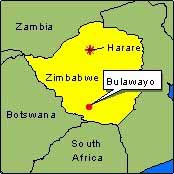
Information on HIV prevalence among antenatal clinic (ANC) attendees is available from Zimbabwe since 1989. In the major urban areas, Harare, Bulawayo, and Chitungwiza, HIV prevalence among antenatal clinic attendees tested increased from 10 percent in 1989 to 30 percent in 1995. HIV prevalence remained at about 30 percent from 1995-2002.
Sentinel surveillance information among ANC attendees in rural areas such as communal lands, small-scale commercial farms, is available since 1990. Since 1990, median HIV prevalence among ANC women tested increased from 16 percent in 1990 to 20 percent in 1997. From 1997 to 2002, median HIV prevalence ranged around 20 percent. In 2000, age detail of HIV prevalence came from 19 sites and included major urban areas. In other areas, such as large-scale commercial farms, administrative centers, mines, etc., HIV prevalence is much higher. HIV among ANC attendees tested in these areas has been around 35 percent since 1997.
In 1994-1995, 86 percent of sex workers tested in Harare were HIV positive. In 2001, 50 percent of sex workers tested in Mutorashonga were HIV positive.
In Harare, HIV prevalence among STD clinic patients tested increased from 52 percent in 1990 to 71 percent in 1995. In 1996, HIV prevalence was 53 percent among female STD clinic patients. Outside of Harare, median HIV prevalence among STD clinic patients was 6 percent from 2 testing sites in 1987. Among 15 testing sites in 1991 and 1992, median HIV prevalence reached 46 percent and 45 percent, respectively. In 1995, median HIV prevalence from 7 testing sites was 65 percent. In 1996, only one site reported HIV prevalence outside of Harare; 72 percent of STD clinic patients tested HIV positive.
|
|
|



