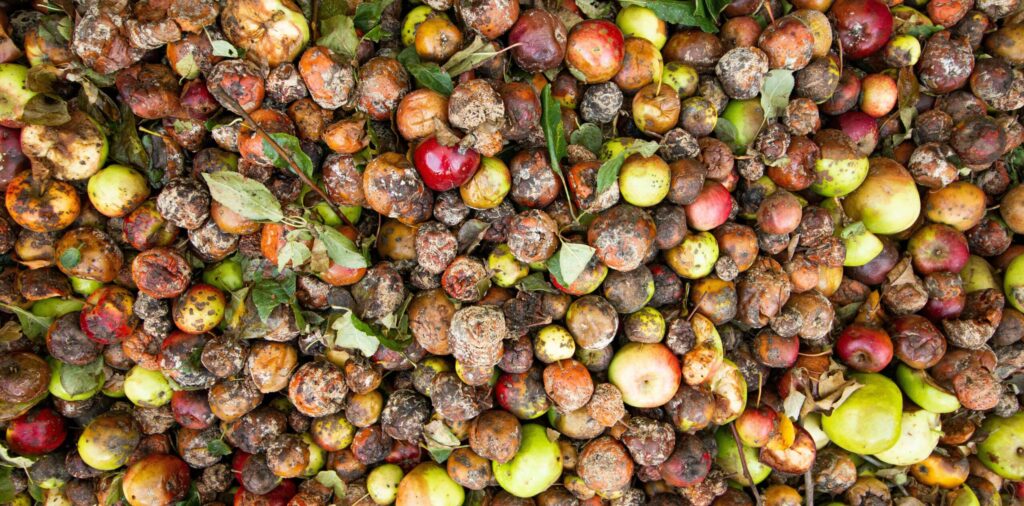
Portugal is facing a spell of extremely high temperatures, with the Portuguese Institute for the Sea and Atmosphere (IPMA) issuing multiple weather warnings due to the intense heat. Beyond the impacts on public health and the daily lives of populations, extreme temperatures bring with them a critical challenge of sustainability and economic management: the drastic acceleration of food waste.
This acceleration is scientifically validated through the Q10 Principle, which demonstrates that an increase of only 10°C in ambient temperature can double or even triple the speed of chemical and biological reactions responsible for the deterioration of food.
The phenomenon worsens the national outlook at a time when, according to the official report of the European Parliament on Food Waste, each Portuguese wastes about 184 kg of food per year — which positions Portugal as the fourth-highest per-capita food waste country in the European Union, with an estimated annual total of 1.9 million tonnes of food wasted in the country.
This structural pressure intensifies considerably during the summer season. According to Too Good To Go’s consumption data history, 28% of Portuguese consumers admit to wasting a larger amount of food during the summer months, with fruit (48%) being the product category most affected, closely followed by vegetables and dairy products, due to their shorter shelf life under elevated temperatures.
“Extreme temperatures require a rigorous adaptation of our preservation habits,” says Maria Tolentino, Country Manager of Too Good To Go in Portugal. “In a context of economic pressure on family budgets, food waste due to heat represents a double loss: the financial cost of the product that spoiled and the waste of electricity that refrigeration equipment consumed, in overexertion, to try to preserve that same food. It is essential to adopt immediate preventive measures, using both small daily gestures in the kitchen and the support of technology, to mitigate this impact before waste occurs.”
To support consumers in mitigating the impact of high temperatures, Too Good To Go has gathered a set of guidelines and tips:
- Sensory evaluation of products (Observe, Smell, Taste): heat can cause dairy products or juices to undergo minor physical changes near the end of their shelf life. Before discarding a product with the “Best before” indication passed, Too Good To Go recommends using the senses to verify whether the food is truly unfit for consumption;
- Efficiency of refrigeration equipment: refrigerators operate under stress with high external temperatures. To avoid technical faults or excessive energy consumption, you should not overload the equipment (cold air needs to circulate freely) and you should ensure the rear coils are clean. Ensure that the temperature remains between 0°C and 4°C in the coldest zone.
- Storage of ethylene-producing foods: fruits such as bananas, apples and tomatoes release ethylene gas, a natural component that acts as a catalyst and accelerates the ripening of surrounding vegetables. During a heat wave, separate these foods from the rest and store summer fruits in the bottom drawer of the fridge to slow the dehydration and accelerated ripening process;
- Use of cork to control humidity: placing one or two corks (cut lengthwise) inside the fruit bowl helps absorb excess ambient humidity. This measure significantly reduces mold growth on the most sensitive fruits;
- Preparation of cold meals (Gazpacho): Tomatoes and peppers that have softened due to the accumulated heat carry a higher concentration of natural sugars. This is the ideal time to process them cold with olive oil and garlic, resulting in a refreshing meal and full use of the raw material;
- Freezing and making homemade ice cream: if you notice that bananas are ripening too quickly, slice them and store them in the freezer. Later, they can be blended to create instant natural ice cream (nice cream), without added sugars;
- Aromatic drinks with surplus fruit: strawberries or cucumber slices showing signs of dehydration from the heat can be combined in a jar with cold water and ice, providing a refreshing hydration option and zero waste;
- Storage in ventilated supports: avoid closed containers for fresh produce. The ventilated ones allow continuous air circulation, preventing the formation of heat pockets and moisture between the foods.
The role of technology in the management of national retail
Elevated temperatures affect not only consumers’ kitchens; they also pose a severe challenge to stock management in supermarkets, bakeries, restaurants and grocers, where the spoilage of fresh products tends to register a linear increase on the hottest days.
Too Good To Go, a social impact company responsible for the world’s largest app to save food and fight food waste, positions itself here as a rapid-response tool for the business fabric. Currently, the platform’s community in Portugal counts more than 2.7 million users, who together with a network of more than 5,500 partners have already saved more than 7.7 million meals (Surprise Bags) — which directly prevented the destruction of more than 7,700 tonnes of food in perfect consumable condition.