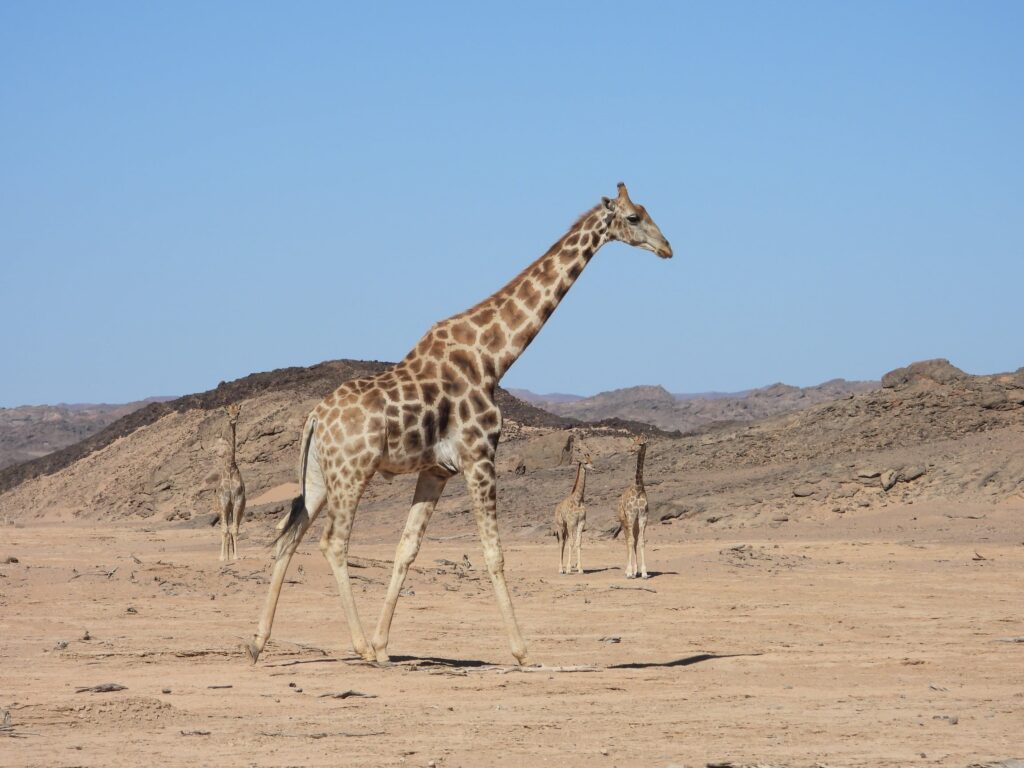
In 2024, a study published in the journal a study published in the journal PLOS One declared to the world that, contrary to what had been thought and despite some resistance to officially recognizing it, there are, in fact, four distinct species of giraffes: the Masai giraffe (Giraffa tippelskirchi), the northern giraffe (Giraffa camelopardalis), the southern giraffe (Giraffa giraffa), and the reticulated giraffe (Giraffa reticulata).
The discussion about whether there really are more than one giraffe species is far from settled, and there is no exact scientific consensus on the matter. However, this study, which is based on differences in the shape and structure of the skull and in the ossicones (the small protrusions on the top of the head found in both males and females, resembling horns), asserts that there are indeed four species.
According to the Giraffe Conservation Foundation (GCF), whose members took part in this study, the populations of three of the species (the northern giraffe, the reticulated giraffe, and the southern giraffe) have been increasing over the last 30 years. The Masai giraffe populations, though not showing the same recovery levels as the others, also show signs of stability, which the GCF interprets as “a strong sign of resilience.”
The figures were released in the organization’s annual report on the state of giraffe conservation in Africa, the only continent where they currently exist in the wild.
According to the GCF, the improvements in population trends are “a direct result of effective conservation actions,” as well as of intensive research and greater global awareness for their protection.
As a result of this painstaking work, experts estimate that, up to June of this year, there were about 43,926 Masai giraffes, 7,037 northern giraffes, 20,901 reticulated giraffes, and 68,837 southern giraffes. For readers to have a comparative reference, in 1995 it was estimated that there were 72,290 Masai giraffes, 23,771 northern giraffes, 36,000 reticulated giraffes, and 31,700 southern giraffes. In fact, the populations of southern giraffes are the only ones today that are more numerous than they were three decades ago.
The current report also updates the geographic distribution map of the four species, with southern giraffes concentrated mainly in South Africa, Angola, Botswana, Mozambique, Zambia, and Zimbabwe; Masai giraffes in Tanzania and in the border area with Kenya, where reticulated giraffes are found. Northern giraffe populations are somewhat dispersed across central Africa, in countries such as Niger, the Central African Republic, Chad, Cameroon, and South Sudan.
For Julian Fennessy, director of conservation and cofounder of the GCF, the figures presented in the report “call for an urgent reevaluation” of the giraffe on the IUCN Red List of Threatened Species, where only a single species is currently listed, under the category of “Vulnerable” to extinction risk.
He adds that it is necessary to reinforce the place of giraffes in international agreements for protecting wildlife, such as the Convention on International Trade in Endangered Species of Wild Fauna and Flora (CITES), and that each species should have its own conservation plan, because, he asserts, one-size-fits-all solutions “will not save them.” This is because, despite conservation efforts and some good news, threats such as poaching and habitat loss persist and continue to threaten the future of these animals.