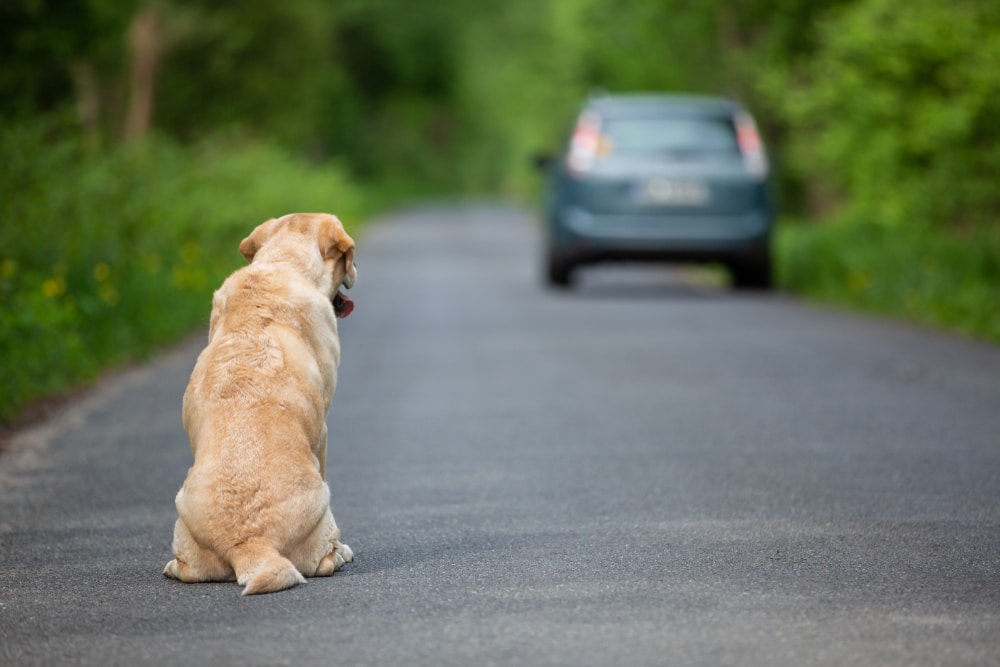
The abandonment of companion animals remains a harsh reality. Rodrigo Livreiro, one of the founders of the Animalife association, tells Green Savers that this abandonment occurs “in an increasingly worrying way.” The ICNF’s most recent data, referring to 2023, confirm that it was the year with the largest number of animals collected ever by the Official Collection Centers (CRO): more than 46 thousand animals, between dogs and cats. This number represents an increase for the fifth consecutive year, “which should alarm all of us as a society,” he warns.
2023 was the year with the largest number of animals ever collected by the Official Collection Centers (CRO): more than 46 thousand animals, between dogs and cats. This number represents an increase for the fifth consecutive year”, ICNF
And the worst, adds Rodrigo, is that this number “doesn’t even reflect the totality of the problem.” In addition to the animals collected by the CRO, there are thousands more that are sheltered by animal-welfare associations, many of them outside any official registry, and there are so many others that never get saved — they remain on the streets, abandoned to their fate. This continuous rise in the number of pickups “shows that, despite awareness campaigns and regulatory advances, abandonment remains an open wound in our country, deeply linked to social and economic issues, to the lack of structured responses and to the absence of a national integrated strategy to support families with companion animals,” he denounces.
“This continuous increase in the number of pickups shows that, despite awareness campaigns and legislative advances, abandonment remains an open wound in our country, deeply linked to social and economic issues, to the lack of structured responses and to the absence of a national integrated strategy to support families with companion animals,” Rodrigo Livreiro, one of the founders of the Animalife association
In Portugal, thousands of companion animals are abandoned every year, with seasonal peaks in summer and after festive periods. Although most cases are not visible in the day-to-day life of those not involved in the cause, the numbers do not lie. “And what worries us most is that for every animal that arrives at a collection center or association, there are many others that are left forgotten on the streets or that never reach to be rescued,” laments the person in charge.
Abandonment “rarely happens out of cruelty or disinterest”
But what exactly motivates many cases of attempted abandonment, or even abandonment? According to the founder of Animalife, abandonment “rarely happens out of cruelty or disinterest.” In fact, the vast majority of cases are linked to situations of social and economic vulnerability. “We are talking about families facing unemployment, evictions, family ruptures, health problems or aging — and who, in these moments of fragility, are forced to choose between securing the basics for themselves or for their animals,” he explains.
Abandonment rarely happens out of cruelty or disinterest. In fact, the vast majority of cases is linked to situations of social and economic vulnerability”, Rodrigo Livreiro, one of the founders of the Animalife association
That’s why they created the Social-Animal Support Program (PASA), which acts exactly where abandonment begins: at the moment when the person feels they can no longer care for their animal. Through this program, and in partnership with the municipalities, they can support families with food, veterinary care, sterilizations, and social-animal accompaniment. “It is preventive, humane and deeply transformative work — because it saves not only the animals, but also the affection and companionship relationships they represent,” describes. At this moment, PASA is already implemented in several municipalities, “but it is urgent to expand the number of protocols, because there are still too many areas of the country without any response in this area,” he warns.
For Rodrigo, municipalities “play a fundamental role here. We need them to recognize animals as an integral part of families and to invest in social programs that include them,” he underlines, adding that “only then will it be possible to combat abandonment in a structural and effective way.” Often, he continues, “families want to continue taking care of their animals, but simply cannot.” The lack of social supports that include animals and the rising cost of veterinary care “are decisive factors in this context,” he states. Therefore, he believes that to combat abandonment “it is essential to support the families who care for the animals.”
Ritmo das necessidades supera o ritmo das respostas
According to the Institute for Nature Conservation and Forests (ICNF), social and legislative progress in matters of companion animal welfare today requires a specific and reinforced framework. Asked whether they feel this is being fulfilled, Rodrigo Livreiro reveals that they have seen “significant changes over the last few years, which is positive and shows a growing will to do more and better.” However, he warns, “we feel that the pace of needs outpaces the pace of responses.”
The official considers that “there is fragmentation of responsibilities among entities and a great disparity in action between municipalities, which creates regions of the country where there are almost no effective responses to abandonment, cat colonies, or support to families with animals.” Associations and protectors “continue to be the main frontline — often without resources or sufficient legal framework for the work they do. There is effort, but it is necessary to reinforce and better coordinate public policies in this area,” he warns.
There is fragmentation of responsibilities between entities and a great disparity in action between municipalities, which creates regions of the country where there are almost no effective responses to abandonment, cat colonies, or support to families with animals, Rodrigo Livreiro
Currently, animals have a legal status that gives them broad protection. But will it be broad enough? Rodrigo has no doubt: “the recognition of the animal as a sentient being was an important civilizational milestone and has been influencing judicial and legislative decisions.” However, he warns, “legal protection still has gaps, especially in its practical application.”
The law exists, but there is a lack of “effective enforcement, rapid responses to complaints and, often, sensitivity in handling cases,” it notes. Furthermore, it adds, “there are still shortages of resources — human and financial — for the competent entities to act swiftly and preventively. The law is the starting point. What is missing, often, is its operationalization on the ground.”
With or without resources, associations like Animalife have been making their mark. Founded in 2011, their main mission is to combat the abandonment of pets and promote animal welfare. How do they do it? “By acting upstream of the problem — i.e., preventing it from happening. We do it through a pioneering intervention model in Portugal, which we call the ‘social-animal’ approach,” replies the founder. This means they do not look at the animal in isolation, but at the family, social and economic context in which it is embedded. “We know that in most situations, the abandonment of an animal is a last resort. Most of the time, people abandon because they lost their job, were evicted, are ill or aged alone. And it is precisely in these situations that Animalife steps in — not only with food and veterinary support, but also with social and emotional support, through the Social-Animal Support Program (PASA) and the Vet on the Street project, which provides social support and free veterinary care to people and families in special vulnerability situations,” he explains.
We know that in most situations, abandoning an animal is a last resort. Most often, people abandon because they lost their job, were evicted, are ill or aged alone. And it is precisely in these situations that Animalife steps in, Rodrigo Livreiro
BSA alivia fome que se vive nos abrigos
In addition, they have a “strong support action” for associations and protectors, through the Animal Solidarity Bank (BSA) and the Vet Bank, which are campaigns to collect essential goods, such as food and medicines, to improve the quality of life of the animals under these entities’ care. They also engage in raising society’s awareness through the Animalife Academy, promoting responsible adoption, respect for animals, and civic involvement in solutions.
“All of this is only possible because we work with a network of volunteers, partners and municipalities, who believe with us that only by taking care of people can we take care of their animals. This is Animalife’s vision: to fight abandonment, yes — but above all, to prevent it before it happens, looking at the animals as an integral part of the community,” he explains.
One of the association’s best-known projects is the “Animal Solidarity Bank,” which collects food and essential products for animals, distributing them to disadvantaged families and institutions that care for abandoned animals. The founder guarantees that “it is much more than a food collection campaign. It is, today, the largest and most significant initiative of support for companion animals in Portugal, with a unique capacity to mobilize society for a problem often invisible: the hunger that is daily lived in shelters from north to south of the country, including the islands. Twice a year, the country stops — literally — to look at this reality.”
Animal Solidarity Bank is much more than a food collection campaign. It is, today, the largest and most significant initiative of support for companion animals in Portugal, with a unique capacity to mobilize society for a problem often invisible, Rodrigo Livreiro
Thousands of volunteers, hundreds of stores and dozens of brands join Animalife “to do something extraordinary: feed more than 75 thousand animals, under the care of more than 680 animal support entities. We are talking about animal-welfare associations and informal protection groups… structures that every day face enormous difficulties to guarantee the basics — food, litter and hygiene products. The BSA exists to alleviate this burden, with consistency and commitment, for more than a decade,” he reinforces.
But the true impact of the BSA lies in how it involves the community. It is families, students, retirees, youths, professionals from all areas who, voluntarily, give their time to be in a store, in a shift, with a smile and a mission: to touch the heart of those who pass by and remind that we all can help. That gesture of placing a bag of food in the cart “is an act of empathy, a vote of confidence in the work of the associations, a direct contribution to the well-being of an animal,” he stresses. And that is why they say the BSA makes society stop — “because it forces it, even if only for a moment, to reflect on the role we have in the lives of the most vulnerable,” he adds.
“It is a mass solidarity action, a phenomenon that transforms volunteers into agents of change and donations into meals that save lives. Year after year, we keep this mutual aid current alive. We do not let shelters fall into oblivion, nor do we allow the animals living there to be forgotten. And as long as there is hunger in the shelters, there will be the Animal Solidarity Bank,” he concludes.
Education is the greatest antidote to abandonment
Rodrigo considers that education and awareness for animal protection are “absolutely fundamental,” that “change always starts with awareness.” And he explains: “When we educate children and adults about respect for animals, we are creating a more empathetic, just and responsible society. Many instances of abuse and abandonment happen due to ignorance or lack of empathy. Through the Animalife Academy and various actions in schools, public events and digital campaigns, we seek to demystify prejudices, teach best practices and promote responsible adoption. Education is the greatest antidote to abandonment.”
When we educate children and adults about respect for animals, we are creating a more empathetic, just and responsible society. Many of the cases of abuse and abandonment happen due to ignorance or lack of empathy, Rodrigo Livreiro
Indeed, the social responsibility of animal associations focuses on their protection and welfare, fighting cruelty and abandonment through actions such as rescue, sheltering, sterilization and responsible adoption. But these organizations also promote social inclusion, support for vulnerable families, population control of animals and community education on responsible animal ownership.
The Portuguese Association for Intervention with Socially Helpful Animals (ÂNIMAS), for example, is a non-profit organization with Public Utility Statute, dedicated to the promotion of Animal-Assisted Services (SAA) and to the free granting of Assistance Dogs.
In various initiatives, standout educational programs aim to foster respect and empathy for animals. The programs carried out in schools, universities, companies and hospitals, where trained dogs create a special environment for learning and the development of cognitive and socio-emotional skills. They also develop workshops to raise awareness among children, youths and adults about animal welfare, teaching them the importance of treating animals with dignity.
The transforming role of animals in human life
Additionally, ÂNIMAS’s activities span a wide network of institutions, such as nursing homes, hospitals, learning-support centers, shelters among many other entities. These interactions “have demonstrated significant benefits in reducing stress levels and promoting empathy among participants,” Abílio Leite, president of the association, tells Green Savers, noting that ÂNIMAS “contributes daily to building a society more conscious of the transformative role of animals in human life.”

Another good example is ABAADV – School for Guide Dogs for the Blind, an IPSS that, as the name indicates, has a structure that allows the housing of dogs from birth (own breeding), up to 24 months (the moment when the blind person/guide dog duo is formed) and even into retirement (after it has fulfilled its role as a guide dog when its user can no longer keep it).
“Our mission is ‘Valuing the dog’s intervention, we exist to improve the quality of life of people’ and, if at the origin of the School this mission was aimed only at blind people, since 2019 it has been extended to institutionalized or homebound elderly people in the area of our municipality and since the beginning of this year to children with specific needs of the Mortágua grouping,” Filipa Paiva, technical director of ABAADV
“Our mission is ‘Valuing the intervention of the dog, we exist to improve the quality of life of people’ and, if at the origin of the School this mission was aimed only at blind people, since 2019 it has been extended to institutionalized or homebound elderly people in the area of our municipality and since the beginning of this year to children with specific needs of the Mortágua grouping,” explains Filipa Paiva, technical director of this association to Green Savers.
Public health promotion through improving animal health
Also notable are Veterinários Sem Fronteiras Portugal (VSF), whose mission is the promotion of public health through improving animal health, in places that lack veterinary care. The lack of animal health care “renders a population vulnerable on multiple levels,” explain veterinarians Carolina Pinto and Filipa Barreto.
Firstly, they say, “it jeopardizes public health, since diseases transmissible between animals and humans, such as mange, tick-borne diseases, brucellosis, among others, can spread easily in the absence of proper prevention and treatment.”
With no available veterinary care, the population of street dogs and cats “easily increases out of control, which puts the population at risk of bites and road traffic accidents,” veterinarians Carolina Pinto and Filipa Barreto
Furthermore, they add, “it has a direct impact on food safety, since sick animals produce less milk, meat or eggs, affecting the nutrition and sustenance of many families.” Without available veterinary care, the street dog and cat population “easily increases out of control, which puts the population at risk of bites and road traffic accidents,” they illustrate.
Another possible effect is the increase in attacks on farm animals and wildlife, such as sea turtles. There is also an increase in noise pollution and environmental pollution, with more litter spreading through the streets. Thus, “when we work to improve animal health, we are contributing to the improvement of a range of situations with an impact on human health and on environmental health,” they assure.
When we work to improve animal health, we are contributing to the improvement of a range of situations with impact on human health and on environmental health, veterinary doctors Carolina Pinto and Filipa Barreto
In terms of social impact, VSF try to work as much as possible with communities to produce long-term behavior change, “because we believe that this is the only way to produce sustainable results,” they conclude.
Protection of companion animals: a social and environmental responsibility?
The associations have no doubt: the protection of companion animals is also an environmental concern. The law itself states that owners must ensure animal welfare and, if people know the needs of their animals and respect them, everything becomes easier. Responsibility and Awareness for the neighbor “will create a harmonious relationship between the person and their companion animal, benefiting both, with a positive emotional relationship, and such has an impact on the environment. From simply picking up waste, with biodegradable bags, to not abandoning,” says Abílio Leite.
Responsibility and Awareness for the neighbor “will create a harmonious relationship between the person and their companion animal, benefiting both, of a positive emotional relationship, and such has an impact on the environment. From simply picking up the waste with biodegradable bags, to not abandoning”, Abílio Leite
Carolina Pinto and Filipa Barreto explain that, in some parts of the globe, companion animals “can represent a risk not only for human populations, but also for other animals, some of them endemic species, which can be preyed upon or victims of disease transmission by companion animals.”

Thus, they add, “it is understood that the management of stray animal populations is an environmental priority. The increase in stray dogs and cats forces them to seek food sources in urban and peripheral areas, often entering forest areas. These food-seeking and shelter-seeking movements can foster the appearance of packs. The sighting of stray dogs in nature reserve zones is a warning that all measures to control these populations should be initiated.”
The management of stray animal populations is an environmental priority. The increase in stray dogs and cats forces them to seek food sources in urban and peripheral areas, often entering forest areas. These food-seeking and shelter-seeking movements can foster the appearance of packs. The sighting of stray dogs in nature reserve zones is a warning that all measures to control these populations should be initiated, Carolina Pinto and Filipa Barreto, VSF
And a social responsibility? “Clearly, since education, legislation, individual and collective initiatives, by promoting animal welfare we are strengthening our ethical values as a society,” responds Abílio. The veterinarians clarify that VSF seeks to integrate long-term solutions for defending animal health and public health, “as we naturally face social obstacles inherent to cultural differences.” Through educational and awareness activities “we aim to reach the most vulnerable populations and generate a change of mindsets, so that the future of these communities can be more sustainable and based on the One Health concept,” they say.
“In the scope of social responsibility, our mission translates our commitment into a better and more inclusive society, proven over 25 years,” says Filipa Paiva, explaining that, in terms of environmental responsibility, the association “contributes in a general way to environmental conservation by appealing to all collaborators to reduce water and energy consumption, raw materials and in waste management and recycling.”
In the scope of social responsibility, our mission translates our commitment into a better and more inclusive society, proven over 25 years, Filipa Paiva
For an institution like ABAADV, “it isn’t easy (due to the atypical nature of its work) to access programs and projects that allow it to realize its objectives for reducing its negative impact on the environment, be it rainwater harvesting, reuse of wastewater, generation of electricity using solar panels and reducing the consumption of fossil energies with electric vehicles,” she laments. However, she adds, “we are currently seeking solutions to implement these measures.”
Daily stories that move and motivate to keep going
Despite the obstacles, there are many success stories. To date, 294 guide dogs have been delivered, with 116 blind person/guide dog duos currently in operation. Regarding the duos formed over all these years, “we can consider them all as success stories because in every case there has been a significant change in the life of its user,” reveals Filipa Paiva.

Abílio Leite says that the impact of their work is told in stories, daily, that “move us and motivate us to continue.” They have, for example, a project with high school students who face high levels of demotivation and difficulties in interpersonal relationships. Although sessions are voluntary and held on Friday afternoons, when there are no classes, the attendance rate is 98%. The most gratifying? “Seeing how the behavior and academic performance of these youths improve significantly with the support of our dogs,” he notes.
In hospitals, he continues, “the magical moments happen every day. We have witnessed cases where patients, who did not react to any stimulus, smile when they feel the dog lie by their side. It is as if a spark of life is rekindled when fingers begin to interlace with the dog’s fur.”
The magical moments happen every day. We have witnessed cases where patients, who did not react to any stimulus, smile when they feel the dog lie at their side. It’s as if a spark of life is rekindled when fingers begin to thread through the fur of our dog, Abílio Leite
In palliative care, the impact is “equally transformative,” he says. As soon as the dog enters the room, faces light up with smiles, conversations come to life and laughter is heard. Many patients express the desire to see the dog again in the next session – “a moment of comfort and joy in the terminal phase of life,” he describes.
And who can forget children with autism spectrum disorders? “It is common to see children in full crises calm down when they sense the dog approaching. It is a moment when serenity takes over the situation and the child can resume their activities,” he reveals.
But perhaps the most special “is something as simple and powerful as spontaneous smiles. The genuine smiles that arise without warning, without effort, just because our dog entered the room. That is what moves us – to know that, through the work we do with our dogs, we can bring hope, comfort and happiness to those who need it most,” he stresses.
“Following our work is to be part of these incredible stories. Together, we can continue to transform lives – both human and animal – with acts of love and empathy,” he concludes.
“We have turned some stray animals into social stars”
Carolina Pinto and Filipa Barreto confide that over the years they have “experienced and seen personal and social transformations in the places of action.” In recent years, efforts have been directed toward controlling and caring for stray animal populations, so the best examples come from there.
Many times, stray animal populations are viewed with social rejection, and only debunking that stigma can place companion animals in a position worthy of basic care, namely the five basic freedoms of animal welfare, Carolina Pinto and Filipa Barreto
“We can say that we have turned some stray animals into social stars, such as Tripé and Calulu, on Príncipe Island. Both dogs from São Tomé and Príncipe who, by collaborating in VSF missions, are the living example of how they can be the best friends of Humans. Tripé for being a model of gratitude after his amputation in 2020, and Calulu for being an example that it is possible to communicate and establish a strong and healthy bond with these animals, even when they began life in difficult circumstances,” they say.
And they conclude: “Many times, stray animal populations are viewed with social rejection, and only debunking that stigma can place companion animals in a position worthy of basic care, namely the five basic freedoms of animal welfare.”
*Story originally published in the September 2025 edition