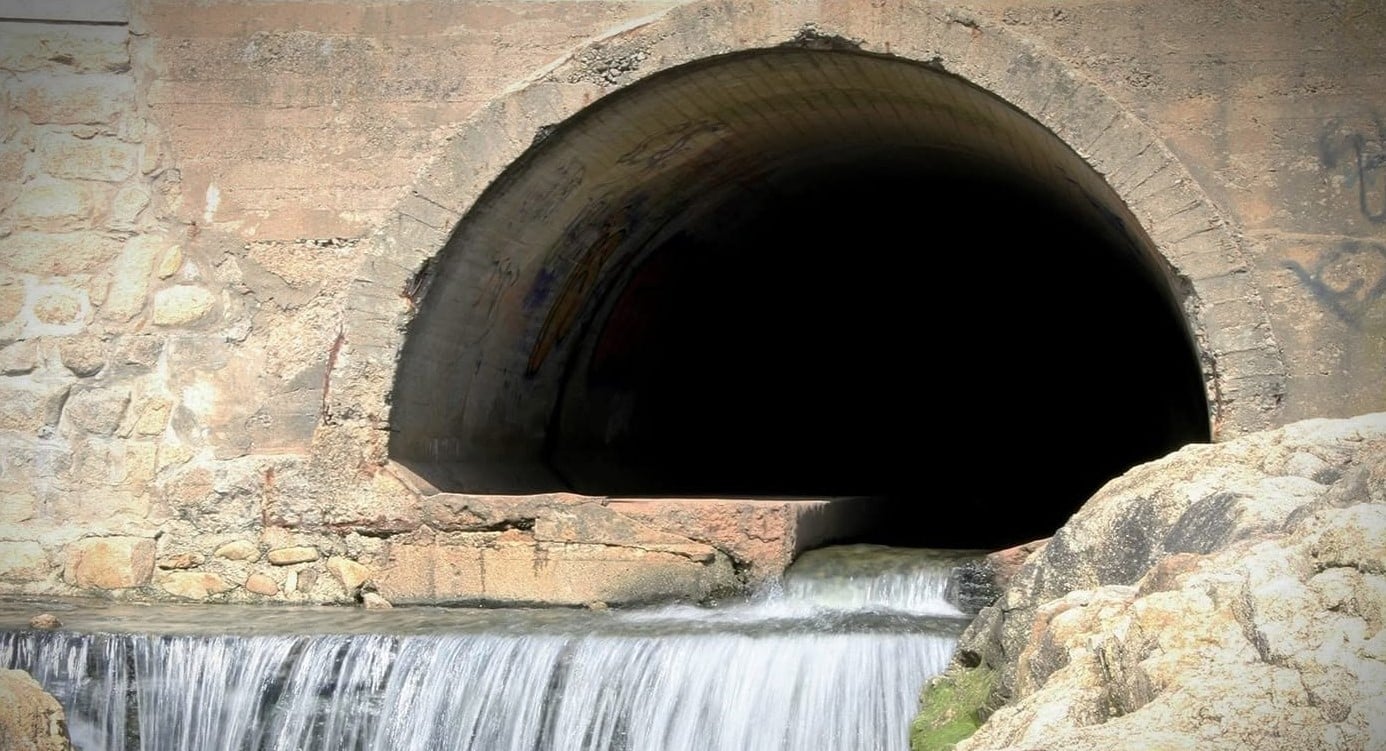
The municipalities of Matosinhos and Porto, together with the Administration of Ports of Douro, Leixões and Viana do Castelo (APDL), want to rehabilitate the Riguinha watercourse for 8.9 million euros by 2028, according to a proposal consulted today by Lusa.
On Tuesday next, the Porto City Hall executive will vote on the drafts of the “Protocol for the Rehabilitation and Enhancement Strategy of the Riguinha Watercourse” between the three parties and the inter-administrative contract for the realization of the design‑build project to extend the watercourse channel, with the involvement also of the municipal company Águas e Energia do Porto and the Portuguese Environment Agency (APA).
In the proposal, which Lusa obtained today, the vice-president of the city council, Catarina Araújo, contextualizes that, although the Riguinha watercourse traverses mainly Matosinhos, its mouth is located at the border between the two municipalities, “with the Municipality of Porto also involved in seeking a solution that improves water quality and the use of the International Beach, so that it can be recognized as a bathing-use zone. In this context, it is necessary to proceed with the rehabilitation and enhancement of the Riguinha watercourse.”
“The bathing water quality of the International Beach and Matosinhos Beach has, over the years, been influenced by the discharge of waters from the Riguinha watercourse, often degraded,” writes Catarina Araújo, who holds the portfolio for Environment and Sustainability.
From Matosinhos’ side, its president Luísa Salgueiro (PS) has denounced the state of this watercourse and the impact on bathing pollution, noting that last year the municipality estimated about 900 illegal connections to the watercourses in the municipality, through which wastewater and effluents are discharged directly into the watercourses and, consequently, into the bathing area.
In the protocol between the parties, the project is seen as having a “priority character” and of “special public interest,” citing the often degraded discharges of waters from this watercourse into a bathing zone.
Technical studies, one of them from the Institute of Hydraulics and Water Resources of the Faculty of Engineering of the University of Porto (FEUP), advocated an “integrated rehabilitation solution” combined with the extension of the outlet channel, about 650 meters in length, to mitigate the impact on the bathing area.
The overall estimated investment, “in a conservative analysis,” is 8,975,292.00 euros, with 50% assumed by the municipality of Matosinhos, 25% by Porto, and the remaining 25% by APDL.
The APA “will provide collaboration on a basis of joint coordination aimed at adapting the projects to legal requirements, ensuring the obtaining of all necessary authorizations for the proper use of the water” and is responsible for the “continuous technical monitoring of the execution of the works — such as the extension of the channel — in order to safeguard and rigorously minimize any negative impact on the aquatic ecosystem.”
“According to the schedule planned for the start of the public contracting procedure for the design‑build contract of the extension of the Riguinha watercourse channel, it is estimated that the contract will not have financial effects in 2026,” reads the proposal.
In January, the president of the Matosinhos City Hall, Luísa Salgueiro (PS), said that monitoring the entire course of the Riguinha watercourse, through cameras, inspections and videos, allowed dozens of illegal connections to be eliminated.
The mayor explained then that the solution would involve the construction of an outfall (submarine discharge or discharge structure) to route the waters of the Riguinha to a more downstream area, avoiding the concentration of pollutant loads in the bathing area, an intervention she then considered to be of “technically difficult execution,” but having already “the validation of APDL and the cameras of Porto and Matosinhos.”
By 2025, moreover, the construction of the outfall, in partnership with APDL and the City of Porto, was being discussed by the Matosinhos executive, given that the Riguinha has for several years been seen and recognized as a source of pollution for the bathing waters.
In July 2025, the Matosinhos City Council had announced that a public competition would be launched by the end of the year for the construction of the submarine outfall at the mouth of the watercourse, a facility budgeted at more than two million euros.
Even then, the funding solution would be tripartite, in the same model, following the detection of hundreds of situations of environmental non‑compliance along that stretch of water.