A group of researchers proposes an innovative approach to reduce the impacts of extreme weather events: performing small strategic interventions in the atmosphere capable of altering the trajectory or intensity of storms, cold snaps, and episodes of extreme precipitation.
The idea, presented in an article published in the scientific journal PLOS Water, was dubbed “Weather Jiu-Jitsu” (Meteorological Jiu-Jitsu), in reference to the martial art that uses the adversary’s strength to its advantage.
The team led by Qin Huang argues that small, carefully planned perturbations can exploit the high sensitivity of atmospheric systems, diverting them from potentially destructive trajectories.
To test the concept, the researchers used advanced atmospheric circulation models and the Aurora artificial intelligence system, developed for high-resolution weather forecasts.
The simulations produced results considered promising. According to the authors, limited cloud-seeding operations conducted a few days before extreme events could have significantly altered some recent episodes.
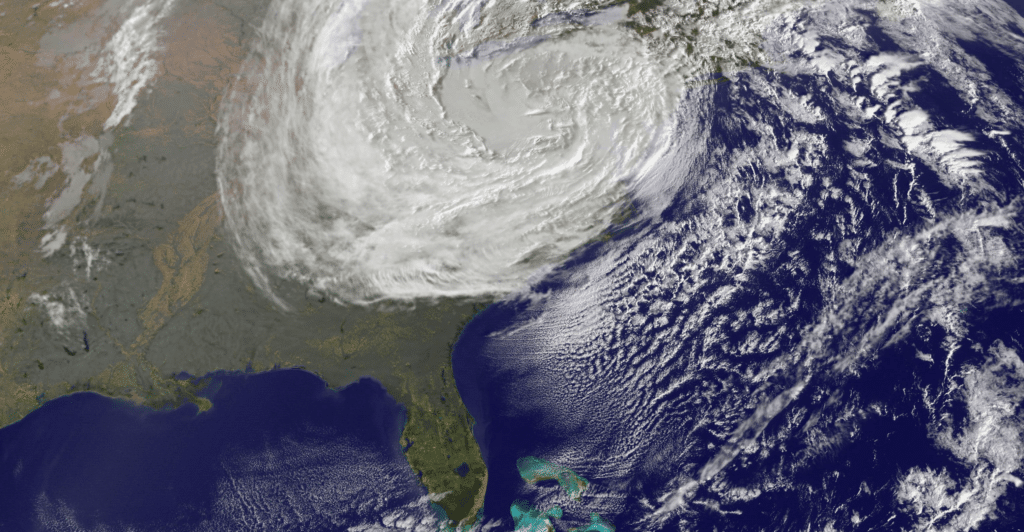
Among the examples analyzed is Hurricane Sandy, which devastated the U.S. East Coast in 2012. The models suggest that small atmospheric interventions could have diverted the storm approximately 480 kilometers from its original path, avoiding the direct impact on the city of New York City.
The researchers also simulated the extreme cold wave that hit Texas in 2021. In that scenario, the interventions would have raised minimum temperatures by about 10 degrees Celsius, potentially reducing damages caused by widespread freezing.
Another case studied was an atmospheric river that caused floods in California in 2022. The simulations indicate that it would be possible to reduce by about 5% the amount of precipitation associated with the phenomenon.
Despite the encouraging results, the authors emphasize that the concept is still far from practical application.
According to the study, it will be necessary to significantly improve atmospheric observation systems, deepen the understanding of which phenomena can actually be influenced, and carefully assess the environmental, legal, social, and political implications of any attempt to modify the weather.
The researchers argue that this approach is not intended to replace traditional disaster-protection measures, such as dams, dikes, or alert systems, but to function as a complementary risk-management tool.
“The growing impacts of extreme weather events show that conventional strategies may not be enough,” say the authors. “Weather Jiu-Jitsu proposes using the atmosphere’s own dynamics to weaken or redirect extreme events before they cause damage.”
If it becomes operational, the scientists conclude, this strategy could represent a profound transformation in how societies deal with climate risks, enabling preventive action on some weather phenomena rather than merely reacting to their consequences.