The Mozambique Red Cross has trained more than nine thousand families in Manica Province, in the central part of the country, for prevention and response to droughts and cyclones, associated with the climatic phenomenon ‘El Niño’, according to local officials.
“At this moment we are receiving some information about the El Niño phenomenon; we think it wise that people be prepared and know how they will survive in forthcoming situations,” said the president of the Mozambique Red Cross in that central province, cited today by the media.
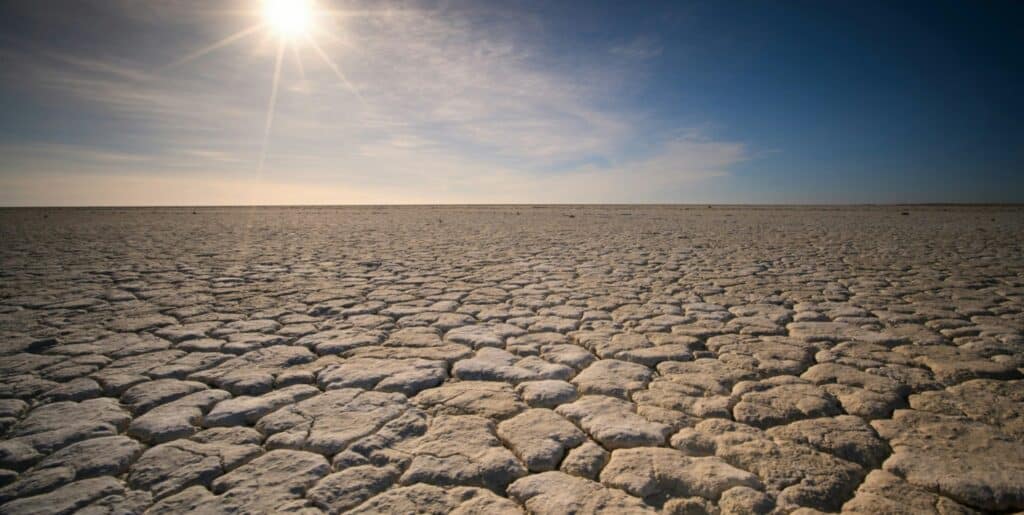
According to Ricardo Simão, 1,572 families will be covered in Machaze district and about 8,146 households in Mossurize and Sussundenga districts, and, in light of the climatic forecasts indicating the possibility of drought and dry spell in the coming months, the training, carried out in coordination with Mozambique’s National Institute for Disaster Risk Management and Reduction (INGD), aims to strengthen the communities’ response capacity, promoting prevention and adaptation actions to these extreme climatic phenomena.
Ricardo Simão also noted that the exercise will, among other things, teach communities how to store food and preserve water properly.
Fenias Nguenha, head of Chipopopo, one of the localities in Machaze district, said that carrying out simulation exercises allows preparing and putting communities in a state of readiness to respond to potential situations of rainfall shortage.
“The community already knows how to position itself, how to act; they have already received materials, they have received all possible support,” concluded Nguenha.
Mozambique recorded rare climatic events during the 2025-2026 rainy season, with January and February classified as the wettest and driest months recorded in 46 years, respectively, according to an assessment by the National Meteorology Institute.
“In general, a large part of southern Mozambique recorded a wetter January than since 1981. Some areas of Maputo, Gaza and Inhambane provinces can be considered the wettest over these 46 years of analysis,” reads a document from the Mozambican National Meteorology Institute (INAM), assessing the 2025-2026 rainy season.
The southern Mozambique and the central part of the Mozambican province of Tete recorded extreme rains in January, with resulting urban floods and “severe flooding” in the Umbeluzi, Incomati, Limpopo, Save and Búzi river basins, while the northern region and parts of the central region recorded rainfall below normal.
Mozambican authorities warned on May 16 of the forecast of a new strong climatic event associated with ‘El Niño’, with the potential to affect several social, economic and environmental sectors in the country.
In a statement, the Mozambican National Meteorology Institute (INAM) notes that current projections from global climate models indicate a high probability of the occurrence of an El Niño event in the coming months, with a strong tendency to prolong into the early part of the second half of the next rainy season 2026/2027.
According to the document, generally, the impacts of El Niño in Mozambique include, for the southern and central regions, a high risk of irregular rainfall with a tendency toward below normal and temperatures above the climatological normal, and, for the north, a high risk of rainfall that is regular with a tendency to be above normal.
Mozambique is considered one of the countries most severely affected by global changes, facing cyclically floods and tropical cyclones during the rainy season, which runs annually from October to April.