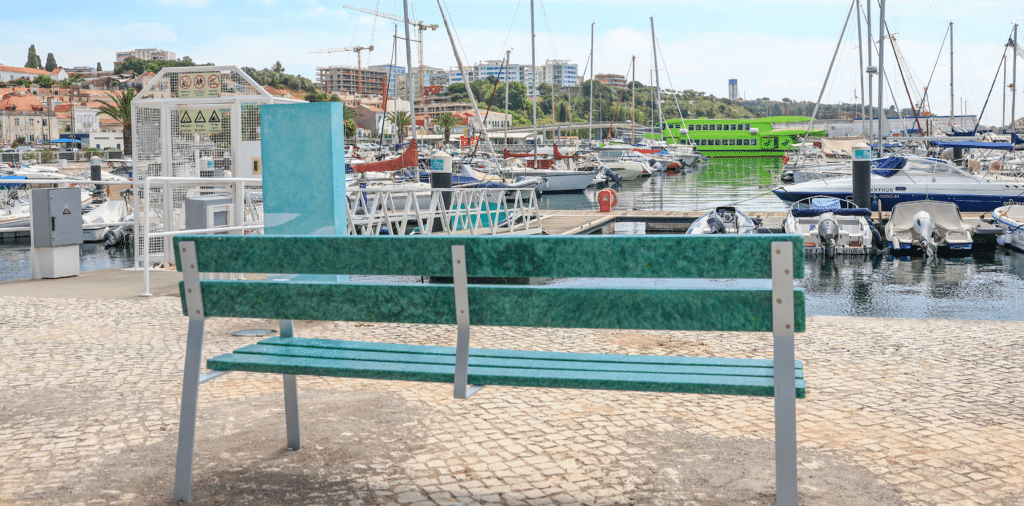
The Setúbal waterfront has gained new urban furniture, featuring benches and litter bins made from sustainable construction materials, created from four thousand recycled fishing nets, as part of an environmental project the municipality joined, according to a press release.
According to the same source, there are four benches and four litter bins, installed since this morning on the waterfront promenade at Wharf 3 of the city’s port and in the Fontainhas Recreational Dock area, donated to Setúbal as part of the MINI Portugal sustainability project, developed in partnership by the municipality with Gravity Wave, an international startup dedicated to cleaning the oceans and promoting the circular economy.
The councilor responsible for the Environment and Climate Action at the Setúbal City Hall, Bruno Russo, thanked MINI Portugal for choosing the city of Setúbal to inaugurate, on national soil, Mini for the Oceans, “a sustainability project that allows the removal of inert fishing gear from the sea, combining environmental value with the promotion of the circular economy.”
These devices were produced from four thousand fishing nets collected at the Port of Setúbal, subsequently recycled and transformed into new products for public use. “This is a project of great relevance, aimed at environmental protection, to which the municipality of Setúbal is associated with great pride,” the mayor stated during the visit this morning to the installed equipment.
Councilor Bruno Russo also spoke about the choice of the waterfront to host these devices, to which, soon, another bench and a litter bin will be added. “They are placed in an area of excellence, with a direct relationship to the sea, a zone of high foot traffic, where the Setúbal City Council will promote a series of events.”
Gonçalo Empis, Mini Manager of Portugal, when speaking about a project of great environmental relevance, community involvement, and real circular economy solutions, praised Setúbal’s choice to launch this initiative in the country. “We sought a location that best represents the fishing area. In this dimension, Setúbal is a reference.”
The chairman of the Board of APPS – Administration of the Ports of Setúbal and Sesimbra, Vítor Caldeirinha, praised the design and concept of the new urban furniture that outfits the waterfront, “created within the framework of sustainability,” a concern aligned with this entity. “We have 75 percent of the area protected under our jurisdiction,” he noted.
After Setúbal, Mini for the Oceans, which originated in Spain, through which more than nine tonnes of plastic from the Mediterranean Sea were collected, subsequently transformed into urban furniture made from recycled fishing nets, has planned more actions on national soil, aiming to broaden the environmental and social impact of the project.