Male parental figures, at least in the mammal world, do not usually play a major role in caring for offspring. Typically, it is the females who take on that responsibility, which, in essence, determines the future of the group and even the species itself.
A study published in the Proceedings of the Royal Society B now reveals that in baboon societies older males, after surpassing the phase of peak sexual vigor, help in caring for the infants. And, with regard to female offspring, the care provided by “present fathers” seems to actually help them live longer lives.
“Male baboons tend to reach the peak of their reproductive success when they are young adults,” explains, in a press release, Elizabeth Archie, one of the lead authors of the study, which focused on a mixed population of baboons of the species Papio anubis and Papio cynocephalus, in the Amboseli region, in Kenya.
However, after they have already fathered a number of offspring and their condition begins to decline, “it’s as if they enter ‘father mode’,” describes the biologist. At that point, the males tend to disperse less and stay closer to their offspring, and they are no longer as motivated by the impulse to reproduce.
The team focused their observations on 216 females and their parents and found that one third of them live in the same social group as their parents for three years or more. The other two-thirds had parents who either left the group or died during the first three years of their daughters’ lives.
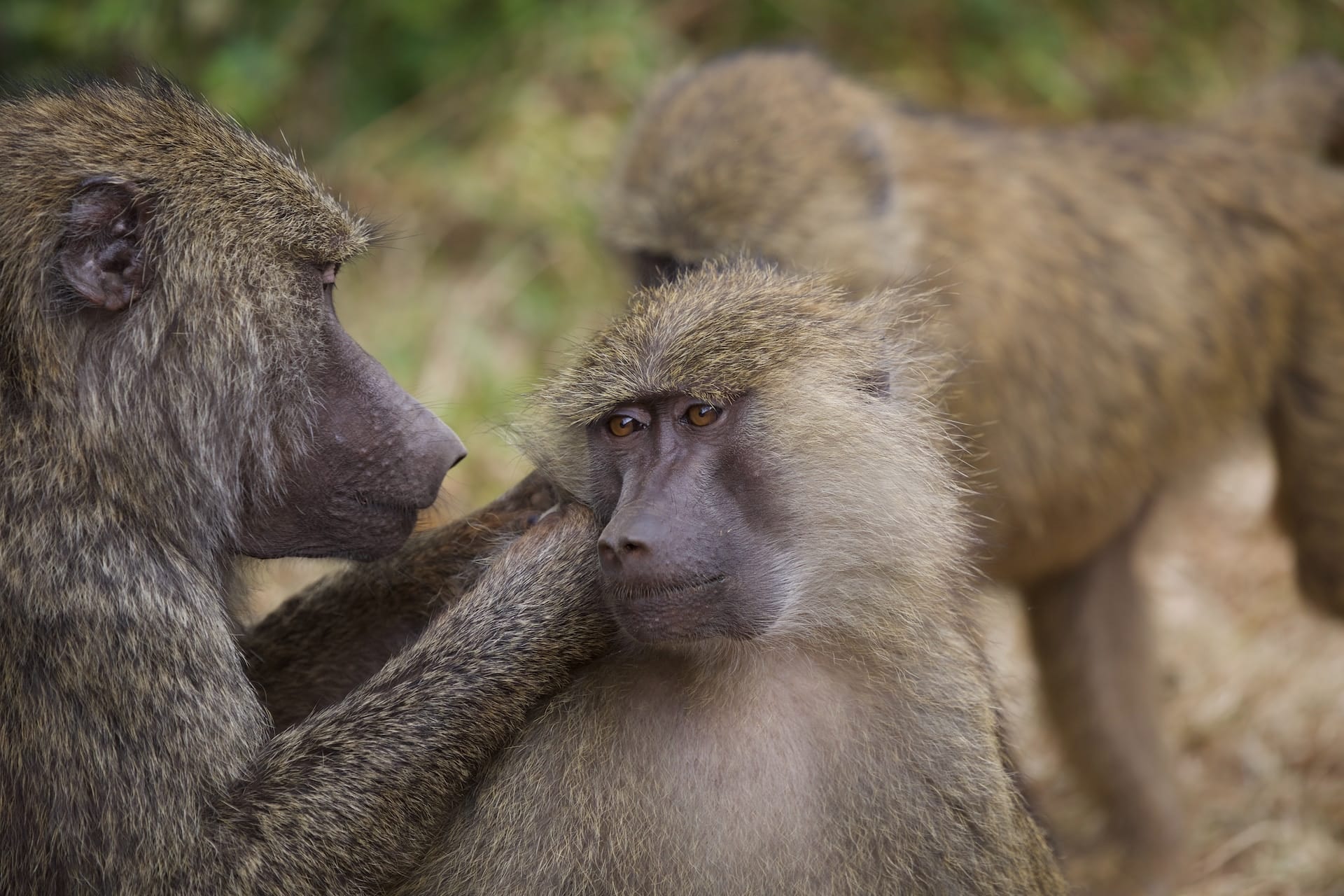
Among the behavioral traits they observed, the scientists paid particular attention to actions known to strengthen social bonds among primates, such as grooming, an activity in which one individual cares for another’s fur, though it is much more than that. For Archie, grooming can be seen as the equivalent of a pleasant chat between two humans while they drink a coffee.
The study concluded, then, that the females who more frequently engage in this type of behavior with their parents, who live with their parents for three years or more, or both, tend to live two to four years longer than females who have less strong father-daughter relationships.
Archie notes, in a statement, that older adult males can be popular members of the group. Therefore, it is expected that many other individuals tend to cluster around them, so that an offspring that stays near that male will have many more opportunities for social interactions than one that is always clinging to the mother baboon’s side.
Additionally, the fathers can also help protect their daughters from other males, who could pose a threat, by creating what the researcher calls “a safety zone for their daughters.”