Vale Carapito, in the municipality of Sabugal, was officially recognised as a Private Protected Area (PPA), becoming the fifth natural space to obtain this conservation status in Portugal, announced today by Rewilding Portugal.
“The classification of Vale Carapito as a Private Protected Area demonstrates that rewilding [renaturalization] is establishing itself as a credible and effective tool for the restoration of nature in Portugal,” highlighted Pedro Prata, executive director of Rewilding Portugal, cited in a statement sent to the Lusa news agency.
Vale Carapito is located in the parish of Vilar Maior, in the Sabugal municipality, in the Guarda district, and will join the National Network of Protected Areas.
For the official in charge, “this recognition naturally leaves us satisfied, but it also reinforces our ambition. We want more ‘rewilding’ areas to follow this path, increasing the extent of protected territory and ecological restoration.”
The environmental non-governmental organization Rewilding Portugal, based in Guarda, added that this status will ensure “the long-term preservation of Vale Carapito’s natural values.”
“The decision represents a milestone for private initiative in nature conservation in the country and for the development of ‘rewilding’ as a tool for ecological restoration.”
Vale Carapito was acquired in 2020 by Rewilding Portugal, to “demonstrate on the ground the potential of ‘rewilding’ to recover ecosystems, restore natural processes and promote the return of wildlife to the region.”
Currently, the area designated as a PPA covers 48 hectares of continuous land, embedded in the Malcata Special Conservation Zone (ZEC) and in a zone of high importance for the ecological connectivity of the Greater Côa Valley.
“Vale Carapito records 172 plant species, 253 insect species and 147 vertebrates, including high conservation value species such as the black vulture, the red kite, the otter and several protected bat species,” highlighted Rewilding Portugal.
According to this environmental NGO, the designation will ensure that “the area’s conservation vocation remains in the future, even in the event of a transfer of ownership, promoting sustainable management compatible with activities such as ecotourism or sustainable agriculture.”
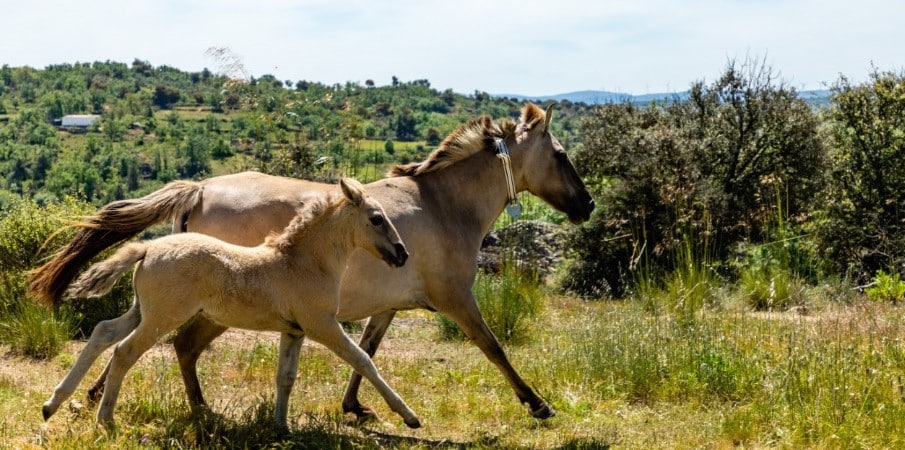
The promotion of natural vegetation regeneration, the recovery of riverbank habitats, the creation and expansion of ponds, the introduction of Sorraia horses to restore natural herbivory processes, biodiversity monitoring and the elimination of extractive activities are actions already carried out.
“This is one of the central principles of rewilding: giving space back to nature so that it can recover its self-regulation capacity, making landscapes more capable of responding to climate change, rural fires and biodiversity loss,” it notes.
For Rewilding Portugal, this classification represents “a decisive step in a broader strategy to consolidate a network of key areas for the recovery of wildlife in the Greater Côa Valley.”
The organization intends to move forward with recognising other rewilding areas as PPAs, which remains a relatively underused designation in the country.
“Being only the fifth PPA recognised nationally, this designation demonstrates its potential to mobilize landowners, civil society organizations and nature investors for biodiversity conservation and for the restoration of degraded ecosystems.”
Recognised by the State, the Private Protected Area is created by voluntary initiative of the owners to guarantee the protection of biodiversity, fauna, flora and geological heritage, while the ownership remains private.
The designation will take legal effect after the signing of a management contract with the Institute for Nature Conservation and Forests (ICNF) and its subsequent publication in the Official Journal (Diário da República).