
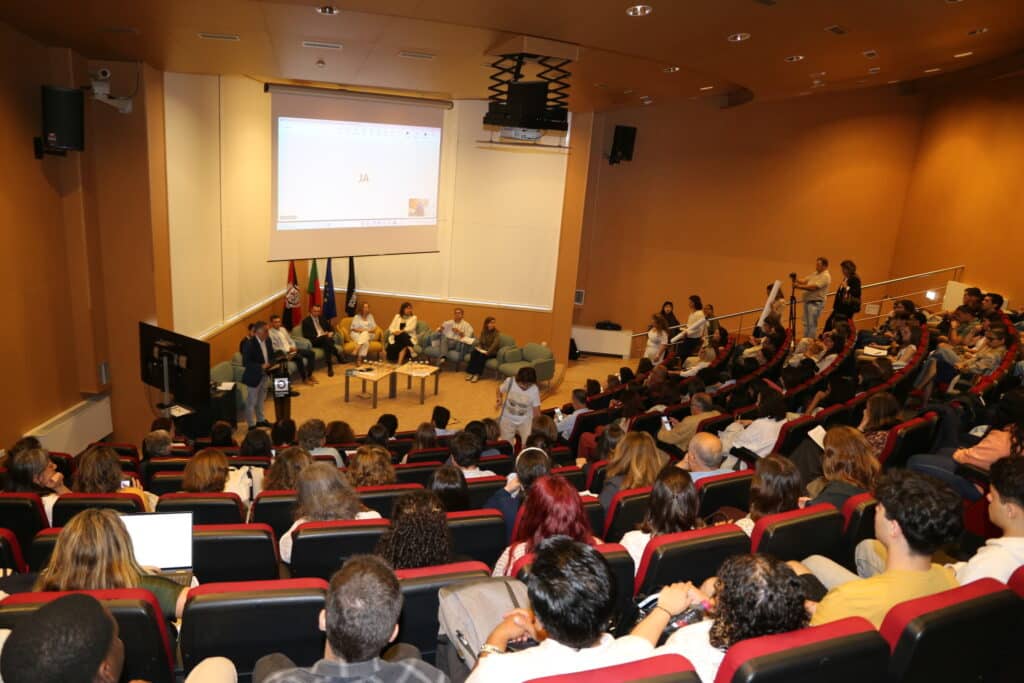
Around 270 researchers, teachers, students and professionals from various national and international institutions gathered in Peniche to discuss the main challenges and opportunities associated with the future of agri-food systems.
Promoted by several institutions, including the Polytechnic Institutes of Leiria, Beja, Santarém, Portalegre and Lisbon, Nova University of Lisbon, the National Institute of Agricultural and Veterinary Research and the University of Lisbon, the “9th Symposium on Food Production and Processing in a Sustainable Environment” took place on June 16, at the Escola Superior de Turismo e Tecnologia do Mar (ESTM) of the Polytechnic Institute of Leiria.
Throughout the symposium, topics related to food production, food processing and environmental sustainability were addressed. The event, according to the Polytechnic Institute of Leiria, promoted “the sharing of scientific and technological knowledge” in areas such as the circular economy, the valorization of agro-food by-products, the adaptation of crops to climate change, biotechnology, food safety, artificial intelligence applied to food production, and the development of more sustainable and healthier foods.
As part of the program, there was a plenary session dedicated to the role of microorganisms in the sustainability of food systems. In addition, there were “several thematic panels that highlighted the contribution of scientific research to the development of innovative solutions capable of addressing the environmental, economic and social challenges that currently condition the agri-food sector,” according to the same source in a press release.
“This symposium positions itself as an important space for the sharing of knowledge, reflection and collaboration among researchers, institutions and professionals who work daily to respond to the challenges facing agri-food systems,” says Sérgio Leandro, director of ESTM.
For the official, “in a context marked by climate change, the need for more efficient resource management and the growing demand for sustainable and healthy foods, it becomes essential to strengthen the link between science, technology and the production sector, promoting innovative solutions with real societal impact.”
Among the highlighted topics were the sustainable valorization of resources and agro-food by-products, environmental monitoring, reduction of food waste, genetic improvement of agricultural crops, food quality and safety, as well as new technological approaches applied to food production and processing.
The Polytechnic Institute of Leiria believes that the symposium also provided an opportunity to “strengthen networks of collaboration” between higher education institutions, research centers and sector entities, fostering future partnerships and joint projects.





