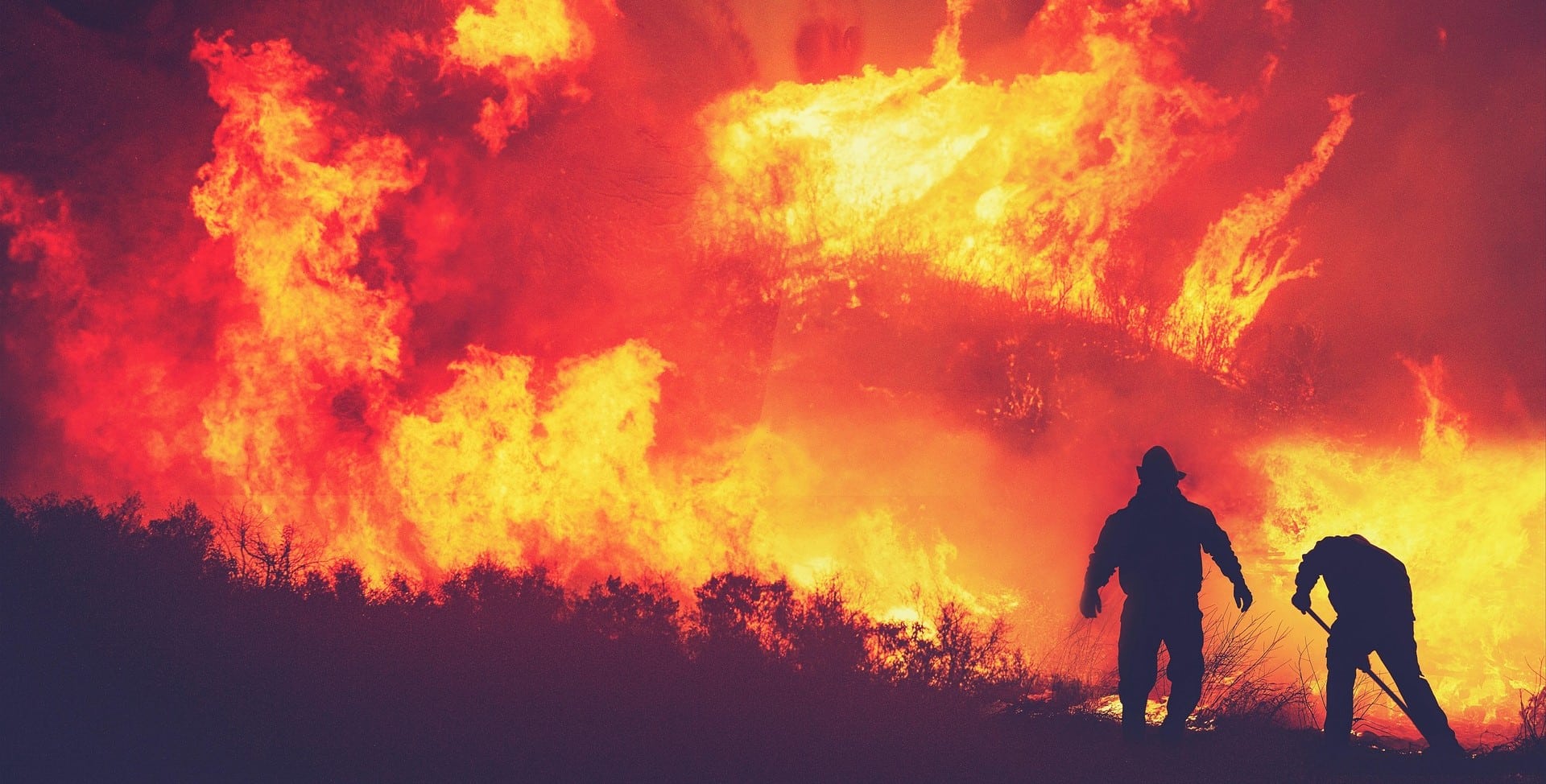
Portugal remains roughly the same area burned and has reduced the number of fires, but it faces the major problem of poor management and of vegetation reduction, warned the specialist José Miguel Cardoso Pereira.
The problem of wildfires in Portugal, he said, is not the arsonists or the eucalyptus trees, nor do the solutions lie in more airplanes or in species that do not burn, he said during a debate in Lisbon on “Forest Fires and Human Health,” promoted by the Portuguese Council for Health and Environment (CPSA).
Specialist in rural fires, researcher and professor at the Instituto Superior de Agronomia (ISA), José Miguel Cardoso Pereira sought to answer the question “why is Portugal so vulnerable to wildfires?”, pointing to the abandonment of agriculture and rural spaces as one of the main causes, which leads to the loss of capacity to manage the territory, and also to climate change.
Relying on statistical data, he said that, in Europe, Portugal and Greece do not show a significant trend in the variation of the area burned, but that in Portugal, in the long term, there is a decrease in the number of fires.
The problem, he explained, is that there is a “clear increase” in heat waves, that summers are “becoming increasingly dangerous” and there is no management and reduction of fuel—vegetation—with fires left uncontrolled or through grazing. “By extinguishing the fire faster and not managing the vegetation we are accumulating fuel, so you will see it burn in the worst circumstances, on very hot days,” he warned.
It was this greater effectiveness in fighting fires and lack of fuel management that “exploded” in 2017 (Pedrógão Grande). And there followed an “illusory period of calm,” a continuation of fuel accumulation.
An accumulation that has consequences, for example, the specialist noted, was the Arganil fire last year in which 65,000 hectares burned. “There have been fourteen full years, in recent history, in which the burned area did not reach 65,000 hectares,” said José Miguel Cardoso Pereira.
The conference was the launching pad to present the CPSA Guide for Fires, an initiative of the Council, similar to others of the kind it has already done for heat waves or for floods.
It is, as CPSA president Luís Campos explained to Lusa, a tool to help people, to increase literacy about preventive measures they can implement.
Because fires, he justified, have a large impact on health, from cardiovascular diseases to diabetes, from respiratory diseases to maternal and child health issues.
Luís Campos, an internist, referred to rising temperatures, climate change and pollution, fires or the increase in the population, factors that together are responsible for 13 million deaths, with pollution the main cause. And because of the smoke from fires, 339,000 people die each year, he said.
It is essential, he warned, to promote the adaptation of the health system to climate change, which has not happened in Portugal. And he added: “We have to begin saying that the climate emergency is a public health emergency,” it is not a “problem of radical youths” but a problem that affects current and next generations.
Na conferência participaram responsáveis de outros setores, como Miguel Arriaga, diretor dos Serviços de Prevenção da Doença e Promoção da Saúde na Direção-Geral da Saúde; o presidente do Instituto da Conservação da Natureza e das Florestas, Nuno Banza; o presidente da Agência Portuguesa do Ambiente, Pimenta Machado e José Manuel Moura, presidente da Proteção Civil.