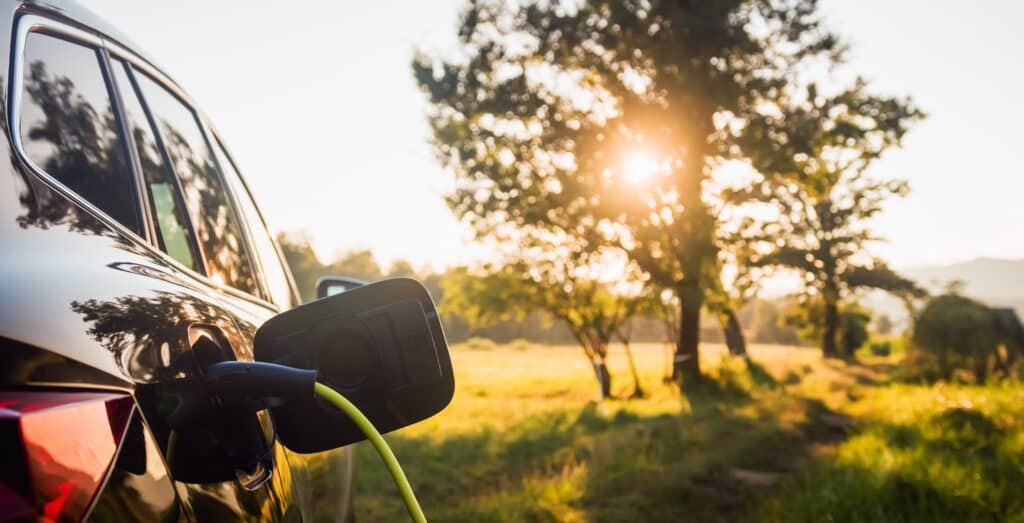
With more than 8,000 public charging points across the country, MOBI.E shares, in a press release, practical tips to help travelers prepare trips that are safer, more efficient and more comfortable during periods of high temperatures.
In the face of the heat wave affecting Portugal and the increase in summer travel, MOBI.E reinforces a set of recommendations aimed at electric vehicle and plug-in hybrid users who will be traveling in the coming days.
In a context of very high temperatures, planning the trip, managing range and choosing appropriate charging moments and locations becomes even more important to ensure comfort, energy efficiency and peace of mind during the journey.
The MOBI.E charging network already includes more than 8,000 charging points of public access across the country, including standard, fast and ultrafast stations, distributed from north to south of the national territory and in the autonomous regions. This coverage allows users to better prepare their trips, check the availability of stations and adapt stops to the vehicle and occupants’ needs.
“Electric mobility is increasingly prepared to respond to summer travel. Yet, in periods of extreme heat, it is essential that users plan ahead, monitor the availability of stations and adopt good practices that help protect the battery, optimize range and make the trip more comfortable,” MOBI.E notes.
Before starting a trip during the heatwave, MOBI.E recommends:
- Plan the route before departure
Confirm the vehicle’s range, the maximum charging power supported and the stations available along the route.
Plan the trip with alternatives, especially in periods of higher demand, such as weekends, holidays, rush hours and access to tourist destinations.
Use the MOBI.E website, the MOBI.Data portal, the applications of electric mobility service providers and the vehicle’s own navigation systems to locate stations and check their real-time availability.
- Start the trip with sufficient charge
Whenever possible, start the trip with the battery charged, especially if you will cover long distances or pass through areas with a lower density of charging points.
Avoid relying on a single charging location. Identify alternative nearby stations in advance, especially on main roads, service areas and accesses to seaside areas or holiday destinations.
- Adapt charging to the heat
During periods of high temperatures, whenever possible, charge the vehicle at times of lower heat, such as early morning, late afternoon or night.
Whenever there is such a possibility, choose charging locations with shade, cover or nearby amenities, in order to reduce exposure of the vehicle and occupants to heat.
- Manage the battery efficiently
On long journeys, it can be more efficient to perform short and well-planned charges rather than waiting for full charges.
Whenever appropriate to the route, try to charge between about 20% and 80% of the battery, a range where charging tends to be more efficient. Charging to 100% should be reserved for situations where additional range is needed.
After finishing charging, release the station so that other users can charge.
- Use fast and ultrafast charging stations on long journeys
For longer trips, prioritize fast and ultrafast stations, which allow reducing stop time and increasing travel efficiency.
However, take into account the maximum power accepted by your vehicle. Using a charging station with power higher than the car’s capacity can incur unnecessary costs.
- Take advantage of natural stops during the journey
Integrate the charging stops with meals, rest or use of services.
A planned pause at a service station, shopping area or rest area can allow you to recover range, avoid extra effort during the hottest hours and make the trip more comfortable for all occupants.
- Use the air conditioning intelligently
Air conditioning is essential for comfort and safety during a heat wave, but it can influence energy consumption.
Set the temperature to a comfortable and efficient level, avoid driving with windows open on highways and, whenever possible, climate-control the vehicle while it is still connected to the grid before starting the trip.
Use efficient driving modes and maintain a steady speed to maximize range.
- Check the vehicle before the trip
Before departing, check tire pressure, the overall condition of the vehicle, the levels of applicable fluids and the proper functioning of cables or adapters needed.
Correct tire pressure is particularly important on hot days, contributing to safety, energy efficiency and the vehicle’s stability.
- Monitor the availability of charging stations in real time
Consult the digital tools available before and during the trip. Real-time monitoring helps avoid unforeseen events, reduce waiting times and adjust the route if a station is busy or unavailable.
Enable notifications on the apps you use and always confirm charging conditions, including power, price, means of access and payment methods.
- Adopt good practices for network use
Respect charging spaces, use only the time needed, leave the space clean and report any anomalies through the channels indicated at the station or in the apps used.
The quality of the charging experience also depends on the responsible use of the network by all drivers.
With more than 8,000 public charging points across the country, the MOBI.E network allows electric vehicle users to travel with greater predictability, comfort and confidence, even during periods of higher demand and extreme temperatures.
For more information about the MOBI.E charging network, station locations, real-time availability and recommendations for trips with electric vehicles, consult www.mobie.pt.