Many countries are at risk of substantial economic losses due to the degradation of forests and other critical natural ecosystems.
The warning is made in a study led by the Grantham Institute for Climate Change and the Environment, of the London School of Economics and Political Science (LSE).
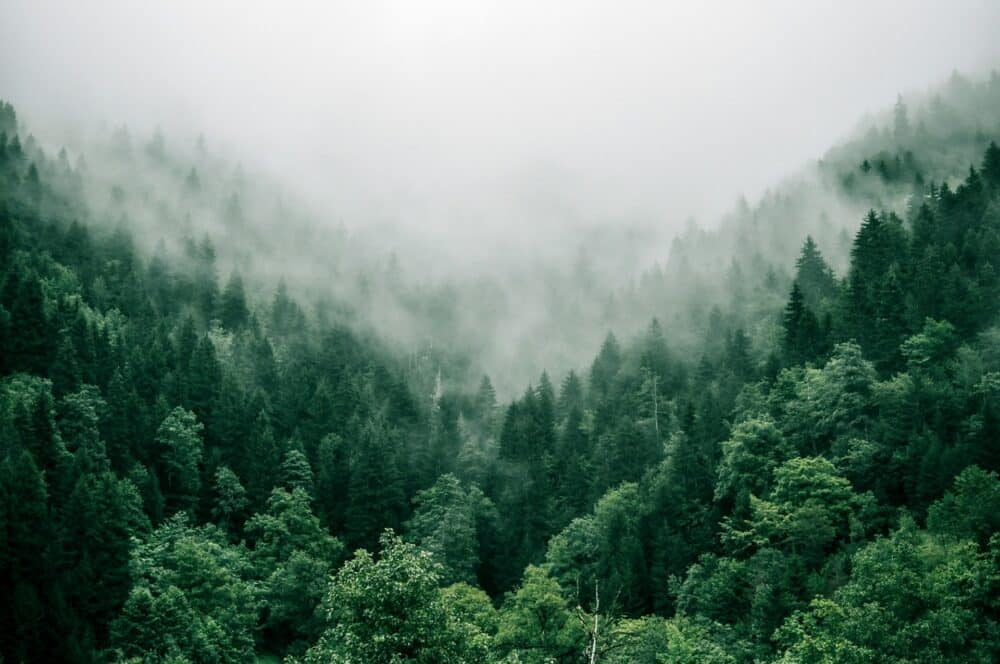
The researchers who sign this work point to new evidence of the world’s wealth’s dependence on the natural world, including the role forests play in rainfall formation and economic activity. For example, it is stated that more than €800 billion of the annual GDP of Europe, China and the United States of America (USA) depends on rainfall generated by forests.
Therefore, the loss of these forests not only represents a significant decline in the planet’s biodiversity but also a major economic threat.
The authors estimate that, in more than 130 countries around the world, direct economic dependencies on rainfall generated by forests may exceed four trillion euros. And these calculations do not include the other services provided by forests, such as timber production, climate regulation, water purification, air quality improvement and flood mitigation.
For the investigators, some ecosystems, such as large rivers and lakes, coral reefs and biodiversity hotspots, should be considered “critical national infrastructure” and, they argue, are as vital to national resilience and prosperity as roads, railways and energy networks.
Thus, they propose a new concept of “Systemically Important Natural Systems” to designate natural systems that are so important that their degradation poses serious risks to economic and financial stability, at national or global level. A similar designation is used in the banking sector, the “Systemically Important Financial Institutions,” which defines banks that are too big to fail.
That is why the authors of this study argue that these “Systemically Important Natural Systems,” just as with banks, must be monitored and well managed to prevent their degradation.
As an example, it is said that the impacts of deforestation in the major cocoa-producing regions could lead to an increase in the price of that product in importing countries, contributing to inflation and higher cost of living.
In the category of “Systemically Important Natural Systems,” the researchers say that the tropical forests of Indonesia and New Guinea, the Amazon and Congo Basin countries, the boreal forests of the northern part of the planet, the coral reefs in the Coral Triangle and the Great Barrier Reef, and the most important and fertile regions for global food production could be included.
“The challenge is not a lack of environmental commitments, but the absence of mechanisms that formally recognize, value and integrate the systemic importance of these critical natural systems,” says Nicola Ranger, co-author of the study.
The researcher explains that the concept of “Systemically Important Natural Systems” gives governments, regulators, companies and financial institutions “a possible framework for identifying ecosystems that are too important to fail and for implementing the monitoring, investment and risk management needed to fill this gap.”
For its part, Thea Philip, who also signs this work, adds that “our results show how forest systems play a critical infrastructural role in sustaining rainfall patterns that support economic activity across countries, sectors and supply chains.”