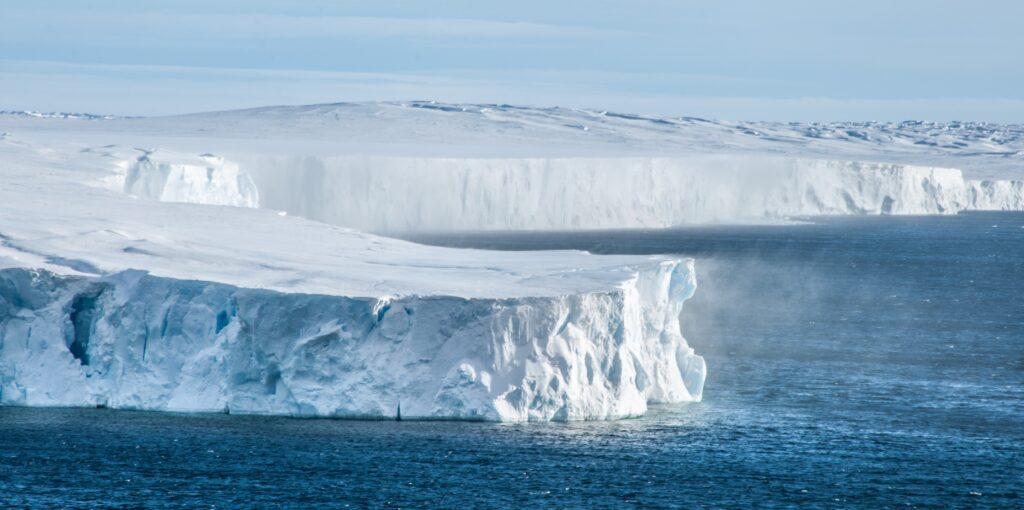
Antarctica could be offering the world a rare period of predictability in one of the major challenges of climate change. A study published in the journal Nature concludes that the next 30 to 50 years constitute a critical window to understand and anticipate the contribution of Antarctic ice loss to sea level rise.
The researchers argue that current models reliably reproduce the rates of ice loss observed today, enabling robust estimates for the coming decades and providing valuable information for coastal planning and for the formulation of public policy.
The scientists warn, however, that this forecasting capability declines significantly in the second half of the century, when physical processes come into play that can rapidly accelerate the retreat of glaciers and ice shelves.
According to the authors, a global sea level rise exceeding two meters by 2100 cannot be ruled out under high-emission scenarios, which would have dramatic consequences for coastal communities around the world.
For the research team, the message is clear: although the long-term risk remains high, there is currently a unique opportunity to strengthen Antarctic monitoring, improve climate models, and implement adaptation measures before uncertainties become too large.