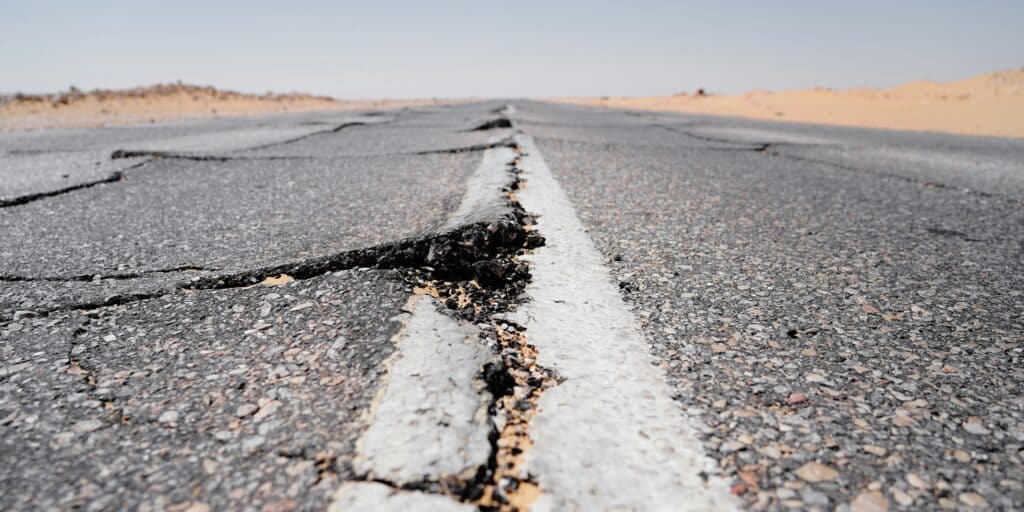
A magnitude 7.5 earthquake could leave parts of the Wellington region in New Zealand isolated by road for several months, according to a study that warns about the vulnerability of the road network and the need to strengthen preparation for major disasters.
The study used computer simulations to assess the impact of a major earthquake on the road connections of the Wellington region, including the Hutt Valley and Wairarapa.
The results indicate that, three months after the earthquake, these two regions would still very likely be isolated due to road closures.
Many trips would remain impossible
The simulations show that, after three months, about half of the car journeys normally undertaken outside the region would remain unviable, while a quarter of trips into the interior of the region would also not be feasible.
This scenario assumes that two major highways recently built — Transmission Gully and Peka Peka–Ōtaki — remain operational.
If these routes also become impassable, the researchers conclude that the situation could worsen significantly, both in terms of connectivity and congestion on alternative routes.
Strengthening resilience before the next disaster
According to the authors, the results highlight the importance of planning in advance the response to large earthquakes and of investing strategically in infrastructures deemed critical.
The researchers argue that strengthening the resilience of the road network could significantly reduce the isolation of populations, facilitate emergency operations and accelerate the recovery of affected regions after a natural disaster.
New Zealand lies in the so-called Pacific Ring of Fire, one of the zones with the highest seismic activity on the planet, and is frequently affected by high-magnitude earthquakes.