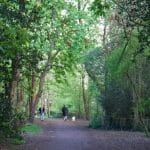
Fighting climate change and, more specifically, carbon emissions requires a shift in attitudes, but also the adoption of new measures. Tree planting is one of the most common practices today; however, there is another solution that seems to have a more positive effect: preserving and conserving forests.
An investigation by the American Geophysical Union (AGU) aimed to quantify the carbon present in the canopy (the upper layer of trees where branches and leaves accumulate) of the trees in Costa Rica. The scientists found that the soil present in the treetops, 30 meters high, stored three times as much carbon dioxide (CO2) as the soil beneath their feet.
“We knew these would be soils truly rich in organic matter, but we did not expect such an extremely large amount of carbon,” says the researcher Hannah Connuck.
The team also sought to measure the amount of CO2 released by the microbial organisms present in the canopy. The results indicate that while they were releasing a greater amount of CO2, compared to underground soils, the rate at which they stored it was enough to offset it. This suggests that older forests may be a good tool for carbon sequestration, due to their complexity and richness of ecosystems.
“It is a strong argument for preserving primary forests and other old forests, rather than cutting and replanting secondary forests,” says the specialist.