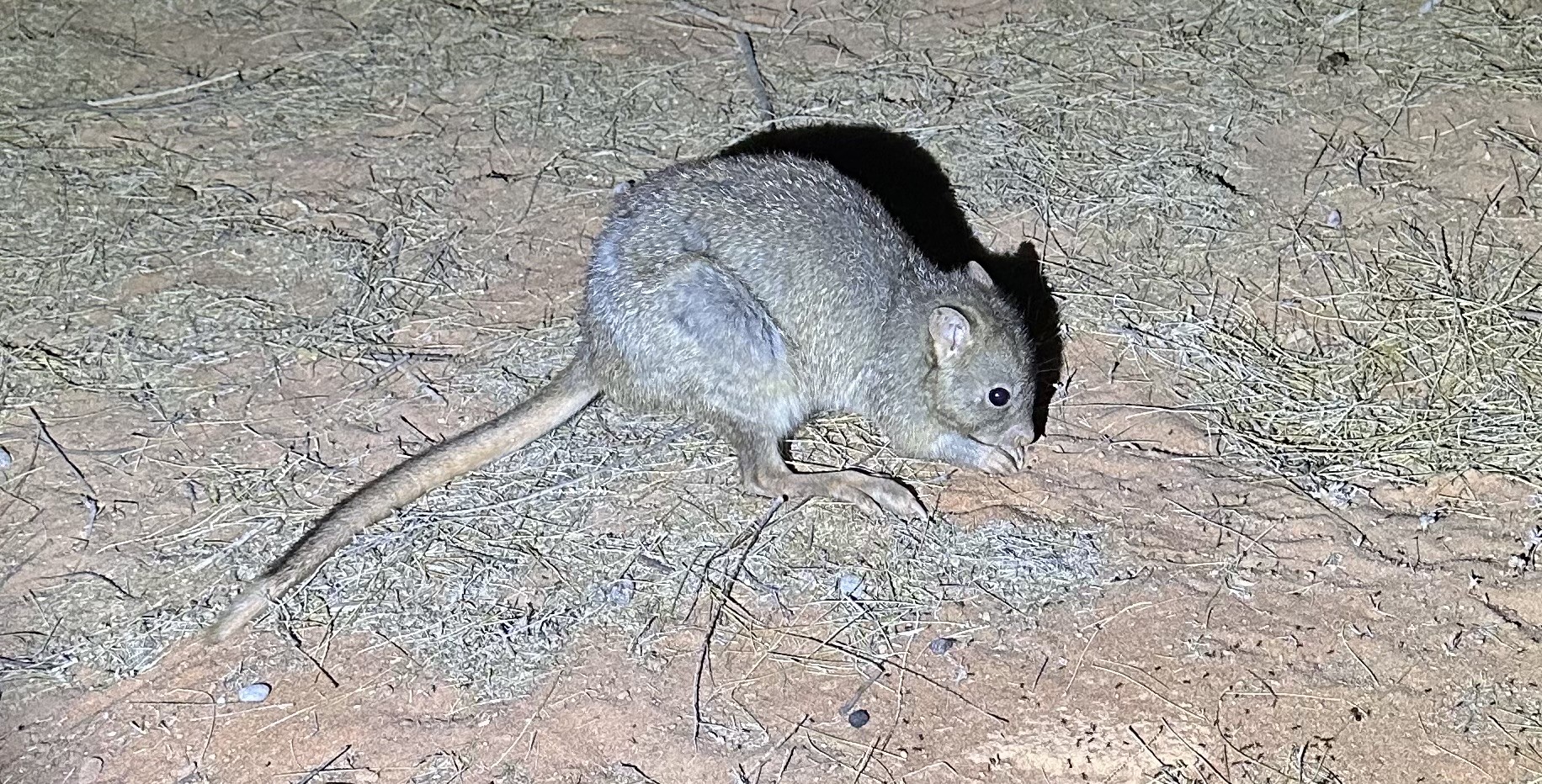
The availability of subterranean fungi, including truffle-like species, could play a decisive role in the recovery of two threatened marsupial species and in the ecological restoration of an area classified as World Heritage by UNESCO, in Australia. The conclusion comes from a study by Edith Cowan University (ECU), published in the scientific journal Ecosystems.
The investigation assessed the availability of food resources for the boodies (Bettongia lesueur) and the woylies (Bettongia penicillata), two small marsupials formerly common across much of mainland Australia, but they have suffered a sharp decline due to the introduction of exotic predators, such as feral cats, and the degradation of natural habitats.
The study was conducted in six sites in Western Australia and the Northern Territory, including Dirk Hartog Island, located in the Shark Bay region, an area recognized by UNESCO for its high ecological value.
Led by Rebecca Quah, a PhD student at ECU, the investigation used DNA analysis techniques to identify the fungi consumed by the marsupials and to verify whether these food resources are present in the habitats where populations are being reintroduced.
“Among the foods consumed by these animals are fungi, a behavior known as mycophagy. While foraging and digging the soil, they end up playing an important ecological role, helping to turn over the soil and disperse fungal spores, which contribute to the health of plants and ecosystems,” explains the researcher.
The results revealed that the island hosts at least 75 species of fungi with visible fruiting bodies, and about half of the species consumed by the boodies and the woylies in other places are also present on Dirk Hartog. Among them is a truffle-like species from the Pezizaceae family, identified as one of the most important in the diet of these animals.
The researchers emphasize that the role of the marsupials goes far beyond their own survival. By consuming fungi and dispersing their spores through their feces, they contribute to the spread of mycorrhizal fungi, organisms that form symbiotic relationships with plants and play essential roles in nutrient uptake, carbon storage, and ecosystem productivity.
The prolonged absence of these animals from the island could have limited the natural dispersal of many subterranean fungi, with consequences for the local vegetation. Therefore, scientists believe that reintroducing the two species could help restore ecological processes that have been absent for decades.
“We hope that the return of these marsupials will contribute not only to the conservation of the species but also to the recovery of fundamental ecological functions on Dirk Hartog,” says Rebecca Quah.
The island has undergone profound changes since the nineteenth century, due to livestock activity and the presence of feral cats, factors that led to the disappearance of at least 11 native species. After eradicating introduced animals and ending livestock farming, several ecological restoration projects are currently underway, including the reintroduction of native species.
According to Lesley Gison, head of the fauna reconstruction program at the Department of Biodiversity, Conservation and Attractions of Western Australia, the study’s results reinforce confidence in the success of these conservation actions.
“This investigation confirms that essential food resources are available on the island, increasing the likelihood that the boodies and the woylies will establish themselves, thrive and contribute to the recovery of the ecosystem,” she emphasizes.