The Navigator Company estimates that it has reduced by almost 300 thousand tonnes the CO₂ emissions from its industrial complexes through projects supported by the Recovery and Resilience Plan (PRR). The investments cover units in Setúbal, Figueira da Foz, Aveiro and Vila Velha de Ródão and amount to around 193 million euros, of which 76 million are funded by the PRR.
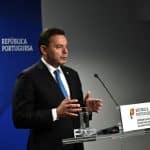
The balance was presented on Monday, September 21, during a visit by the Secretary of State for the Economy, João Rui Ferreira, to the company’s industrial complex in Setúbal.
Among the projects are a recovery boiler in Setúbal, a biomass lime kiln in Figueira da Foz, a cogeneration unit in Aveiro, a biomass boiler in Vila Velha de Ródão and photovoltaic plants at the Aveiro, Figueira da Foz and Vila Velha de Ródão complexes.
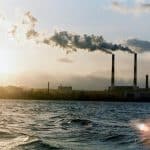
Taken together, the six projects should enable a reduction of around 300 thousand tonnes of Scope 1 and 2 emissions. Navigator compares this figure to the annual emissions of approximately 70 thousand cars.
The company had set, in 2019, a goal to reduce its emissions by 86% by 2035, with 2018 as the reference year. By 2025, the reduction reached 37%, according to data disclosed by the company, which foresees reaching 54% in 2027, corresponding to about 415 thousand tonnes of CO₂.
Since 2018, investment in decarbonisation measures amounts to 352 million euros. For the period between 2027 and 2035, new projects for biomass utilisation and electrification are under review, to which Navigator attaches a potential additional reduction of 251 thousand tonnes of CO₂.
One of the projects already under development is LK2BM, in Setúbal, which provides for the conversion of a lime kiln to biomass utilisation in place of natural gas.
The reduction in the use of fossil fuels is also pointed out by the company as a way to reduce exposure to prices and volatility of energy markets. António Redondo, CEO of Navigator, however considers that there are obstacles to the electrification of industry, notably related to the price of electricity and access to the grid.
“The price of European electricity remains largely indexed to gas, even when most electricity is no longer produced from gas,” he said. For the executive, long-term affordable contracts, grid connections compatible with investment calendars, and prices that reflect the current mix of electricity production are required.
From Decarbonisation to Bioproducts
Navigator’s participation in the PRR did not limit itself to investments aimed at reducing emissions from its factories. The company also joined the Mobilising Agenda From Fossil to Forest, dedicated to the development of cellulose-based solutions.
The project brought together more than 20 partners, including companies, universities and research centres, and involved an investment close to 94 million euros. Among the solutions developed are pulp and papers for packaging, papers with barrier properties, biocomposites, paper sensors and molded cellulose products.
One of the projects has already reached industrial scale. In the Aveiro complex, a line began operating for the production of take-away and tableware solutions from virgin Eucalyptus globulus fibre. The company presents it as the first fully integrated industrial line with this fibre.
The bet is part of the development of renewable-based alternatives to fossil-origin products, notably single-use plastics.
In total, Navigator was involved in 90 PRR-supported projects, including initiatives for digitalisation and modernisation of forestry activity. According to the company, these investments have accelerated decarbonisation, innovation and industrial modernisation projects.
António Redondo argues that public support plays a particularly relevant role in projects where the benefits for society — such as emission reductions or reduced external energy dependence — surpass the direct return for the companies.
“There have been successive reallocations, many due to lack of execution in the public sector, but we cannot fail to question, on a day like today, how many green productive investment projects we would have carried out if the supports had been more balanced between public and private,” he said.
For the CEO, industrial capacity must also be considered in evaluating the impact of these investments. “Losing a factory is bad. Losing an ecosystem is practically irreversible,” said António Redondo.