The environmental organization WWF Portugal yesterday began an ecological restoration intervention in Trafaria, in the municipality of Almada, to protect seahorse populations in the Tagus Estuary, through the installation of underwater shelters.
In a statement, WWF Portugal notes that this action, which involved the collaboration of the Associação Ciência e Educação para a Conservação da Biodiversidade Marinha (MARDIVE), is part of the national initiative D-EVOLUÇÃO, “developed with the aim of contributing to the recovery of degraded ecosystems, halting biodiversity loss and reinforcing the resilience of territories in the face of climate change.”
The action foresees, in a first phase, the installation of nine underwater shelters in three distinct locations in the Trafaria bay, intended to create shelter and anchoring zones for the seahorses and to improve the ecological conditions of their habitat.
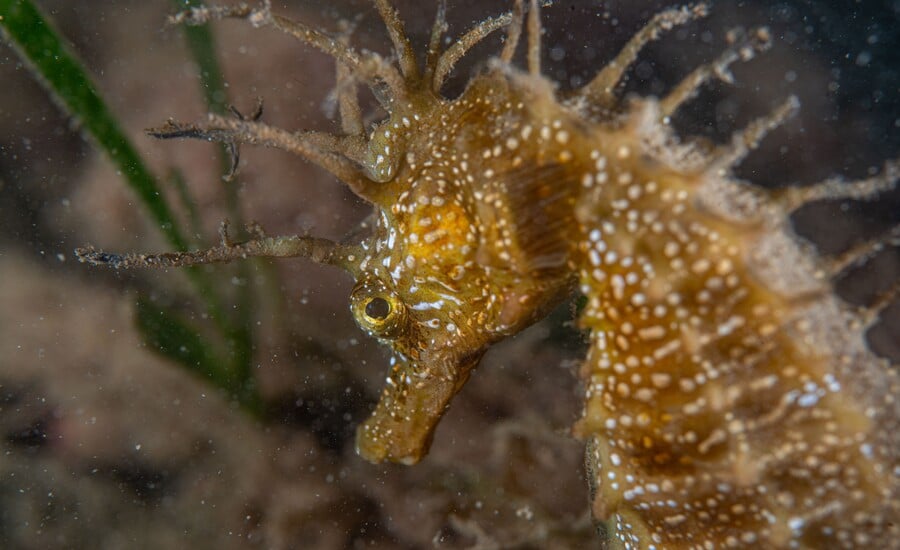
“The Tagus Estuary is Portugal’s largest estuary and one of Europe’s most important wetlands. On the Trafaria riverside lives a population particularly relevant of seahorses, composed of the common seahorse (Hippocampus hippocampus) and the long-snouted seahorse (Hippocampus guttulatus),” the note describes.
However, the environmental organization warns, “the estuarine habitat they occupy is highly degraded in light of the multiple local threats, such as marine litter, pollution and underwater noise.”
WWF Portugal explains that in preparatory actions for the installation of the shelters, several community interviews were conducted and the local community was involved, notably the fishermen.
“Protecting nature requires more than ambition. It requires concrete action, scientific knowledge and work hand in hand with local communities,” says, cited in the note, the executive director of WWF Portugal, Angela Morgado.
The initiative is financed by companies, individual donors and public and private entities.