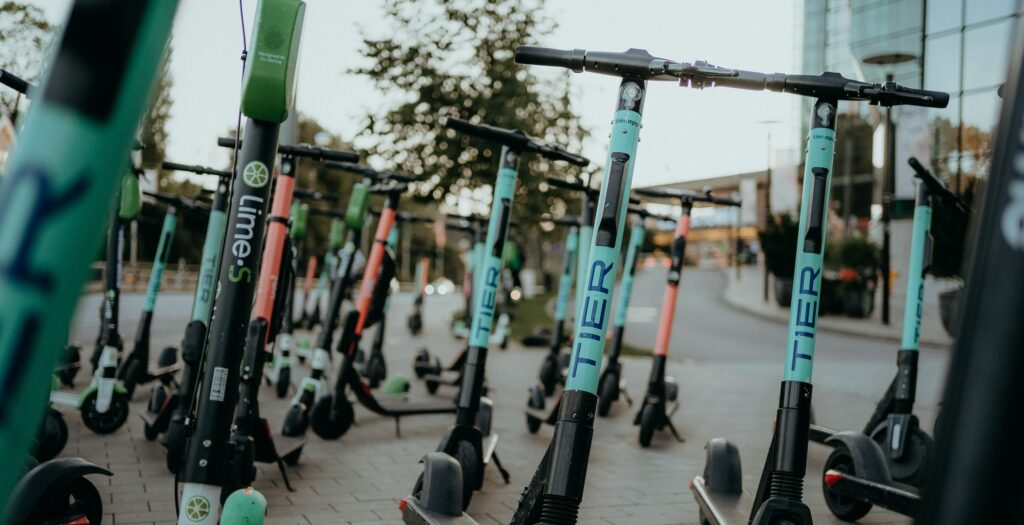
Electric scooter users present a significantly higher risk of suffering traumatic brain injuries than motorcyclists and cyclists, according to a study conducted in England and Wales. The researchers advocate measures such as mandatory helmet use, stricter speed limits, and improvements in the design of these vehicles to reinforce safety.
Published in the scientific journal Scientific Reports, the study analyzed data from 15,247 patients with moderate to severe traumatic injuries recorded between 2020 and 2022 in 18 cities in England and Wales.
The analysis included 580 electric scooter users, 7,027 motorcyclists and 7,640 cyclists.
Risk of brain injury is 3.5 times higher
The results show that adults who used electric scooters had a 3.5 times higher risk of suffering traumatic brain injuries compared with motorcyclists.
Compared with cyclists, this risk was 1.7 times higher.
In addition, scooter users had a 1.5 times higher risk of suffering internal organ injuries relative to motorcyclists and 1.4 times higher when compared with cyclists.
The risk of injuries to arteries or veins was also higher: 3.2 times compared with motorcyclists and 1.7 times relative to cyclists.
By contrast, the researchers found that scooter users had fewer bone fractures than the other two groups.
Few users wear helmets
According to the authors, one of the main explanations could be the reduced use of helmets.
The study indicates that only 5.9% of electric scooter users wore a helmet, while this protection was used by 75.7% of motorcyclists and 45% of cyclists.
The researchers acknowledge that this factor may contribute to the higher risk of traumatic brain injuries, together with vehicle characteristics that favor falls where the rider is projected over the handlebars.
Women report more severe accidents
The team also analyzed more than 23,000 accidents and near-miss incidents reported by the scooter users themselves.
The data reveal that men had a collision risk 36% lower than that of women.
In turn, women had a 2.1 times higher likelihood of reporting serious injuries.
The authors suggest that this difference could be due, at least in part, to many scooters being designed based on male body proportions. They also add that previous studies have shown that women tend to ride more frequently on trails and non-paved surfaces.
Mandatory helmets and design improvements
The researchers consider that the risk associated with electric scooters results from a combination of factors, including the reduced use of helmets, the design of the vehicles, user behavior, and the characteristics of urban infrastructures.
Therefore, they advocate measures such as mandatory helmet use, lower speed limits, improvements to braking systems, and changes to the design of the handlebars, making them safer in case of a collision.