An unprecedented worldwide study conducted by the Museums Victoria Research Institute revealed that, beneath the cold, dark, and pressurized world of the deep sea, marine life is far more globally interconnected than previously thought.
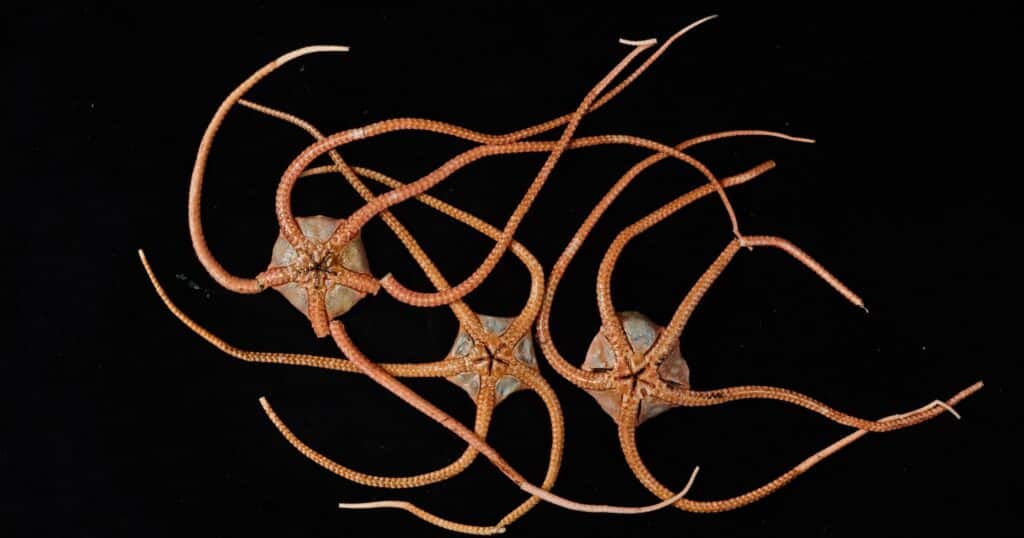
Published today in the journal Nature, this landmark study maps the global distribution and evolutionary relationships of brittle stars (Ophiuroidea), ancient spiny creatures found from shallow coastal waters to the deepest abyssal plains, and from the equator to the poles.
By analysing the DNA of thousands of specimens collected during hundreds of research expeditions and preserved in natural history museums around the world, scientists discovered how these deep-dwelling invertebrates quietly migrated across entire oceans over millions of years, linking ecosystems from Iceland to Tasmania.
This unprecedented dataset provides new and powerful insights into how marine life evolved and dispersed across the oceans over the last 100 million years.
One might think that the deep sea is remote and isolated, but for many deep-sea animals it is, in fact, a connected highway,” said Dr. Tim O’Hara, Senior Curator of Marine Invertebrates at the Museums Victoria Research Institute and the study’s lead author.
“For long periods of time, deep-sea species expanded their ranges by thousands of kilometres. This connectivity is a global phenomenon that has gone unnoticed, until now.”
This is the most exhaustive study of its kind, using DNA from 2,699 brittle star specimens housed in 48 natural history museums around the world. These animals, which have inhabited Earth for more than 480 million years, are found on all ocean floors, including depths exceeding 3,500 metres.
Unlike shallow-water marine life, which is limited by temperature boundaries, deep-sea environments are more stable and allow species to disperse over large distances. Many brittle stars produce yolk-rich larvae that can drift in the deep-ocean currents for long periods, giving them the ability to colonize distant regions.
These animals do not have fins or wings, yet they have managed to cross entire oceans,” says O’Hara. “The secret lies in their biology—their larvae can survive for extended periods in cold waters, hitching rides on the slow currents of the deep sea.”
The research shows that deep-sea communities, especially in temperate latitudes, are more closely related across regions than their shallow-water counterparts. For example, marine animals found off southern Australia share close evolutionary ties with those of the North Atlantic on the opposite side of the planet.
However, the deep sea is not uniform. While species may spread widely, factors such as extinction events, environmental changes, and geography have created a patchwork quilt of biodiversity on the ocean floor.
It is a paradox. The deep sea is highly interconnected, yet also incredibly fragile,” says O’Hara. “Understanding how life distributes itself and moves across this vast environment is essential if we are to protect it, especially as threats from deep-sea mining and climate change intensify,” he adds.
This investigation not only transforms our understanding of the evolution of the deep sea but also highlights the enduring scientific value of museum collections. The DNA analysed in this study comes from specimens collected during 332 research voyages, many of them conducted decades ago, and preserved in institutions such as the Museums Victoria Research Institute.
“This is science on a global scale,” says Lynley Crosswell, CEO and Director of Museums Victoria. “It demonstrates how museums, through international collaboration and the preservation of biodiversity specimens, can unlock new knowledge about our planet’s past and help shape its future.”
This world-leading project was made possible thanks to partnerships with more than 40 institutions worldwide, spanning natural history museums, universities and marine research organisations, including support through sea-time subsidies on the RV Investigator of the CSIRO Marine National Facility in Australia.