An international team of researchers has demonstrated that cold-water coral mounds located in the southern Gulf of Mexico store significant amounts of carbon over geological time scales.
The study, published in the journal Coral Reefs, features the participation of two Portuguese scientists: Lélia Matos, from the Algarve Centre for Marine Sciences (CCMAR), and Joana Gafeira, from Kelpie Geoscience, a consultancy in marine science matters.
CCMAR states in a note that Lélia Matos’s previous work laid the scientific foundation for this new assessment, which “highlights the role of deep-sea ecosystems in the geological carbon cycle”.
In recent years, there has been much talk of ‘blue carbon’, what is absorbed and stored in coastal ecosystems, such as seagrass meadows, mangroves, and salt marshes, which have gained prominence in the range of nature-based solutions available to mitigate climate change. However, this group of researchers says that less attention has been paid to the contributions that deep-sea habitats can provide.
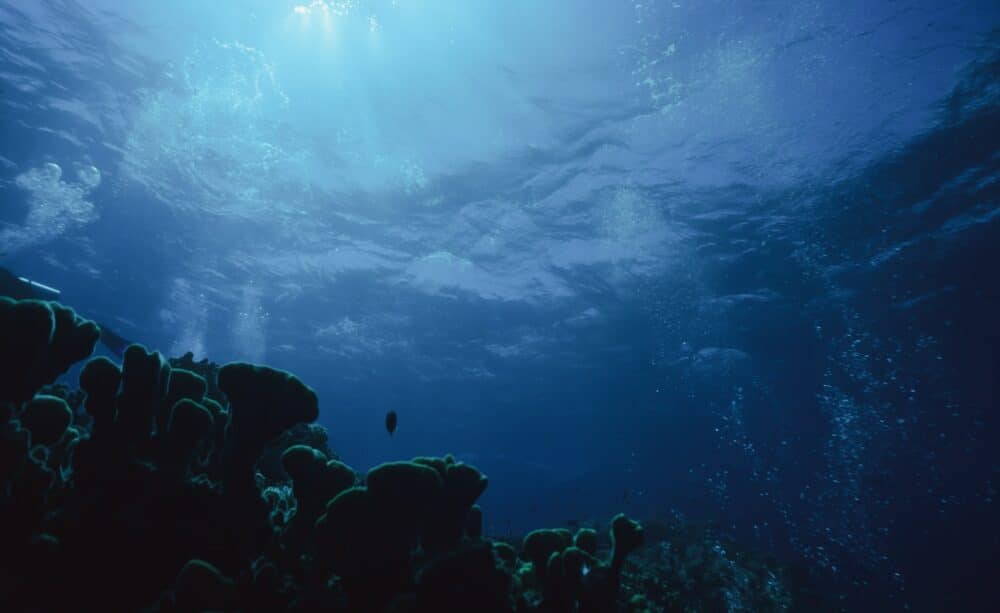
This study focuses on the three cold-water coral mounds (named Ixchel, Ah Xoc, and Chaac) in the Campeche Seamount Province, situated in the southern Gulf of Mexico. These large seabed structures, formed over hundreds of thousands of years by reef-building corals (also known as hard corals), function as natural reservoirs where organic and inorganic carbon accumulate and remain stored for millions of years.
To unravel this process, the researchers combined sediment analyses with high-resolution mapping of the seafloor. According to the team, this allowed them to reconstruct about 250,000 years of carbon accumulation across the Campeche Seamount Province.
The results show that carbon accumulation on these submarine mounds is three to nine times higher than that recorded in the surrounding seafloor sediments.
Extrapolating these data to the entire mapped area, the team estimates that the Campeche Seamount Province stores approximately 18.5 million tonnes of carbon, which will be retained for millions of years.
CCMAR states that the chronology of the sediments and the paleoceanographic reconstructions developed in previous work in the Campeche Seamount Province were not only integrated into this investigation, but were instrumental in establishing the temporal framework used to quantify carbon accumulation over the last 250,000 years.
Because they act as long-term carbon reservoirs, cold-water coral reefs may play a more significant role in the global carbon cycle than previously thought, the authors of this study emphasize. They argue that these results reinforce the importance of continuing to investigate these ‘vulnerable and still underexplored’ habitats, also demonstrating the value of international scientific collaboration and the integration of data and knowledge (produced over several years) to deepen understanding of how marine ecosystems function and their role in regulating the climate.