Waste from the brewing industry could be given a new life and contribute to cleaning waters contaminated by antibiotics.
This is the proposal of a study from the University of Aveiro (UA) that developed materials from by-products of beer production, “with the potential to treat wastewater in a more sustainable and efficient way,” the institution states in a note published on its online page.
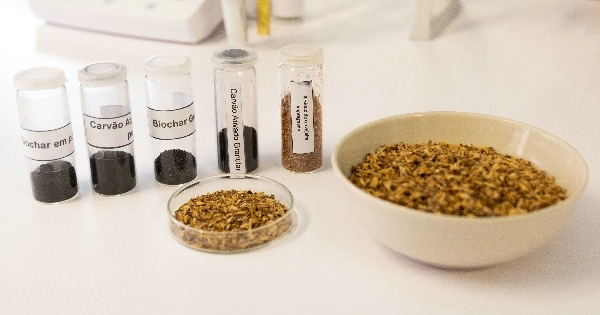
The research, signed by Érika Sousa, a researcher in the Department of Chemistry and CESAM – Center for the Study of the Environment and the Sea, one of UA’s research units, focused on the production of biochar and activated carbon from spent malt, one of the main wastes of the brewing industry.
Through processes that combine chemical activation and microwave pyrolysis, a method described as “an energetically more sustainable alternative to conventional methods,” it was possible to obtain activated carbon with a high surface area and capacity to remove from water antibiotics such as sulfamethoxazole, trimethoprim, and ciprofloxacin.
The developed materials were tested under different conditions, the academic institution says, including real wastewater, having shown “competitive results compared to commercial activated carbon.” The tests, however, showed that the presence of different compounds in wastewater can reduce adsorption capacity due to competition among the various contaminants.
“To overcome this challenge, the researcher modified the surface of the activated carbon, introducing different functional groups,” explains the UA. “Among the strategies tested, oxygen functionalization showed particularly promising results, increasing the material’s ability to remove the antibiotics present in the water.”
The investigation, conducted during Érika Sousa’s PhD, also explored the use of molecularly imprinted polymers, a technology that allows creating materials with greater capacity to recognize and capture, in a selective manner, certain contaminants. The combination of this technology with biochar significantly increased its selectivity for sulfamethoxazole, even in the presence of other contaminants, it is reported.
The results also demonstrated the potential of biochar in different water treatment systems, including continuous processes, with its adsorption capacity being recoverable through thermal regeneration. “This possibility could contribute to making these materials a more economically viable and sustainable solution for treating contaminated waters,” notes the UA.
By transforming a by-product of the brewing industry into a resource for the removal of emerging contaminants, such as antibiotics, the academic institution considers that this research contributes to a “circular economy” approach and to the development of more sustainable wastewater treatment solutions.