A study presented by the University of the Azores (UAç), commissioned by the Regional Government, acknowledges that combating the invasive alga Rugulopteryx okamurae is difficult. The alga first appeared in the archipelago in 2019, but has since spread to nearly the entire region.
“Probably, this alga will not disappear from the Azores’ seas in the near future, because the biology and ecology of this alga are quite violent, and they are affecting the entire balance of coastal ecosystems,” admitted Filipe Porteiro, a UAç researcher and the study’s coordinator, in statements to journalists during the presentation of the study’s conclusions in a public session in the city of Horta.
The invasive alga, or Asian alga (as it is also known), was discovered in 2019 near the port of Ponta Delgada, the archipelago’s largest city, probably dragged by the hulls of ships crossing the Atlantic, or by the ballast tanks of merchant ships.
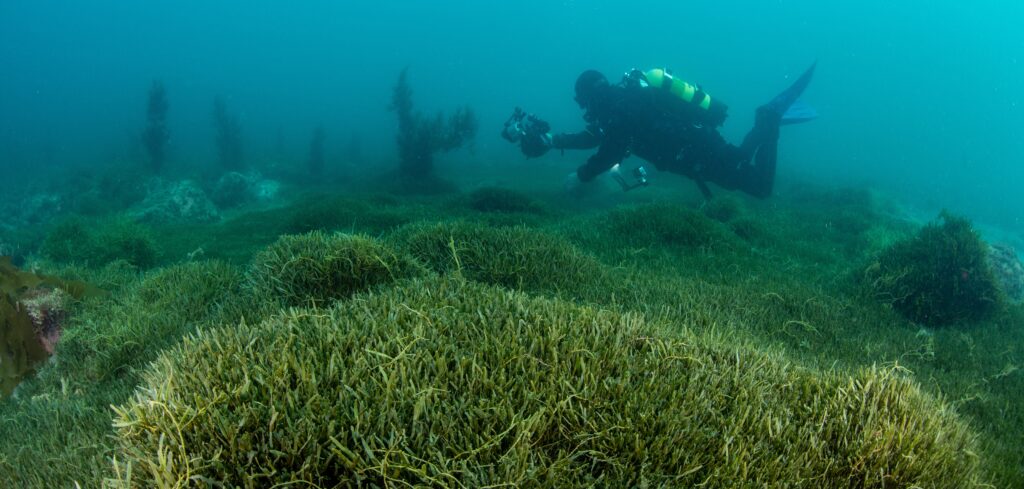
The species, which can develop on the seabed up to 40 meters deep, ended up spreading, seven years later, to almost all Azorean islands, with the exception of Corvo (the smallest), where there are still no records of its presence, although researchers understand that it will be only a matter of time before it reaches there.
“It is about trying to devise measures to minimize the impact in the most affected coastal areas, and in bathing areas, such as, for example, in the port of Madalena [Pico], in Porto Pim Beach [Faial], or in several areas of São Miguel island,” emphasized Filipe Porteiro, adding that a substantial investment is needed in monitoring, cleaning, and storage.
The scientists confirm that the alga reproduces very quickly and is causing negative impacts on marine biodiversity, in addition to the foul odor when the species washes up on beaches or bathing areas (especially in spring and early summer), and decomposes, driving residents and tourists away.
The regional Secretary for the Sea and Fisheries, Mário Rui Pinho, acknowledges that this is a “complex problem” for the Azores, but says that it is now necessary to “work” on a joint solution that would allow the use of this biomass in future commercial projects.
Also Alonso Miguel, regional Secretary for the Environment and Climate Action, highlighted the high costs of cleaning, transporting, and storing the algae that have washed ashore on the archipelago’s coast, both by environmental services and by the municipalities of the most affected areas.
The invasive alga is not, however, a problem exclusive to the Azores. This species is also present in the Madeira and Canary Islands archipelagos, on the continental Portuguese mainland, and in several Mediterranean countries, from where it is presumed to have originated.
The UAç study coordinator says that there are several international projects pointing to the possibility of using this alga as a “fertilizer or herbicide” in the agro-industry, but reminded that these studies have not yet progressed beyond laboratory experiments.
“There are applied research projects that try to determine the relevance of this alga, for example, as fertilizers, as feeds, or as herbicides, or even as biogas, but there is still no initiative that has reached industrial scale, in the most affected areas, such as the southern coast of Spain or Portugal,” stated Filipe Porteiro.
For now, the researcher offers one recommendation: that the invasive alga continue to be studied and monitored by the University of the Azores in the coming years.
According to the Government of the Azores, the large-scale presence of this alga in the archipelago represents the most aggressive marine bio-invasion ever recorded in the islands, with “severe impacts” on the degradation of coastal ecosystems, directly affecting vital sectors of the Azorean economy, such as tourism, leisure, and fishing.