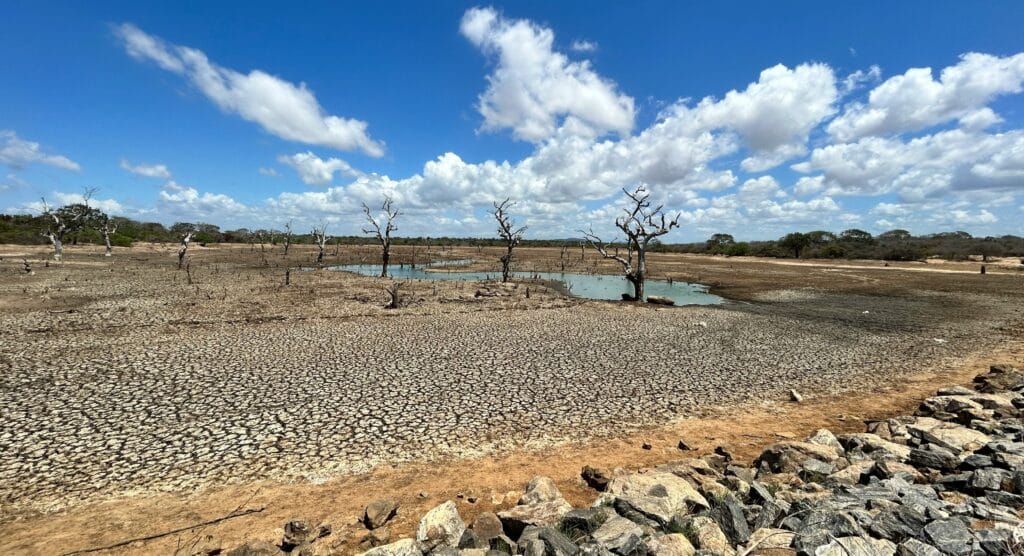
The UN summit in Mongolia against desertification ended today without a global agreement to combat drought, but mobilized 1.3 billion dollars (1.1 billion euros) for land restoration.
After intense negotiations, the parties (196 countries and the European Union) decided to postpone the global drought agreement to the next summit, to be held in 2028 in Egypt.
In Mongolia, participants managed to mobilize 1.3 billion dollars in funding, mostly public, for land restoration and drought resilience in 23 countries, with the bulk of the investment to be carried out aimed at pastures.
The UN estimates that land degradation already affects 40% of the planet’s surface and that if nothing is done to curb it, by 2050 a further 11% of lands could be degraded, an area equivalent to South America, with grave consequences for climate, biodiversity and food production.
According to the United Nations, drought has increased by 30% worldwide since 2000 and will affect three out of four people by 2050.
In tackling this scourge, the summit launched an investment fund for drought resilience, aimed at mobilizing 400 million dollars (343 million euros) of private capital to finance projects.
The Mongolian Minister of Environment and Climate Change, Sandag-Ochir Tsend, said at the closing press conference of the summit that more money would be needed, on the order of 355 billion dollars (304 billion euros) annually to combat land degradation, desertification and drought worldwide, instead of the 77 billion dollars (66 billion euros) currently mobilized each year.
The 17th Conference of the Parties to the UN Convention to Combat Desertification (COP17) took place over two weeks in Ulaanbaatar, the capital of Mongolia.