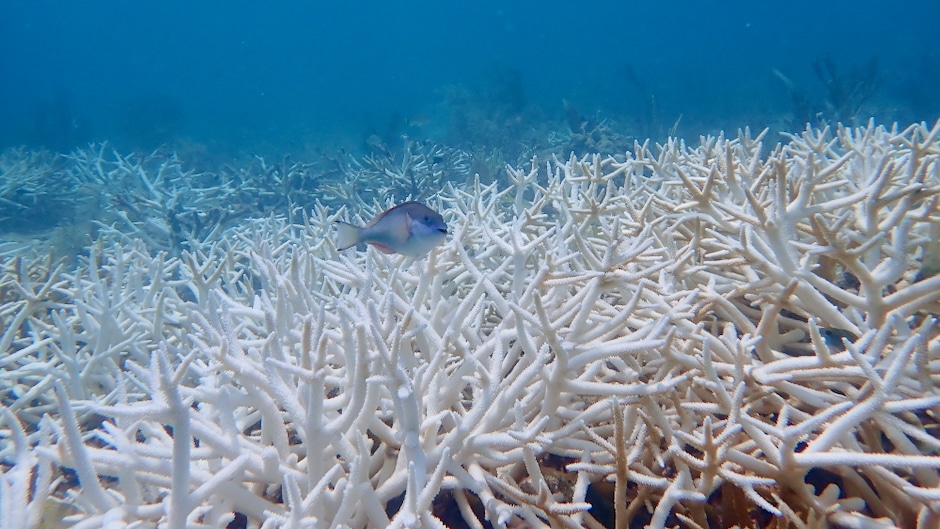
A marine heatwave in 2023 drove two critically endangered coral species to become “functionally extinct” on the Florida reef, in the United States of America.
In a study published this month in the journal Science and signed by dozens of scientists, it is revealed that along the roughly 560 kilometres of the Florida reef, the surface seawater temperature stayed above 31 degrees Celsius for an average of 40.7 days. This marine heatwave from two years ago was the largest recorded in the region in the last 150 years.
The authors speak of an almost total collapse of the coral species Acropora cervicornis and Acropora palmata, essential elements in the construction and maintenance of reefs not only in Florida but also in the Caribbean, and which, given their threatened status, have been the target of conservation actions. Thus, the so-called “functional extinction” of these species means they still exist in small numbers, but no longer have the capacity to perform their fundamental roles in building and maintaining reef ecosystems.
The scientists warn that functional extinction is “a stage that often precedes global extinction.”
Although other coral species did not suffer losses as devastating as the Acropora, which are more heat-sensitive, the authors emphasize that the consequences of the 2023 marine heatwave in Florida should serve as a warning about the future of coral reefs globally.
“We are running out of time,” warns Ross Cunning, from the University of Miami and the study’s second author.
“Extreme heat waves are increasing in frequency and severity due to climate change, and without immediate and ambitious actions to slow ocean warming and boost coral resilience, we risk witnessing the extinction of even more reef corals in Florida and around the world,” cautions the researcher.
In the reefs on the Florida Keys and Dry Tortugas islands, mortality of Acropora corals ranged from 98% to 100%.
Scientists and conservationists rescued some of the survivors of the 2023 heatwave with the aim of bolstering the captive coral collections. The goal is to repopulate the reefs devastated by marine heat, in an effort to prevent local extinction of the species and to secure the genetic diversity of coral populations.