Decarbonisation of the European economy has ceased to be merely an intention and has become a target with deadlines and indicators. The European Union has committed to achieving carbon neutrality by 2050, which requires a profound transformation of the way we produce, consume and live. For the HVAC sector, this challenge takes on particular relevance, as heating, cooling and ventilation systems represent a significant portion of buildings’ energy consumption and greenhouse gas emissions.
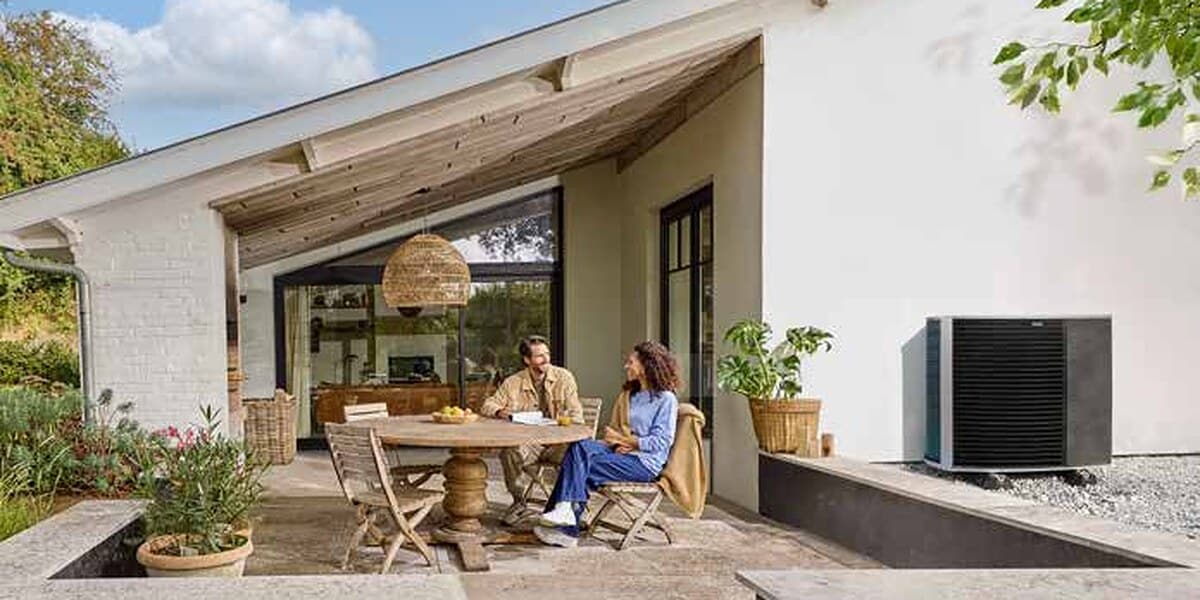
Daikin has responded to this challenge through a consistent strategy, supported by the goal of carbon neutrality by 2050, which covers industrial activity, products placed on the market and the entire value chain. This ambition translates into a clear commitment to increasingly efficient equipment and to next-generation refrigerants, with a global warming potential considerably lower than conventional ones. Solutions such as heat pumps with the refrigerant R-290, VRV systems with R-32 and refrigeration units with R-290 and CO2 are concrete examples of this transition, and have contributed to the record performance achieved by Daikin Europe in the last financial year, with a business volume of 5.25 billion euros in the EMEA region.
The commitment to sustainability is also reflected in the industrial strategy. In May, Daikin opened a new heat pump production facility in Poland, following an investment of around €300 million, mainly dedicated to residential heating. This factory strengthens European production capacity and contributes to accelerating the continent’s transition to climate-control systems less dependent on fossil fuels.
The same requirement also applies to the company’s own facilities. Daikin’s new Research and Development centre in Ghent, Belgium, recently obtained BREEAM Excellent certification, one of the most demanding European standards for building sustainability. Designed according to the principle of nearly zero energy consumption, it integrates geothermal systems, state-of-the-art climate-control solutions and heat-recovery ventilation, applying internally the technologies it makes available to its customers.
The decarbonisation of the HVAC sector does not depend on a future technology, but on the ability to mobilise in a coordinated way the solutions already available. This is the path Daikin has been following, convinced that the sector’s sustainability is one of the most concrete contributions to achieving Europe’s climate objectives.
Content in partnership with Daikin. Article published in issue No. 23 of the Green Savers magazine.