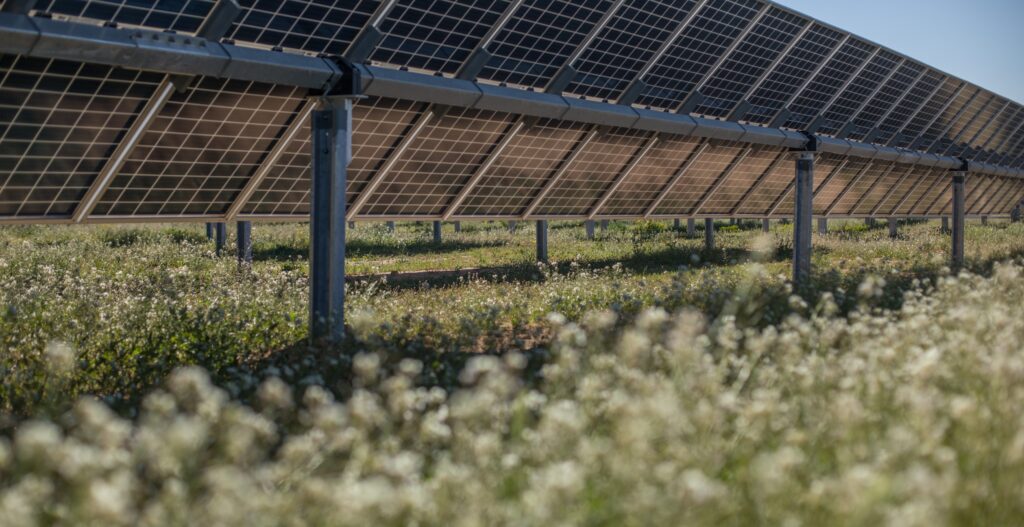
The Municipality of Penamacor announced today that it maintains the unfavorable technical opinion on the Sophia Solar Park, requiring that this type of projects respect the maximum limit of two percent of the municipality’s total area.
LightSource BP, promoter of Sophia, reformulated the proposal, which was in a new public consultation until Wednesday.
Penamacor remains against the implementation of the project, considering that “fundamental issues persist that compromise the environmental, landscape and territorial balance of the municipality.”
The president of the Penamacor Municipal Chamber, José Miguel Oliveira, in a statement, reiterated the municipality’s commitment “to environmental sustainability, decarbonization and the promotion of renewable energies, recognizing its strategic role in the country’s energy future.”
On the other hand, he defended that “these objectives cannot be pursued at the expense of an excessive concentration of infrastructures in territories that have natural, landscape and patrimonial values whose preservation is decisive for their future.”
José Miguel Oliveira advanced that in the municipality “around 553.89 hectares are already committed to projects of this nature,” to which “approximately 624.54 hectares of the current Sophia Solar Park proposal are added, raising to more than 1,178 hectares the total area affected by renewable energy production infrastructures.”
He argued that “the assessment of new ventures cannot be carried out in isolation, ignoring the presence of other projects.”
“We must indeed take into account the cumulative effect of all these energy infrastructures.”
The mayor added that “the production of clean energy must be accompanied by responsible planning policies, a careful assessment of the territory’s capacity to host them, and mechanisms for the fair distribution of the economic benefits generated.”
He also recognised that “the reformulation of the project represents a positive evolution relative to the initial proposal, by reducing the implantation area, by excluding areas integrated into the Municipal Ecological Structure, by defining a single electrical connection corridor and by reducing soil impermeabilization.”
However, “the municipality cannot be seen merely as a space available to host large energy investments.”
“It is a territory with identity, resources, communities and legitimate development aspirations that must be respected and protected.”
The insufficiency of concessions and compensations envisaged for the territory also weighed on the decision to maintain the unfavorable opinion: “Projects of this nature must represent more than investments in energy production. They must constitute concrete development opportunities for the territories that host them, through structural, lasting and genuinely felt benefits by the populations.”
The counterparts of this type of project “must be fair, able to contribute to the dynamization of the local economy, the creation of opportunities, the retention of population and the strengthening of the municipality’s investment capacity.”
The Municipality of Penamacor remains “available for institutional dialogue and for seeking solutions that reconcile the objectives of the national energy policy with the unwavering defense of the interests of the municipality and its populations.”
In September, the British multinational promoter of the Sophia solar photovoltaic plant reduced the project’s installed capacity by 34% in the reformulation submitted to the Environmental Impact Assessment Authority (AIA).
“Regarding installed capacity, there is a 34% reduction, from 867 MWp (Megawatt peak) to around 573 MWp. In this context, the project’s fenced-off area is reduced by 32% and the number of fenced-off cores decreases from 44 to 22, a 50% reduction,” explained LightSource BP in the information made available to the Lusa news agency.
The initial project had an installed capacity of 867 MWp.
The area occupied by the project by photovoltaic modules was 390 hectares, 435 hectares considering all infrastructures, and a total of 1,734 hectares of fenced-off area.