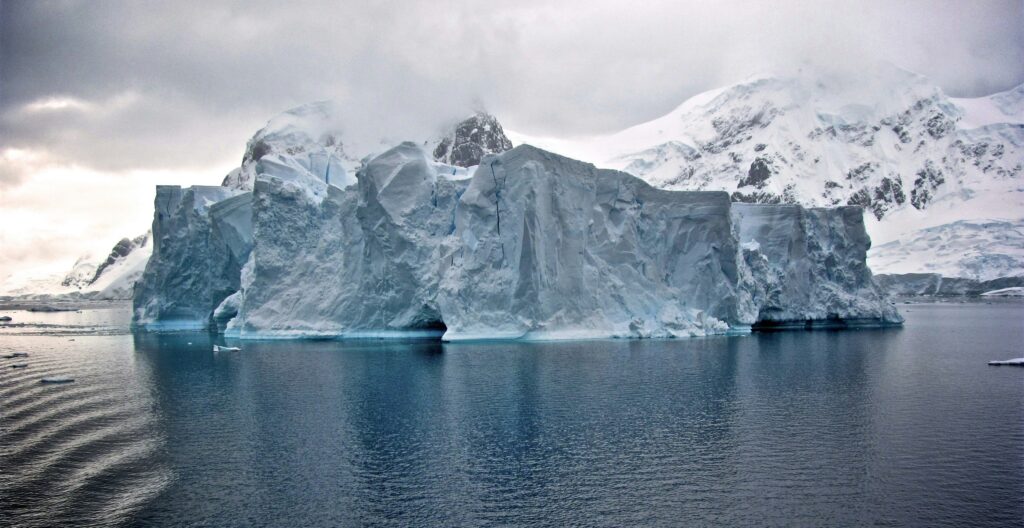
A new study concludes that the creation and maintenance of protected marine areas in the Southern Ocean could nearly double the safeguarding of zones critical to genetic diversity — rising from the current 28% to about 54%. According to the researchers, this measure is essential to reduce the high risk of collapse of marine ecosystems in that region.
The investigation was led by a team from the Securing Antarctica’s Environmental Future (SAEF) program, with participation from James Cook University.
The researcher Sally Lau, from the SAEF program at James Cook University, notes that the Antarctic Ocean is one of the regions of the planet undergoing the most rapid changes, with seabed ecosystems under increasing pressure from climate change and other environmental factors.
“Protected marine areas are one of the most effective tools we have to preserve these ecosystems. This investigation allows us to present recommendations based on genetic knowledge, helping to define priorities where protection will have the greatest impact,” she says.
For the first time, scientists compiled and analyzed genetic data from several species inhabiting the benthic depths of the Antarctic Ocean to identify genetic diversity hotspots that should be prioritized for conservation.
The team drew on genetic information from a wide set of benthic species, including octopuses, sea spiders and sea urchins, mapping areas with high genetic diversity, connectivity and differentiation along the Antarctic Ocean.
According to Sally Lau, ecosystems with greater genetic diversity exhibit greater resilience and a better capacity to adapt to climate and environmental changes.
The researchers further assessed how existing protected areas—and those currently proposed—cover these critical points. They concluded that only about 28% of the zones identified as genetic diversity hotspots are currently under protection. If existing areas are maintained and the proposals are implemented, coverage could reach approximately 54%.
“Without such measures, the Antarctic Ocean faces a high risk of ecological collapse. It is essential to act to secure the resilience of ecosystems,” warns the researcher.
Also involved in the study, Nerida Wilson, from the University of Western Australia and the Western Australian Museum, highlighted that the work was only possible thanks to decades of international investment in collaborative Antarctic research.
A large portion of the genetic data used resulted from large-scale international scientific initiatives, underscoring the importance of ongoing global cooperation efforts. The researcher also stressed the need to safeguard Antarctic samples in appropriate museum facilities, ensuring their long-term preservation.
“These samples are irreplaceable and will continue to provide crucial information about past and future changes,” she concludes.