In large groups of social animals, rapid communication between individuals can be fundamental to escaping threats. In various animal societies, there are “sentinels” who remain vigilant to dangers while others feed or rest, and issue alerts that set the whole group in motion or into flight.
In the world of ants, something similar happens. A trio of researchers from New York University and the New Jersey Institute of Technology (United States) discovered that a single ant is capable of setting a large part of the colony in motion. This has its advantages, but it can also be counterproductive.
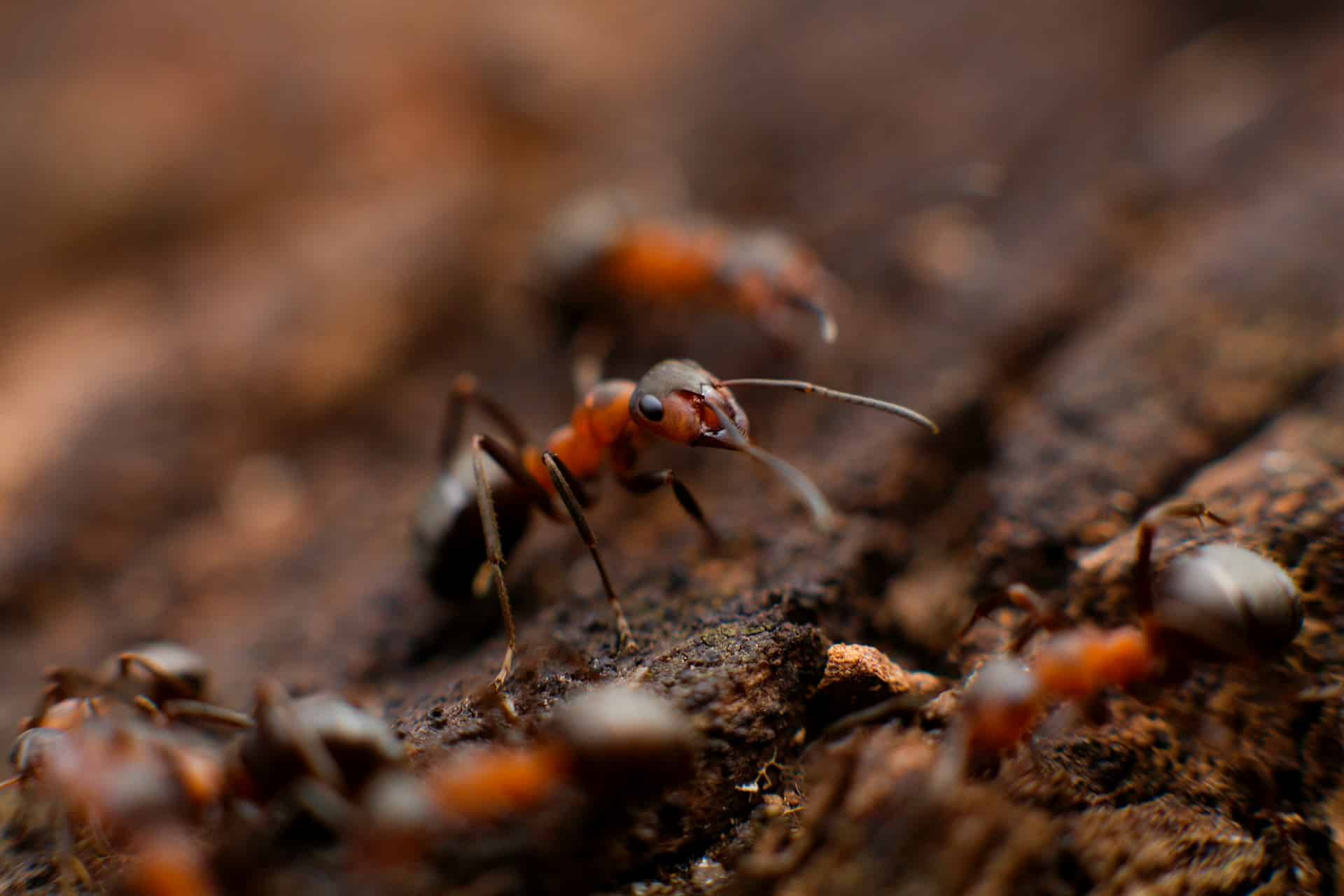
It had already been documented that ants of the species Leptothorax acervorem, Temnothorax allardycei, T. rugutalus and T. rudis moved, at times, as if they were a single organism. Large masses of ants would suddenly become synchronized and, then, the agitation would fade away, at seemingly random intervals.
These peaks of collective activity are not rare, also occurring in schools of fish and in firefly experiments, for example. To understand what triggers these collective movements, the researchers created a mathematical model, published in the journal ‘PRX Life.
The conclusion? It only takes a single “pioneer ant” to set the group in motion.
“In many collective systems, these chain reactions usually occur only if there is already a sufficient number of active individuals,” explains Simon Garnier, coauthor of the article. Therefore, he notes, “the most surprising result is that a single ant is capable of triggering an entire cascade of activity.”
The researchers created a model where each individual ant is represented as moving independently through a virtual colony. By inputting data from investigations on real colonies, they realized that when the density of ants, the distance between them and the speed at which they move are at certain levels, a single ant can set in motion a large part of the group.
It was also found that the activity in the colony moves almost like a “wave,” with periods of greater agitation interspersed with periods of rest. The team considers that this reveals the colony’s ability to “deactivate” chain reactions, which can be beneficial.
The ability to mobilize quickly is essential for the colony to respond promptly to changes in the environment (such as rain that floods the underground tunnels) or to threats (such as the presence of predators). However, if the chain of reactions is started by an ant that misinterprets environmental signals, and there is no reason for alarm, then the colony has wasted precious energy unnecessarily.
“Fortunately, we have shown in earlier studies that ants have a regulatory mechanism against this,” emphasizes Garnier. “When the number of active individuals is too high, they tend to inhibit each other and the colony returns to a more inactive state,” he adds.
Thus, the colony can stay alert without having to waste energy when it is not really necessary.