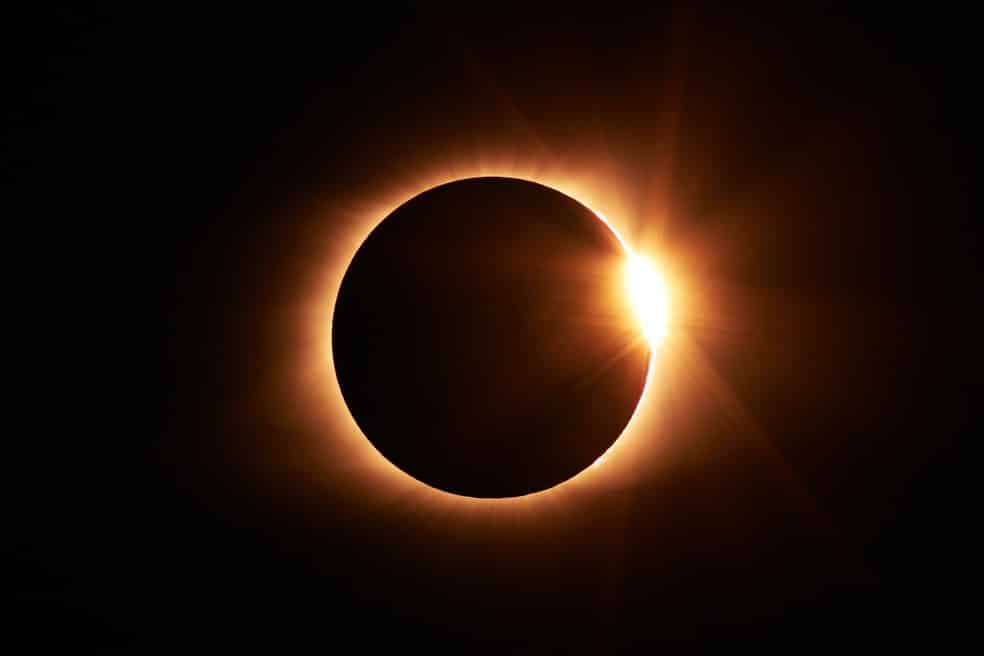
The solar eclipse crossing Portugal this Wednesday, August 12, is expected to cause a significant reduction in photovoltaic production, with REN – Redes Energéticas Nacionais estimating a loss of solar generation of around 450 MW between 18:30 and 20:30. The figure corresponds to approximately 7% of national consumption forecast for that period and 45% of centralized solar production expected for the same time.
For Pedro Miranda, cofounder and CEO of Youdera, the phenomenon, though punctual, helps illustrate a structural challenge of the energy transition: the need to ensure flexibility in a system that is increasingly dependent on non-dispatchable renewable sources, whose production cannot be adjusted directly to match demand.
“The solar eclipse is a punctual phenomenon, but it well illustrates one of the main challenges of an increasingly non-dispatchable energy system,” says Pedro Miranda, referring to sources whose production cannot be adjusted on demand, unlike hydro with reservoirs or thermal.
According to REN, during the most intense phase of the eclipse, the reduction in solar production could reach 35 MW per minute. “REN estimates a solar generation loss of around 450 MW between 18:30 and 20:30,” the official explains, adding that the loss rate could reach 35 MW per minute during the peak phase of the phenomenon.
The impact will, however, be partially offset by the fact that the event takes place in the late afternoon, at a time when photovoltaic production would naturally be diminishing. “Interestingly, the impact in Portugal is mitigated by the time it occurs: in the late afternoon, when solar production would already be in decline.”
Still, the timing also presents an additional challenge, since it coincides with the approach of the period of highest electricity demand. “That apparent advantage is offset by the fact that it occurs during the approach to peak consumption, which adds two effects rather than cancelling them out.”
The episode thus highlights the importance of having mechanisms capable of compensating for rapid variations in renewable production. “This is where storage and flexibility gain special importance,” argues Pedro Miranda.
Batteries can play a relevant role in this context, allowing electricity to be stored during periods of higher production and released when solar generation falls or demand rises. “Batteries allow storing energy when there is higher production and using it when it declines or demand increases,” he underlines.
Alongside storage, Pedro Miranda highlights intelligent demand management as another essential tool to balance the grid. The ability to adjust demand based on energy availability could help reduce the need to rely, by default, on hydropower or thermal reserves.
“A smarter management of consumption helps balance the system without resorting, by default, to more hydropower or thermal reserves,” he states.
The eclipse thus functions as a concrete example of a question that is likely to gain weight as solar energy integration increases: more than simply increasing renewable production capacity, there will be a need to ensure that the electricity produced can be stored, managed, and used at the moment it is needed.