In the southeast of Finland, just a few dozen kilometres from the border with Russia, lies Lake Saimaa, the largest lake in that Nordic country and the fifth largest in the world, covering about 4,400 square kilometres.
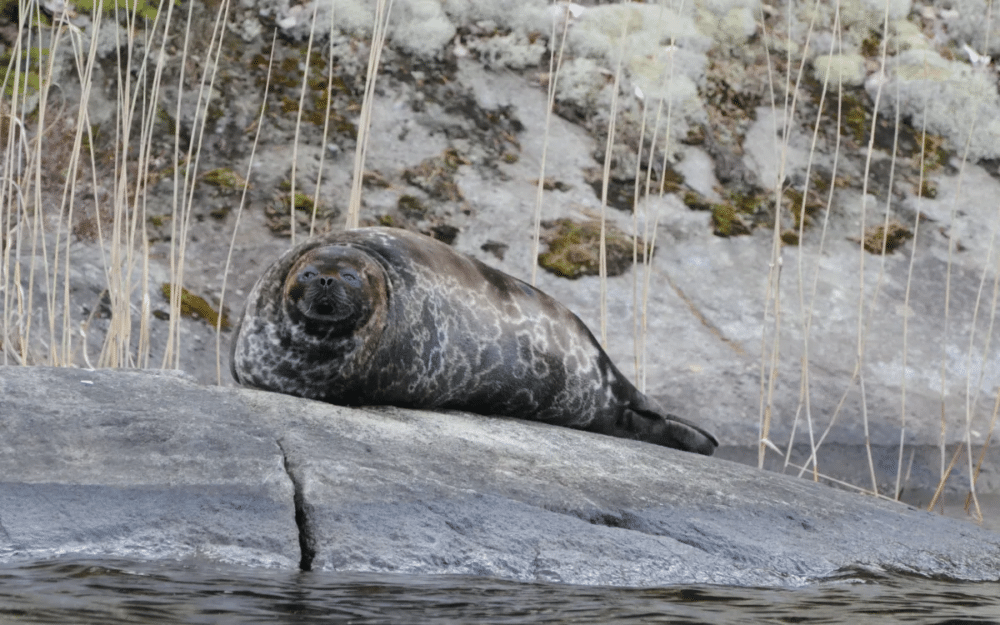
Scientists estimate that it formed 10,000 years ago, due to the warming of the Earth that triggered the Last Glacial period. As the ice retreated, a group of ringed seals, of the species Pusa hispida, became trapped in this body of water and, since then, have lived there, isolated from other populations.
The Saimaa ringed seals are currently classified as a subspecies, with the scientific name Pusa hispida saimensis. However, a group of researchers believes that it is not a subspecies, but a species in its own right.
Being the species most widely distributed in the Arctic Ocean and also found in the marine waters of northern Japan and in the Baltic Sea, some ringed seals live in lakes, not only in Saimaa, but also in Lake Ladoga, in Russia. According to the current scientific consensus, these lacustrine seals are considered distant relatives of the marine seals that were trapped in inland bodies of water when the ice disappeared.
Now, a study led by the University of Helsinki reveals that the Saimaa ringed seals diverged from the species more than 60,000 years ago, long before the formation of the Finnish lake. This is why these scientists argue that the Saimaa seals do not descend from the ringed seals that were stranded on land at the end of the Last Glacial, but that they were already a distinct species before that happened.
“For a long time, genetic studies suggested that the Saimaa ringed seals are more different than we might think based on the history of the origin of Lake Saimaa. But it was only through the analysis of all Arctic ringed seals that we were able to date the divergence of the Saimaa ringed seal lineage from the others,” explains, in a statement, Ari Löytynoja, the first author of the article published in the journal ‘PNAS’.
The conclusion that the Saimaa ringed seals should be classified as an independent species results from the analysis of the genomes and morphology of almost all the world’s ringed seal populations.
The researchers say that, while the ringed seals living in the Baltic Sea and Lake Ladoga originated from Atlantic populations, those of Lake Saimaa very likely arrived there from the east, from present-day Russia, which at the time of crossing, thousands of years ago, was covered by frozen lakes, allowing dispersal.
Along the way, they interbred with the ringed seal populations inhabiting western regions.
Looking closely at the dentition of the Saimaa seals, scientists also realized that the teeth of these animals differ from the teeth of ringed seal populations in other parts of the world, which suggests that this isolated population adapted to a different ecological space, resulting in physical characteristics that are also different.
“Measurements of hundreds of specimens show how exceptional the teeth of the Saimaa ringed seals are,” says Jukka Jernvall, one of the lead co-authors of the article.
“These differences support the results of genomic analyses of a long and independent developmental history,” he says. Differences were also found in the tongue and the digestive system of the Saimaa seals, which the researchers interpret as even more proof that this is truly a separate species, and not just a subspecies.
Thus, they propose the scientific name Pusa saimensis for the new species, a designation which, according to Jaakko Pohjoismäki, the second author of the study, “reflects its path of independent development.”
As a result of conservation efforts, the Lake Saimaa ringed seal population currently numbers around 500 individuals, and it is considered the only endemic mammal species of Finland.