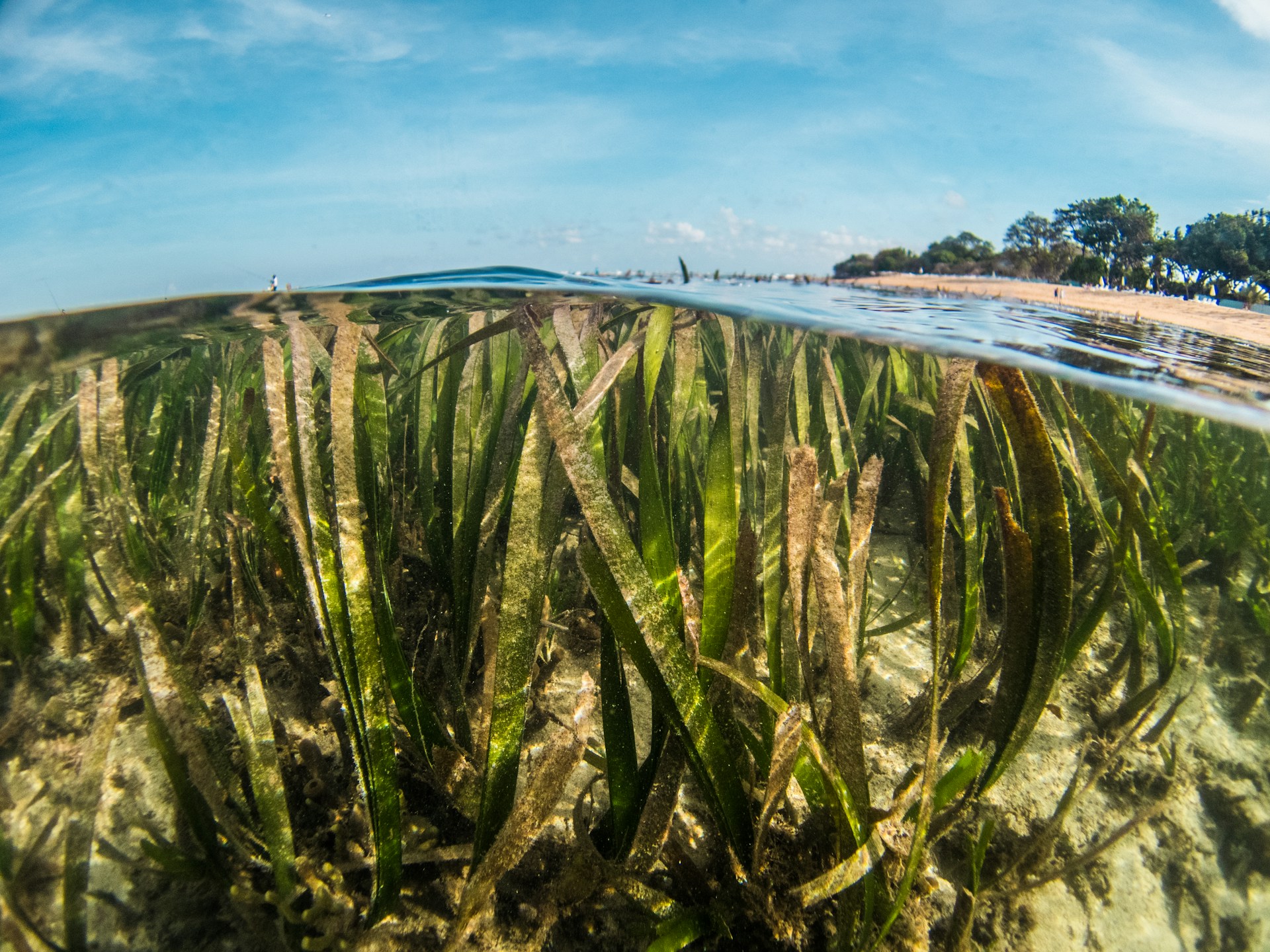
Although they cover only 0.1% of the global ocean floor, seagrass meadows are fundamental ecosystems for the stability of the planet. They store significant amounts of carbon, produce oxygen, serve as a natural barrier against storms and mitigate coastal erosion, they are crucial for biodiversity and for the sustenance of coastal human communities.
For this reason, the conservation and restoration of seagrass meadows are considered important in achieving the Sustainable Development Goals. They are not as famous as coral reefs, but a new study is saying that the fish living in meadows may provide a richer combination of essential nutrients for coastal communities than those living in nearby coral reefs.
A team of researchers led by the non-governmental organization Project Seagrass and Stockholm University studied the fish from 20 seagrass meadows and 20 coral reefs along about three thousand kilometers of coastline between Kenya and Mozambique, passing through Tanzania. And they examined the concentrations of six key nutrients for human health – calcium, iron, zinc, selenium, vitamin A and omega-3 fatty acids – in the fish found along that stretch of coastline.
The scientists explain that, instead of considering each of these nutrients in isolation, they chose to look at the studied fish as “natural multivitamins.”
“The fish do not nourish people with a nutrient one at a time,” says Benjamin Jones, first author of the work published in the journal Cell Reports Sustainability.
“It’s a full package. A single fish contains iron, zinc, calcium, selenium, vitamin A, and omega-3s. We wanted to understand which habitats produce fish with the best combination of these nutrients,” adds the now-conservation director of Project Seagrass.
Based on the data obtained, the scientists estimate that fish communities in seagrass meadows are, on average, 1.6 times richer in nutrients than the fish communities found on coral reefs in the same study areas. And, according to the investigation, this difference was even greater when only the species most frequently caught by fishermen in East Africa were considered.
Of these, the three most captured species were, on average, more than eight times more nutritious in seagrass meadows than in coral reefs. Additionally, two important fish species for feeding human populations in the region are, according to the study, several times more abundant in seagrass meadows than in reefs.
“We know that coral reefs generally have more fish, but seagrass meadows have more of the fish that actually matter for local feeding,” Jones emphasizes. “This changes the way we should view these habitats,” the researcher notes, arguing that “seagrass is not just a fish nursery, nor just a carbon reserve” but also “a food infrastructure, the supermarket of nature itself.”
These researchers argue that the contribution of seagrass meadows to the health of coastal communities is not being adequately accounted for, as they calculate that a fish from these habitats, on average, contains about 5% of a child’s daily iron needs, 70% of selenium and 21% of zinc. Furthermore, they say that more attention should be paid to seagrass meadows, because, like coral reefs, they face a number of threats, but, unlike coral reefs, they attract less public interest and less funding for their conservation and study.
“If we lose seagrass meadows, we do not lose just habitats. We may be losing a source of nutrition for millions of people who need it most,” warns Jones.
Still, the researchers clarify that this is not about substituting coral reefs with seagrass meadows in global conservation priorities, but rather about looking at both in the same way, as requiring equal attention, despite performing different functions. Protecting meadows is not enough by creating protected areas at sea; it is also necessary to act on land, as many of the threats originate there, such as untreated sewage and harmful farming practices, whose impacts are carried by rivers to coastal zones.
As such, “the conservation of seagrass has as much to do with people as with nature,” asserts Jones. “These meadows sequester carbon, sustain biodiversity and help feed millions. This makes them one of the most important ecosystems on Earth.”