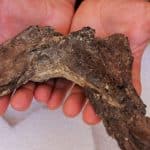
An artificial reef weighing 800 kilograms, installed at a depth of 12 meters off Peniche, is already being colonized by fish and other marine organisms. The structure was produced through 3D printing, using mussel shell waste, as part of Ilse Matus’s research conducted at the Faculty of Sciences of the University of Porto (FCUP).
The work forms part of the PhD in Science, Technology and Marine Management pursued by the student, and results from a partnership between FCUP, the Faculty of Engineering of the University of Porto (FEUP) and the Abel Salazar Institute of Biomedical Sciences (ICBAS).
“We used mussel shell waste as raw material, due to its richness in calcium carbonate, a feature naturally present in reefs,” explains Ilse Matus, originally from Chile.
The research began during the master’s degree and continued in the PhD, with the aim of designing and installing an artificial reef in a marine environment. In a first phase, the student tested in aquariums prototypes made from different materials derived from waste, including brick dust, shells, fossil coral skeleton, limestones, rice husk and mussel shells. It was this last material that yielded the most promising results.
“We added the mussel-shell composite to cementitious materials and, using additive manufacturing technologies, or 3D printing layer by layer, we built an artificial reef that can be colonized by marine organisms,” she explains.
After laboratory tests, the research moved to the sea. Last month, Ilse Matus dived offshore Peniche to observe the installed structure. “We placed the reef in a location where there was nothing and now it is surrounded by biodiversity,” she says.
The 3D printing was supported by FEUP professors Jorge Lino and Joaquim Góis, and the work was also supervised by Paulo Vaz Pires of ICBAS. For Jorge Lino, the project demonstrates the potential of additive manufacturing in building artificial reefs.
“Ilse’s thesis demonstrated that it is possible to manufacture habitats designed with recycled materials, sourced from the sea and that return to the sea, to foster biodiversity, promote colonization by marine organisms and recover degraded areas,” says the professor, who highlights the circular economy component of the research.
Peniche reef integrates training in marine restoration
Alongside the PhD, Ilse Matus participated in the European RestReef – Educational Platform for Ecological Restoration Techniques with Artificial Reefs in Natura 2000 Sites, co-financed by the Erasmus+ program, with completion expected this week.
The reef installed in Peniche has become one of the dive sites used in the project’s practical training in Portugal. Participants could observe in the marine environment itself a structure developed through scientific research and 3D printing.
RestReef brought together partners from Portugal, Spain and Croatia, with the aim of bringing together young divers and students in fields such as biology, marine sciences, engineering and design with the techniques and technologies of marine ecological restoration.
Throughout 2026, the project carried out theoretical and practical activities in the three countries, combining diving, scientific knowledge, conservation and habitat monitoring. In Portugal, the initiatives took place mainly in Peniche and Berlengas and included dives at sites with artificial structures, installation of experimental substrates, hands-on coral propagation techniques and sessions dedicated to developing artificial reefs through 3D printing.
The trainings allowed following the various stages of the process, from material development and digital design to manufacture, installation and monitoring of the structures and their colonization by marine organisms.
Research presented in New Zealand
The work carried out at the University of Porto has also reached the international scientific community. In July this year, Ilse Matus presented part of the research at the International Coral Reef Symposium (ICRS 2026) in New Zealand, one of the main international meetings dedicated to research, conservation and the future of reefs.
The research will continue beyond the recently defended PhD thesis and the RestReef project. A book dedicated to artificial reefs produced through 3D printing, which will bring together contributions from national and international authors and experts, is also soon to be published.
“This publication aims to cross-link knowledge about additive manufacturing, materials, design, engineering, ecology and marine restoration, contributing to consolidating and disseminating the existing knowledge on an area that has been gaining international relevance,” emphasizes the student.