The number of road collisions with wild boars, deer and other ungulates has been rising exponentially on the roads under the responsibility of Infraestruturas de Portugal (IP), which registered more than 140 incidents in 2025.
Since 2010, IP has sought to monitor road collisions with ungulates (wild boars, roe deer, deer, and others) and the number has risen almost uninterruptedly over 15 years of monitoring, said today Graça Garcia, a biologist with Infraestruturas de Portugal, who spoke in Lousã during the first seminar “Impact – toward the mitigation of the impacts of wild ungulates in Portugal.”
According to the graph presented today, while up to 2015 fewer than 20 collisions were recorded per year, in 2025 the number rose above 140.
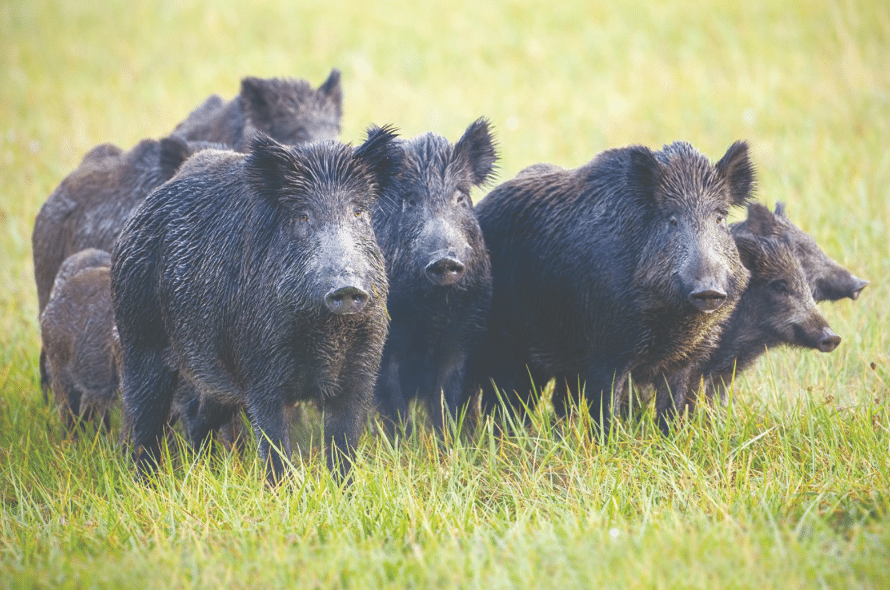
Graça Garcia noted that since 2010 there has been a total of 856 road collisions on IP’s roads, the vast majority involving wild boars (762).
For the biologist, the exponential increase is due not only to the clear expansion of wild boars across the territory, but also to an increase in the information made available.
However, the number is much higher when accounting for accidents on all roads that are not under IP’s jurisdiction.
A project from the University of Aveiro and promoted by the Institute for Nature Conservation and Forests (ICNF) counted more than 500 annual accidents related to wild boars between 2019 and 2020, covering all types of roads.
Present at the seminar, Carlos Fonseca, who coordinated that project and who is also leading the “Impact” project, told Lusa News Agency that the number of accidents has been increasing year by year, already surpassing more than a thousand annual collisions, with more critical regions such as Coimbra and Viseu.
“There are critical points in terms of road accidents that are strongly associated with a greater abundance of this species,” he noted.
The project presented today, which continues past work, seeks to define strategies to better understand the evolution of ungulate populations and ways to mitigate their impacts, both on road collisions and on agriculture.
“We, without baseline information, not knowing densities, do not have information to be able to define adaptation measures to better manage these populations,” said Carlos Fonseca, who coordinates a plan that, in addition to more information, aims to develop and test tools to reduce the impacts of these wild animals, in order to later provide a guide to those affected by the increase of these species on national territory.
The project was commissioned by the Government, is operationalized by ICNF, and the scientific work is led by the Centre for Environmental and Maritime Studies (CESAM) at the University of Aveiro.
The initiative will also evaluate the measures defined by the ICNF to reduce the wild boar population to determine whether they are having an effect on this species.
At the seminar, the president of the Lousã City Council, Victor Carvalho, highlighted the importance of finding a balance between the presence of animals such as the deer or wild boar, which attract tourists and generate economic opportunities, with the pressure on agricultural systems, particularly family farming.
For the mayor, it is possible to reconcile nature conservation goals with the safeguarding of agriculture.
Meanwhile, the Secretary of State for Forests, Rui Ladeira, expressed concern about a reduction in the number of active hunters, who could play an important role in controlling ungulate populations, noting the economic impacts that wild boars have on road accident losses or on agriculture, where losses are estimated at more than eight million euros per year just in the maize crop.
The official announced that in the fourth quarter a call for proposals will be launched to support and protect agricultural crops affected by these animals.