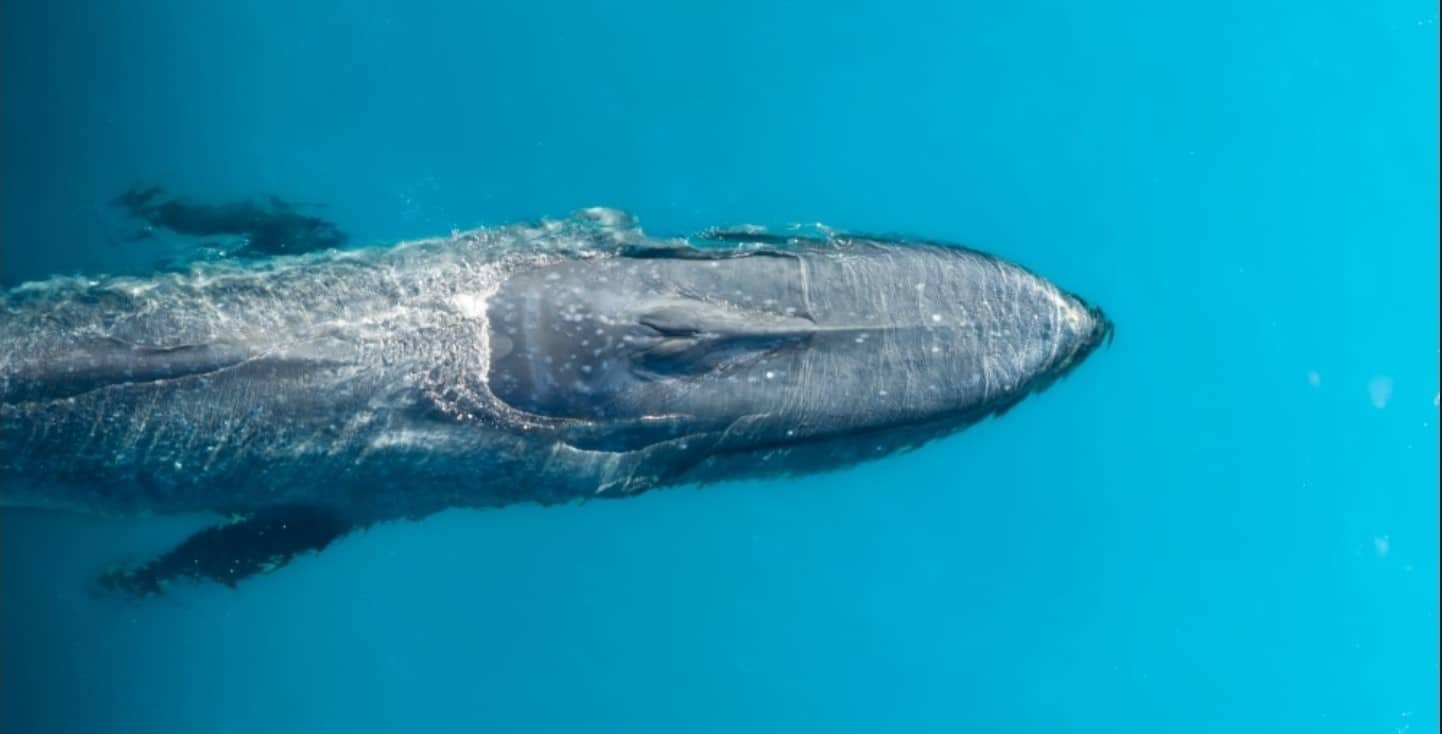
Blue whales living off the western coast of Australia tend to feed during the day and produce more vocalizations at night. The conclusion comes from a study published in The Royal Society scientific journal, which suggests that vocalization patterns can help determine when these cetaceans are feeding, rather than migrating.
Researchers found that feeding occurred predominantly during the day, the period in which the whales produced fewer sounds. The proposed explanation is that the animals rarely feed and sing at the same time, so vocal activity increases when they stop searching for food. In this way, a higher frequency of nocturnal songs may indicate that the whales in a given area are primarily involved in feeding.
The study could contribute to improving the monitoring of this threatened population by analyzing the sounds emitted by the animals. According to the researchers, distinguishing vocal patterns associated with feeding from those that occur during migration could help track the whales’ behavior and guide conservation measures.