Climate change is altering the depth of snow that falls in the forests of the northernmost regions of the planet, thereby changing, in turn, the amount of carbon dioxide (CO2) that is trapped in the soil or released to the atmosphere.
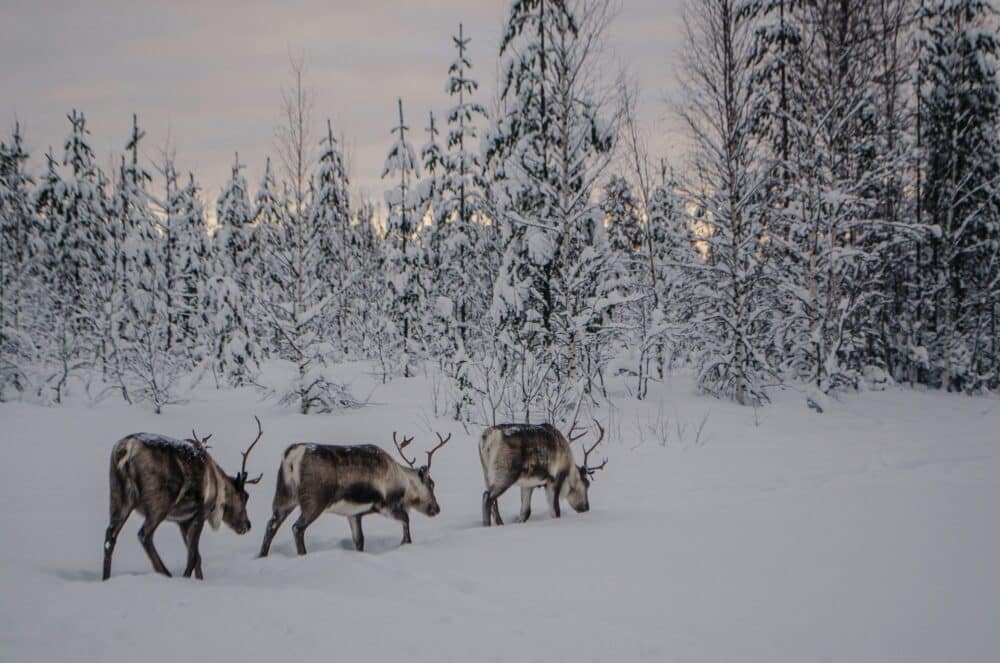
A group of scientists, led by the University of Oulu in Finland, sought to understand how reindeer influence the carbon cycle by grazing in snow-covered forests that are affected by climate change.
To this end, field experiments were conducted. In one area, in northern Finland, where reindeer grazing had been excluded for 55 years, zones with shallower snow released more carbon from the soil and from the understory vegetation. By contrast, in zones with deeper snow, the release of carbon was lower.
Moreover, the scientists say, in an article recently published in the Science of the Total Environment, that in areas where reindeer currently graze the release of carbon from the soil and from the vegetation is practically the same, irrespective of the depth of the snow cover.
The authors suggest that in the area of half a century of reindeer grazing exclusion, the proliferation of lichens, an organism resulting from the symbiosis between fungus and alga and that is an important part of the diet of these animals, may have increased the temperature and humidity of the soil, promoting greater carbon release.
By contrast, in areas where the reindeer roam, there are fewer lichens and, thus, lower carbon emissions. Therefore, they believe that the activity of reindeer could, in some way, help mitigate the release of carbon from boreal ecosystems, in a context of global warming.