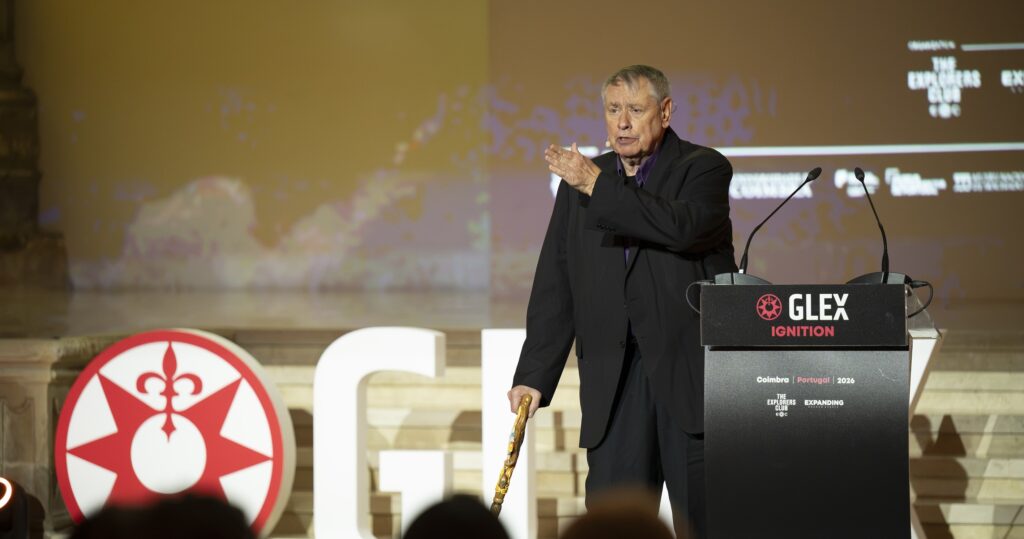
The possibility of identifying an Earth-like planet in the next ten years, the unexpected discoveries of the Artemis II mission, and the role of science in protecting the planet were among the central themes of GLEX Ignition, which gathered this Thursday in Coimbra 11 international protagonists of exploration, science and innovation, as stated in a press release.
According to the same source,
Pete Worden, former director of NASA Ames Research Center and current executive director of the Breakthrough Initiatives, expressed confidence in the discovery of an “Earth 2.0.” “I believe Earth 2.0 exists somewhere in the Universe and that we will find it, I hope within the next decade,” he said.
Kelsey Young, responsible for the scientific operations of NASA’s Artemis II mission, revealed unexpected observations made by the astronauts, including several bright flashes on the dark side of the Moon that may correspond to micrometeorite impacts.
“We are now studying the meaning of these observations, which could help us better understand the lunar environment and prepare future missions,” she explained. Meanwhile, Andreas Mogensen, an ESA astronaut and former commander of the International Space Station, considered that “this will be the great voyage of discovery of our generation,” referring to the Moon return.
Scientific exploration was also linked to Earth’s environmental challenges. Ocean protection, forest conservation, and adaptation to climate change were among the topics addressed by the participants. Lola Fatoyinbo, a space ecologist and former NASA scientist, underscored the importance of using space technology in conserving ecosystems: “For me, space is not the final frontier. The final frontier is Earth.”
In turn, Cliff Kapono, a Hawaiian researcher, presented the objective of mapping one million coral reefs by 2030 and involving 10,000 citizen-scientists in this work.
Organized by Expanding World Portugal, in partnership with The Explorers Club, of New York, GLEX Ignition continues this Friday, 30 October, with Coimbra Supernova – Frontiers in Action. The forum aims to bring together scientific institutions, researchers, companies and investors, promoting cooperation and the development of projects beyond the meeting.