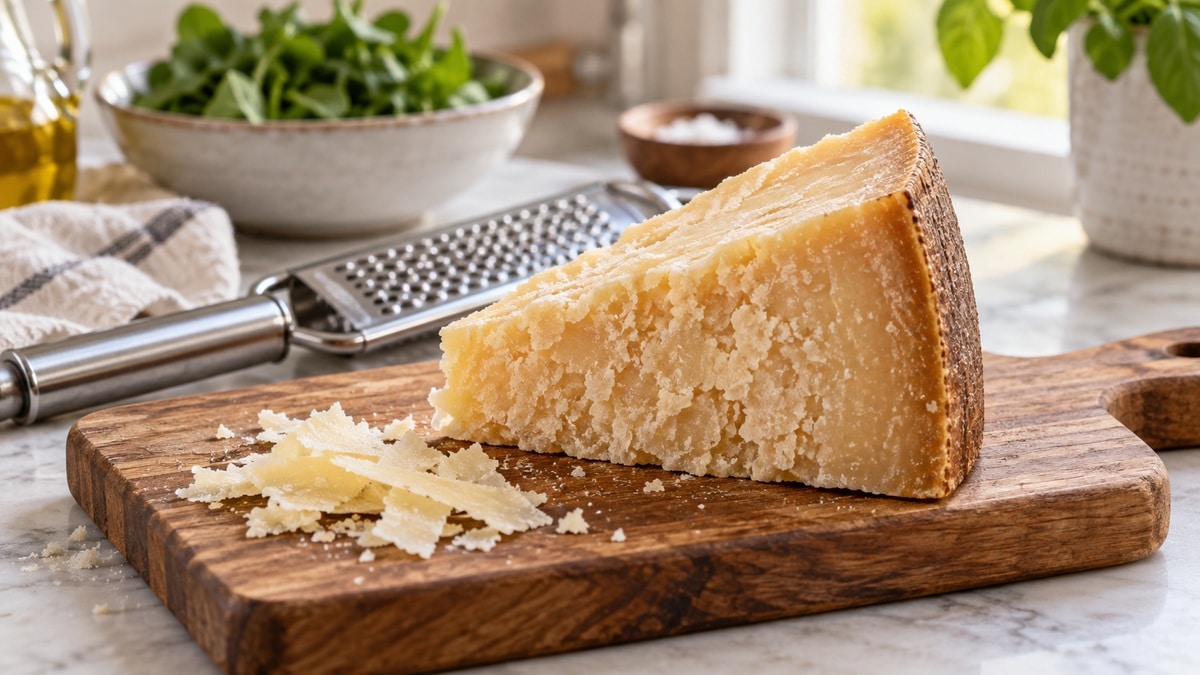
The cheese counter can make an ordinary shopping trip surprisingly complicated. There are soft rounds, sliced blocks, reduced-fat packs and expensive wedges wrapped like gifts. For someone thinking about bone health after 60, a familiar hard cheese deserves a closer look: Parmesan.
Its appeal is practical. A little brings a strong savory flavor, along with calcium and protein, to food that is already on the table. You do not need a special diet plan to grate some over vegetables or stir it into a bowl of soup.
That makes it a useful choice, rather than a prescription for everyone. The amount you eat, your usual meals and any medical dietary restrictions still matter more than a dramatic claim on the front of a packet.
Why a hard cheese earns its place
Parmesan loses moisture as it matures. The result is a firm, concentrated cheese with plenty of flavor and calcium relative to its weight. Calcium helps maintain normal bones, while protein contributes to the maintenance of muscle. Both belong in a conversation about eating well as we get older.
Its texture helps with portioning, too. A small piece can be shaved into thin curls or finely grated across a whole plate. Instead of adding a thick layer of melted cheese, you can use its intensity to make a modest amount satisfying.
A calcium-rich food is not an osteoporosis treatment. Bone strength depends on much more than what goes into tonight’s pasta. Food can support an overall care plan, but cheese cannot reverse a diagnosis or replace prescribed medication.
The useful serving is smaller than the wedge
Parmesan contains salt and saturated fat as well as useful nutrients. Its concentrated character works both ways. A large handful added automatically to every meal is a different habit from a light grating that finishes a dish.
Put the amount you want on a small plate before cooking, especially if you tend to grate directly from the block. You can see what you are using instead of losing track as it disappears into hot food. There is no need to turn lunch into a weighing exercise.
Read the nutrition panel on the product you actually buy. Different cheeses and grated blends are not interchangeable. Compare salt as well as calcium when calcium is listed, and remember that a per-serving figure only describes the serving size printed beside it.
Make it part of a meal you enjoy
A few shavings can make a plate of roasted vegetables more appealing. Finely grated Parmesan also works in a bean soup, over a baked potato or on pasta with peas. The point is to improve a proper meal, not to replace one with cheese and crackers.
For people whose appetite has become smaller, enjoyable food matters. A familiar flavor can make everyday cooking feel less like a list of obligations. Keep the rest of the plate varied, with vegetables and other foods that supply protein, rather than expecting one ingredient to cover every need.
Other calcium sources still count. Milk, yogurt, suitable fortified alternatives and calcium-set tofu can all have a place, depending on what you eat and tolerate. Parmesan can be the cheese you choose without becoming the only useful food in the fridge.
After 60, keep the bigger picture in view
Turning 60 does not suddenly change a food into medicine. Bone health develops over years, and personal circumstances differ. Vitamin D helps the body absorb calcium; appropriate physical activity and attention to fall risks also belong alongside nutrition.
If you have osteoporosis, kidney disease or a prescribed restriction on salt or other nutrients, ask your clinician or dietitian how cheese fits your plan. Hard cheese is not suitable for someone with a milk allergy. Individual advice takes priority over a general shopping recommendation.
For everyone considering a change to the weekly shop, Parmesan is an ordinary, useful option. Buy a piece you enjoy, use it thoughtfully and keep eating a varied diet. Its strongest selling point is how easily a small amount can fit into food you already like.