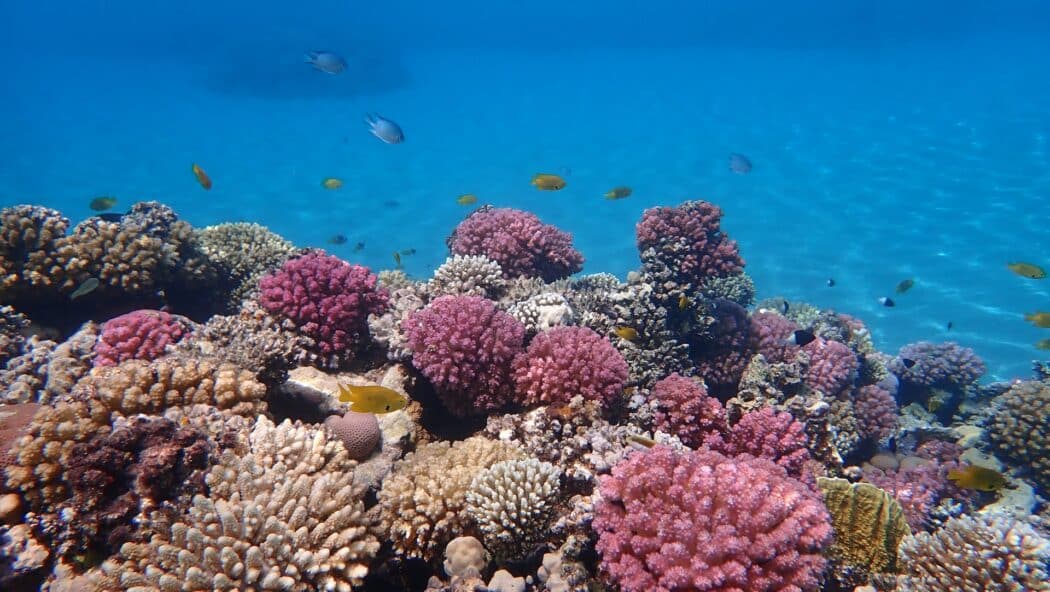
As marine heat waves become increasingly frequent, the window of opportunity that coral reefs have to recover between each one is becoming ever shorter.
The alert is issued in a report published by the Global Coral Reef Monitoring Network (GCRMN, in English), and which is considered the most comprehensive analysis to date of the status of these marine ecosystems.
The work looks at decades of monitoring and research on the state of the reefs, with data collected between 1980 and 2024, across millions of observations made in more than 36,000 sites in 124 countries. For the researchers signing it, this is the study that most clearly shows how climate change and local pressures are transforming coral reefs around the world.
“After decades of studying coral reefs, what concerns me most is not the current loss of hard coral cover, but that we are progressively deteriorating the conditions they need to recover,” says Manuel González Rivero, the lead author.
“Climate change is causing marine heatwaves to become more frequent and severe, but local pressures, such as poor water quality, overfishing and coastal development, are making the reefs even less able to withstand them,” he warns, adding that “we have to do two things at once: reduce emissions globally and implement science-based conservation measures at the local level.”
Rising sea temperatures trigger bleaching events, which can be fatal for corals if they are prolonged and frequent.
Excessive marine heat leads corals to expel the small algae with which they maintain a symbiotic relationship and from which they depend to feed. It is the algae that give corals their color, so the expulsion is known as “bleaching.”
If conditions do not quickly return to normal and the corals do not regain their algae, then the corals may die.
According to this report, over the past decades there have been several major global coral bleaching events, and each of them resulted in the loss of hard coral cover, essential for reef formation. And the authors say that only partial recovery has been observed before the next marine heat wave hit them again.
“In times past, coral reefs had decades to recover after major bleaching events. Today, it is luck if they have five or six years,” recalls González Rivero.
The researcher notes that the unprecedented marine heatwaves of 2024, which affected many coral reefs, may this year suffer even harsher blows, as it is foreseen that El Niño of 2026 will be one of the strongest ever. Thus, these reefs will have had little more than a year to recover.
“This is creating a spiral of decline that becomes increasingly difficult to reverse with each bleaching event that passes.”
El Niño is a global climatic phenomenon characterized by above-normal sea surface temperatures in the central and eastern Pacific and by a reduction in the strength of the trade winds. It is estimated that this year’s El Niño will be the strongest observed in more than a century.
Nevertheless, the report shows that, given enough time, coral reefs can recover. After the large global bleaching event of 2016-2017, with an estimated loss of 6.6% of hard coral cover, a similar recovery took place between 2017 and 2019.
The analysis shows that the current frequency of global bleaching events, occurring every five or six years, will keep coral reefs on a decline trajectory from which they will be hard to rescue. However, the authors of the report say that, with “ambitious” reductions in greenhouse gas emissions, and with a “science-based” management of local pressures, the global cover of hard corals could recover from losses suffered due to marine warming.