The environmental non-governmental organization Palombar – Conservation of Nature and Rural Heritage has just publicly launched the “Field Guide to Portugal’s Terrapins,” the first of its kind in the country dedicated to these species, according to a press release.
According to the same source, produced within the scope of the project “Water Bridges – Conservation of the striped-shelled terrapin,” this guide combines scientific knowledge with active on-the-ground conservation of native terrapins in Portugal. This is a multifaceted tool essential that will not only guide and inform, but also inspire all who study and admire these unique beings with a millennial history, which continue to inhabit our aquatic ecosystems. The guide is available free of charge in its online version.
A comprehensive guide that informs and inspires discovery
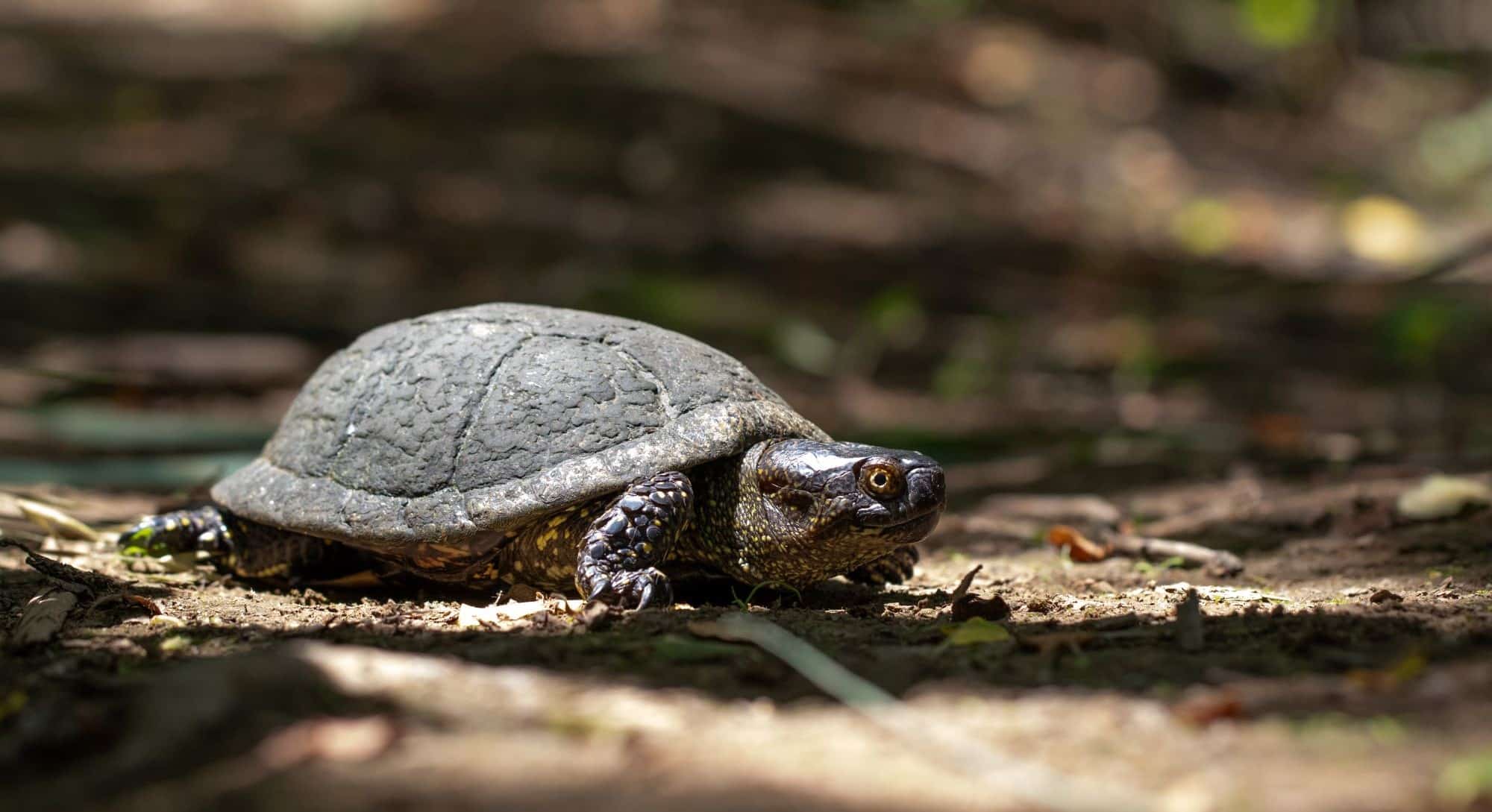
The “Field Guide to Portugal’s Terrapins” was designed to include the various dimensions involved in scientific knowledge and discovery about these reptiles, focusing on the two species that occur in Portugal, the striped-shelled terrapin (Emys orbicularis), one of the most threatened and emblematic species of Portugal’s aquatic ecosystems that has the status of “Endangered,” and the Mediterranean terrapin (Mauremys leprosa), but not only. In addition to addressing these species and their life cycle, habitat, ecosystems and conservation threats, it also has chapters dedicated to invasive exotic species and observation practices, as well as other unpublished content.
“This guide represents an important milestone for the conservation of terrapins in Portugal. It is the first publication dedicated exclusively to the terrapins present in our country and was born from the desire to bring scientific knowledge about these species to audiences of all kinds,” highlights the biologist Pedro Alves of Palombar, one of the authors of the guide, who coordinated the field conservation work of the striped-shelled terrapin in Portugal, under the Water Bridges project.
“The edition of this guide emerges as a result of an environmental education project that brought us very closely, in a special way, to the senior community of the Douro International Natural Park, enabling active awareness and the return of individuals of native species to their natural habitat. Many of the deliveries of native terrapins to the Palombar team for subsequent release were memorable moments. The stories we collected along this path were enriching, emotional, and inspirational. They showed us that nature conservation is more effective when built together with people, valuing their knowledge, their experiences and their connection to the territory,” emphasizes Sara Freire, head of the Environmental Education area at Palombar and coordinator of the Water Bridges project in Portugal.
The first dichotomous key for identifying the terrapins that occur in Portugal
The guide also includes a section with the first dichotomous key created for the identification of Portugal’s terrapins, which helps to identify in a simple and practical way both the native terrapin species of the national territory and the introduced ones. This is an unprecedented tool that facilitates field identification and may be useful for researchers and technicians, as well as for teachers and the general public. The publication also includes a glossary that decodes the most technical terms and others, so that it can be an inclusive and easy-to-understand tool for everyone.
“From the start, we wanted to create an accessible tool, capable of being used by both specialists and students, teachers, naturalists, and anyone with curiosity about nature. We maintained scientific rigor, but opted for a language that is simpler and closer to the reader,” explains Pedro Alves.
Illustrative poster with a comparative table of all terrapin species present in the country
The guide also includes an illustrative poster with a comparative table of all terrapin species present in Portugal, whether native or exotic, allowing quick and practical reference to the main distinguishing features of each species.
“We hope this guide will inspire more people to know, value, and protect Portugal’s terrapins and aquatic ecosystems, contributing to the conservation of unique elements of our natural heritage,” concludes Pedro Aves.
The “Field Guide to Portugal’s Terrapins” was written by Palombar’s biologists Pedro Alves, Leonor de Carvalho, and Sandra Fernandes, who have already contributed to or are involved in several wildlife conservation projects, including native terrapins, with a strong component of science communication, and also by biologist Luís Lourenço, who has participated in several projects on the conservation of native terrapins and the control of invasive exotic species in Portugal.