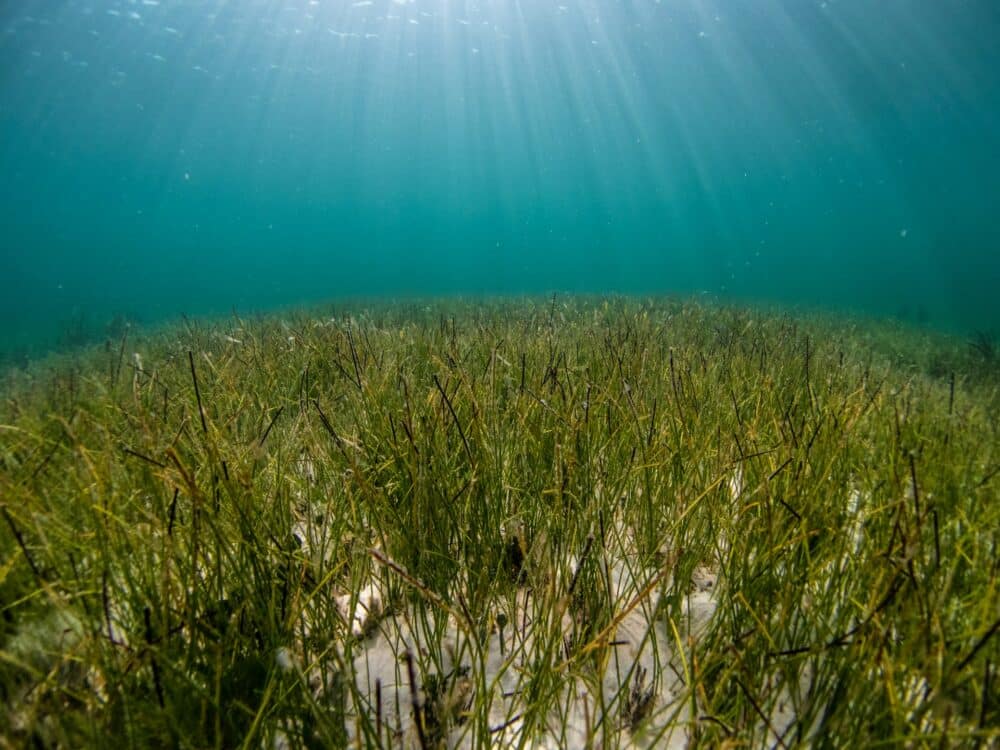
It is urgent to protect Portugal’s marine ecosystems and to create a National Strategy for Marine Biodiversity with a horizon through 2040. This is the appeal left by scientists, civil society organizations, sea-related companies, and citizens in the “Milfontes Manifesto – For the Future of Portugal’s Marine Forests“.
The manifesto was designed and developed within the scope of the scientific meeting “What future for Portugal’s marine forests?”, held in Vila Nova de Milfontes, at the end of May and framed in the 4th edition of the Festival of Marine Forests 2026. The gathering brought together specialists from several national universities and research centers, environmental organizations, representatives of civil society and operators linked to the sea.
The document, which counts almost 80 signatories to date, warns of the growing degradation of Portugal’s marine forests, including seagrass meadows, macroalgal forests, coral gardens and sponges, and other biogenic habitats, ecosystems essential to biodiversity, fishing productivity, coastal protection, climate regulation, and the ecological resilience of the ocean.
For the signatories, the manifesto underscores what international scientific evidence has been showing: many marine ecosystems can exceed ecological boundaries of non-return, making recovery extremely difficult, slow, or even impossible on human time scales.
In addition to the manifesto, the document also includes an annex with a proposed set of guiding principles for a National Strategy for Marine Biodiversity, which the promoters say rests on an “integrated and long-term vision based on the best available science and broadly supported by the national scientific community, civil society and maritime-related entities”.
The promoters argue that Portugal, “the holder of one of Europe’s largest exclusive economic zones and of an internationally excellent marine scientific community”, has unique conditions to assume a strategic leadership in the conservation of the Atlantic Ocean.
The manifesto will be sent to the President of the Republic, the Government, the Assembly of the Republic, scientific institutions, municipalities, civil society organizations and other relevant national entities.