
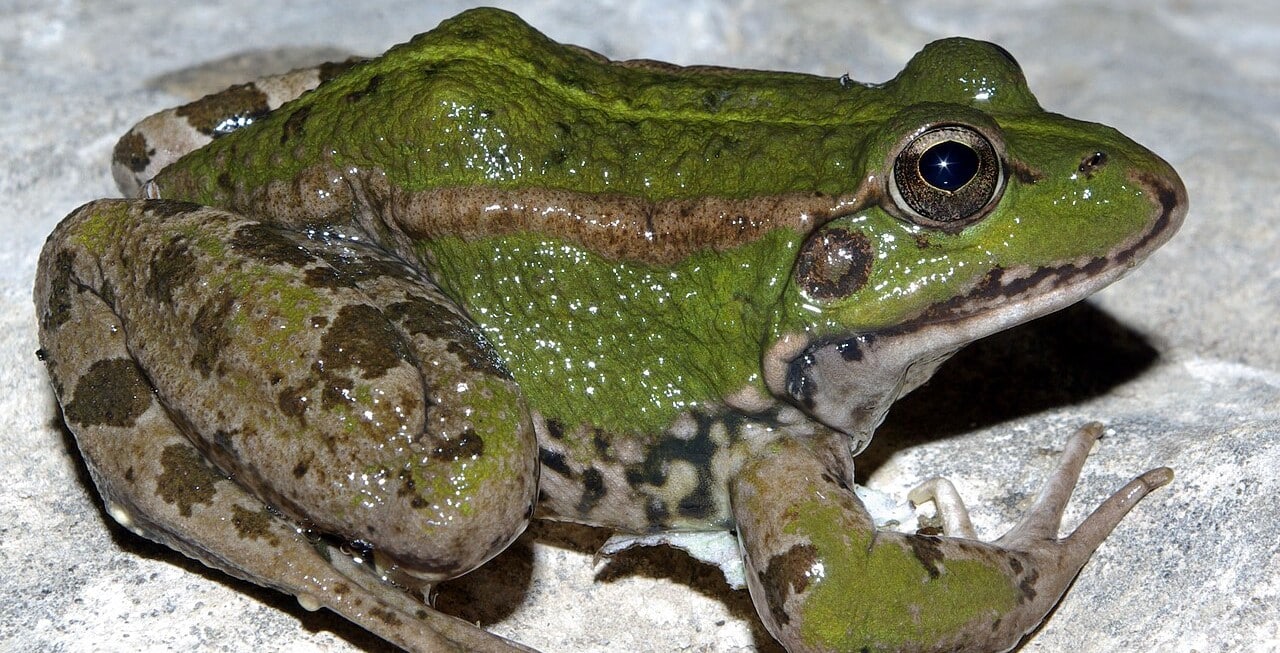
Amphibians will appear for the first time in Portuguese philately, 57 years after the CTT began representing wild species on their stamps. The issue “Amphibians of Portugal” goes into circulation on September 18 and brings together five species, in an initiative that results from several years of research on the representation of Portuguese biodiversity in philately, according to a press release.
According to the same source, between 1968 and 2025, the CTT issued 666 stamps and 23 self-adhesive labels dedicated to Portuguese natural heritage, distributed across 145 issues and representing more than 360 species. None of the stamps analyzed so far featured an amphibian.
The investigation was carried out by the biologist and scientific illustrator Fernando J. S. Correia, who analyzed the philatelic collection and cross-referenced it with conservation tools such as the Habitats Directive, the Birds Directive, and CITES, in addition to CTT reports and the evolution of national and international conservation policies.
The results point to an uneven representation of biodiversity. According to the analysis, Portuguese philately privileged certain species, while others had little or no presence. The coverage of species covered by the Birds Directive is estimated at 51.5%, while that related to the Habitats Directive is 22.8%. Invasive species account for 5.6% of the set analyzed.
Amphibians constitute the most extreme case of this absence. The group is considered the most threatened among vertebrates, with 40.7% of species globally threatened with extinction. Portugal hosts 21 species, of which 19 are native.
The new issue includes the green frog (Pelophylax perezi), the common toad (Bufo spinosus), the yellow-spotted salamander (Salamandra salamandra), the marbled newt (Triturus marmoratus), and the Lusitanian salamander (Chioglossa lusitanica), an Iberian endemism classified as Vulnerable.
The issue includes four stamps, each with a run of 40,000 copies, and a block with a stamp of 3.50 euros, with a run of 18,000 copies. The issue is accompanied by a booklet with texts and illustrations by Fernando Correia, a first-day cover, and a commemorative postmark.
From the stamp to citizen science
The new issue also includes a citizen science component. Each stamp on the booklet refers, through a QR code and a persistent identifier, to BioDiversity4All, the Portuguese node of iNaturalist, whose records contribute to the Global Biodiversity Information Facility (GBIF).
The connection aims to facilitate the recording of observations of the species represented. Thus, anyone who finds a frog, a toad, a salamander, or a newt will be able to photograph it and submit the observation to the platform, contributing to the knowledge of Portuguese biodiversity.
The research is also the origin of the book “Impressions of Nature – The Theater of Biodiversity: 1968-2025,” with 200 pages, published by the CTT and with a numbered edition of 3,500 copies. The work brings together an analysis of the course of biodiversity in Portuguese philately and includes the complete amphibian emission.
The launch of the issue and the book is scheduled for September 18 at 6:00 p.m., at the Serralves Foundation in Porto. The exhibition associated with the work will be shown again at the Biodiversity Gallery in Porto, starting October 26, where it will remain on display until December 31.





