Some of the oldest living organisms on Earth may actually be right beneath our feet. They are not ancient trees or coral reefs, but fungi, whose longevity remains a mystery to science. Researchers from Lund University, in Sweden, warn that it is still unknown how long most fungi live — or even how to define their age.
In an op-ed published in the scientific journal Trends in Microbiology, from Cell Press, the researchers analyze the reasons why it remains so difficult to study fungal longevity and point to new technologies that can help answer some of these questions.
“We don’t really know whether 10 years or 500 years is ‘old’ for a fungus, or to what extent this varies among species and lifestyles of fungi,” says Kristin Aleklett of Lund University, the study’s lead author.
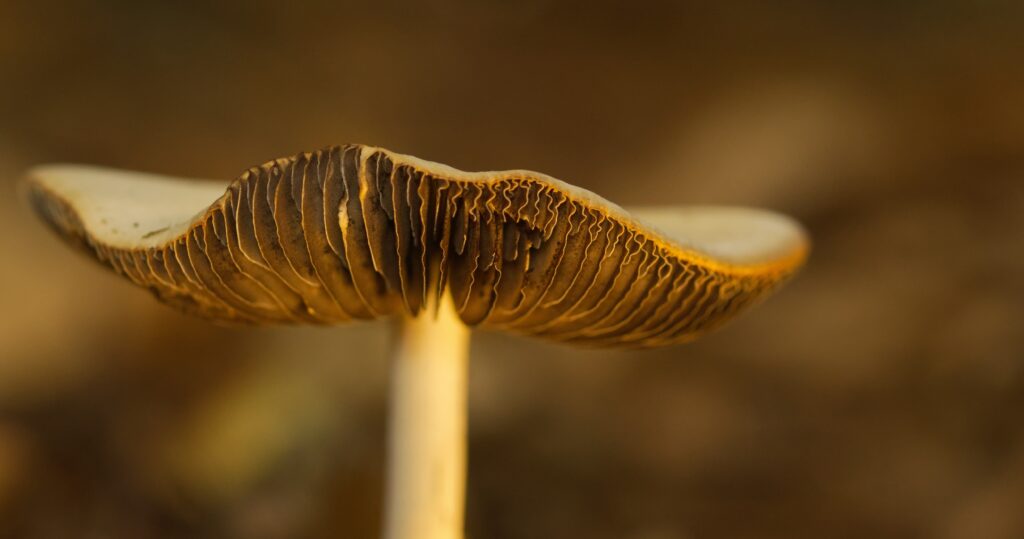
One of the main obstacles lies in the very structure of these organisms. The mushroom we see in forest soil is only a small part of the fungus. Beneath the surface lies its main body: an extensive network of microscopic filaments, called mycelium, which spreads through soil or wood and can establish connections with plant and tree roots.
Some of these fungal networks may live for hundreds or even thousands of years. The problem is that the mycelium is constantly branching, growing, recycling old tissues, and sometimes branching apart to form new networks.
“One of the biggest difficulties lies in determining where a fungal individual begins and ends,” explains Aleklett.
This feature raises several questions for researchers. Should the age of a fungus start counting when its underground network forms, even if much of that structure is subsequently replaced? And when a network splits into different parts that continue to share the same DNA, should those parts continue to be considered a single individual?
Unlike trees, which display growth rings, or animals, whose age can be determined more directly, fungi have no obvious signs that allow their longevity to be established. Scientists often turn to genetic tools to identify individuals and estimate their age based on the rate at which the mycelium grows in the laboratory. However, they cannot directly observe how these networks expand and disappear across seasons and years in their natural environment.
“I think it’s exciting to know that there is still so much basic research to uncover about fungi,” says the researcher. “There is a whole large kingdom of organisms living beside us about which we still know very little.”
The way fungi age can also vary significantly between species. Yeasts display relatively simple life cycles, while other species have much more complex processes. In the case of fungi that live in symbiosis with plants, their longevity may depend on the life of the host organisms they serve as hosts for.
Decomposer fungi may survive beyond a decaying trunk, continuing to branch through the soil in search of new food sources.
Rather than seeking a universal average lifespan for fungi, researchers argue that longevity should be studied taking into account different species and lifestyles. To that end, they propose combining genetic tracking, long-term laboratory experiments, and new technologies, such as the so-called “fungi on a chip,” which could enable closer monitoring of the growth and persistence of these organisms.
According to the researchers, a better understanding of the life cycles of fungi could contribute to our knowledge of the organisms that sustain ecosystems and play an important role in agriculture and human health.
“If we want to preserve the biodiversity of fungi and the services of ecosystems, we need to better understand their life cycles, including how or when their lives end,” concludes Kristin Aleklett.