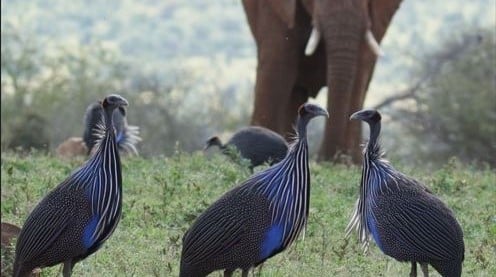
Just like humans, animals can become stressed when they try to lead a group of peers in a particular direction, according to a study from the Australian National University (ANU).
According to Associate Professor Damien Farine, co-author of the study, many groups of animals make decisions in a very democratic way, adopting a “majority-rule” approach.
Although effective, this approach can also have consequences.
“We already have evidence of how this decision-making can work – it’s like a voting process. Thus, individuals may begin to drift away from the group in the direction they want to go to find food and, if they gain enough support, the group follows them. Alternatively, if no one follows them, they fail and return to the group,” says Associate Professor Farine.
“The strongest indicator of the direction the group will end up taking is the option with the most votes,” he notes.
“Some individuals lead more than others, while others follow more. We were interested in the consequences of this process,” he adds.
The researchers followed a group of wild guinea fowl in Kenya for a four-month period, using heart-rate monitors and GPS devices.
The guinea fowl recorded the highest heart rate when they tried to lead their group by initiating movements, especially when they did so against the majority of group members.
“It is notable when they are trying to do something that very few individuals in their group want to do. They also feel a much higher heart rate when they cannot lead in these situations,” says co-author James Klarevas-Irby.
“We also found that the mere act of moving together had a notable impact on the birds’ heart rate, which was much higher than when they moved alone,” he reveals.
“Most of us can identify with it – it’s like when we’re with a group of friends and we’re trying to decide where to go for dinner, and we really want to go to a particular restaurant, but most of our friends want to go somewhere else,” he explains.
“Although initiative and leadership are theoretically beneficial for animals like the guinea fowl, because if they are successful they can go to the ‘restaurant’ of their choice, if they are in the minority, this comes at a substantial cost,” he adds.