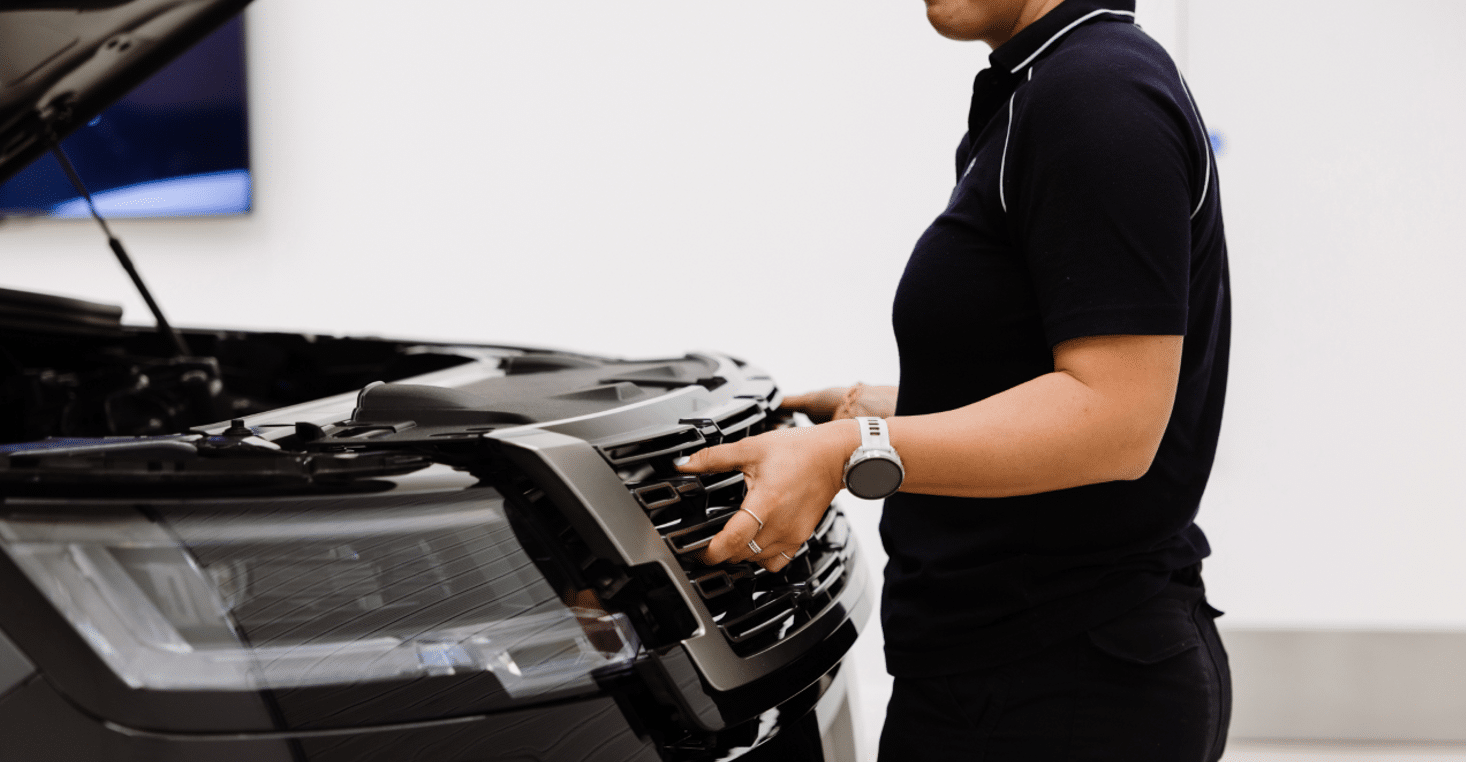
JLR unveiled a new conceptual demonstration vehicle that incorporates the latest advances the company has made in circular design, low-carbon engineering, and the use of innovative next-generation materials.
Developed under the Cornerstone project, the prototype results from a collaboration between JLR’s engineering and industrial operations teams and more than 40 first‑tier and raw material suppliers. The aim was to create automotive components that are more sustainable, prioritising recycled materials, bio-based materials, and materials with low environmental impact, as well as solutions designed to facilitate repair, disassembly and recycling.
According to the British brand, the project avoided emitting more than one tonne of carbon dioxide (CO₂), an amount equivalent to the emissions generated by a one-way air journey between Paris and New York per passenger. In addition, around 140 kilograms of additional recycled materials were incorporated.
By producing components intended for a real body-in-white, Cornerstone seeks to demonstrate the viability of integrating these solutions into JLR’s current and future models. Among the technologies already slated for production are a new generation of headlights, low-emission steel, recycled glass for doors, recycled foam for seats, and the new FlexAir seats.
The project also achieved several unprecedented milestones in the automotive industry. Among them is the use of 100% recycled glass in a closed-loop system, capable of reducing CO₂ emissions associated with its production by 36%. Solutions were also developed for materials considered critical, such as demountable electronic systems that facilitate the repair and recycling of headlights, as well as magnets composed of 95% recycled material applied to loudspeakers.
For Paul Francis, Senior Manager Circularity at JLR, the results demonstrate the potential of collaboration across the entire value chain. “What we are achieving with Cornerstone shows how JLR can lead the advancement of circularity in the automotive industry and underscores the value of a coordinated and collaborative approach among multiple partners to accelerate progress,” he states.
The official added that setting common objectives from the early development stages significantly improves manufacturing efficiency and overall outcomes, helping to make circularity economically viable.
Also Mary Creagh, the UK Minister for Nature, highlighted the importance of the initiative after a visit to the company’s design centre in Whitley, Coventry.
“This project demonstrates how the industry can innovate when there is a stable government framework in terms of public policy and investment,” she states.
The minister further argued for the need to build a more resource-efficient economy, where waste is eliminated from the product design stage and cars are designed to last longer.
The advances developed by JLR’s Circularity Lab will continue to feed the evolution of the Cornerstone project. The laboratory is dedicated to developing solutions that enable the recovery of more value from end-of-life vehicles through reuse, repair and recycling of components.
JLR’s strategy is to strengthen circularity in the automotive sector, helping to increase resource resilience, accelerate industrial decarbonisation, and strengthen long-term supply chains.
Recently, the company also joined the Automotive Plastics Circularity Project, promoted by the Global Impact Coalition. The initiative seeks to find solutions to one of the automotive industry’s major challenges: recycling the plastics found in components such as seats, instrument panels, bumpers and lighting systems. The aim is to transform plastic waste into high-quality recycled materials for use in new vehicles.