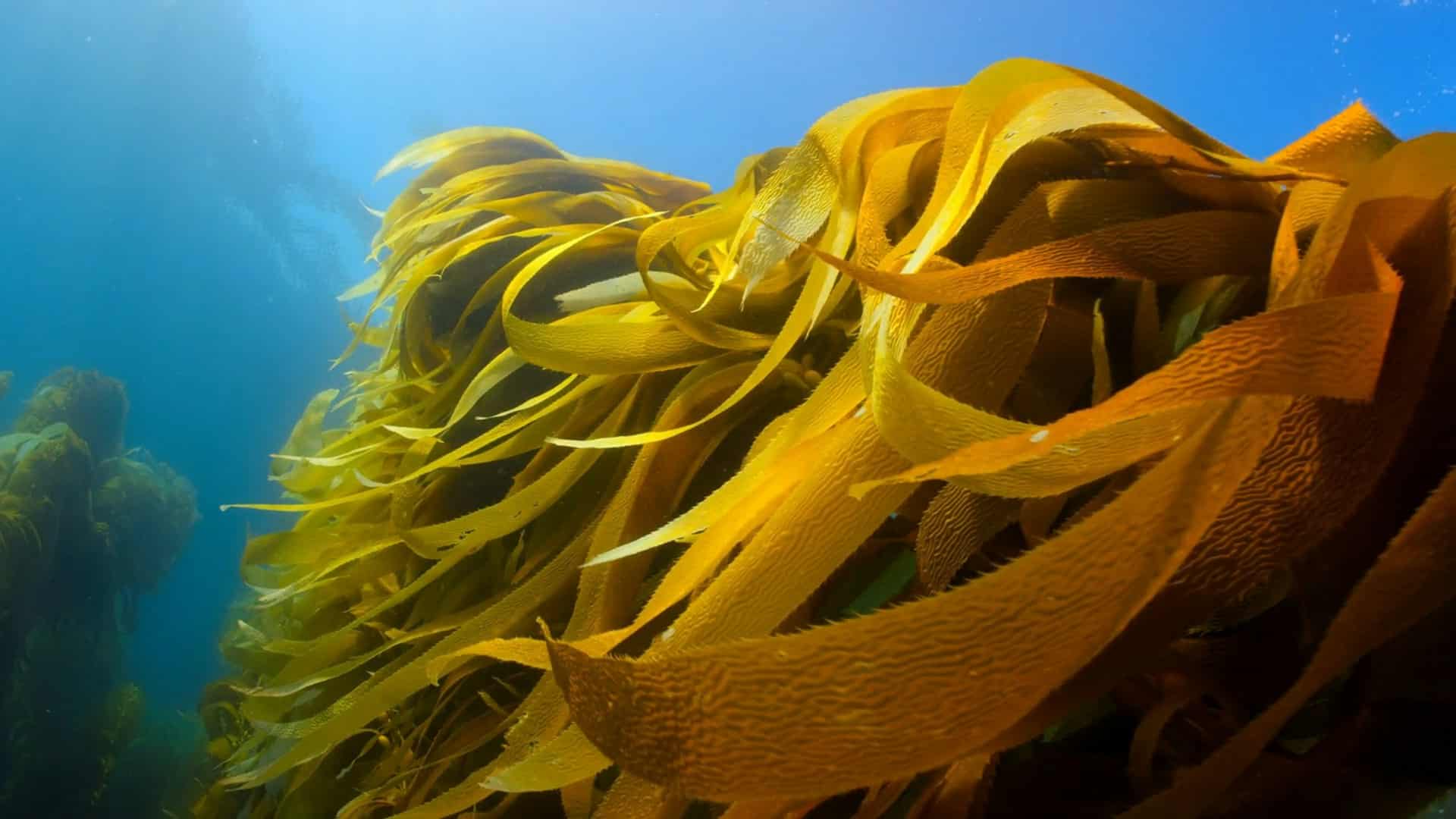
The use of algae for food, feed, or medicines has been optimized and expanded in recent years, but the ‘greatest challenge’ remains legislative, at national and European levels, according to industry representatives.
The assessment was provided to the Lusa agency by members of the Vertical Algas consortium, which today presented the results of four years of investments under the Blue Bioeconomy Pact initiative.
The Blue Bioeconomy Pact was a project included in the Recovery and Resilience Plan (PRR), with €139 million in investment through 2026. Vertical Algas was the largest initiative of the plan, bringing together 37 entities, led by the company Necton, and mobilizing €44 million.
They say the consortium’s leaders contributed to ‘positioning Portugal as a European reference in the algae sector,’ with more sustainable and digitalized production processes, increased productivity, and the development of products for human and animal nutrition, including fish feed, or products for the pharmaceutical and cosmetic industries, or for agriculture (such as biofertilizers).
Hugo Pereira, of GreenColab, a platform that connects academia and industry and which is part of Vertical Algas, told Lusa that the installation of production units was fundamental to the project, and as a result there have already been new products on the market, with others to be launched soon, alongside advances in research.
“Portugal is a reference. It is one of the EU countries with the strongest algae sector,” and the PRR-funded project not only made the country “stronger” but also allows the continuation of the work, potentially with further European support.
“Algae are an emerging raw material,” he said, defending the increase of production capacity and warning that high costs lead to the need “to scale up” to make the sector more competitive.
For now, he stated, the algae have improved, there are more algae in study, improvements have been made using biotechnology or the protection of the microbiome, there has been concern with sustainability, the focus on reducing costs, in water, in electricity, and also in the automation of the units.
Highlighting the great diversity of algae, noting that new products will be on the market in the coming months, Hugo Pereira said that although this is a market that grows every year there is much legislative work to do. “The big problem is the legislation,” he warned.
And he gave as an example the invasive alga Rugulopteryx okamurae, which has flooded beaches in the Algarve or Cascais in recent years, and which has become a problem for beachgoers and for the municipalities.
“We cannot study the alga, because it is invasive. But if instead of going to landfills it were directed to treatment units the risk would be the same,” he said, lamenting that proteins, lipids and carbohydrates are washing ashore and are not being utilized. “It is important but we cannot,” he summarized.
João Navalho, president of Necton, for whom the project exceeded what he expected and left clues for future developments, also told Lusa that the biggest challenge is tied to legislation, national and European.
With a very new industry (it began in the 1970s), with much to discover in the exploitation of algae, the executive told Lusa that there is no way to compete with agriculture, which began thousands of years ago and is heavily subsidized.
“Algae must have a predominant role, they make sense in the entire circularity process. But they are included in aquaculture, whose legislation is designed with fish in mind. Since we are not included, it is as if we did not exist,” he lamented.
That is why, without adequate policies, algae cannot find their space; for example, it is not possible to produce plant-based protein that could compete with agriculture. “We do not have strength” and the same happens at the European level, he said, also giving the example of Rugulopteryx okamurae, which “could be utilized but will hit the legal text.”
Nevertheless, João Navalho does not doubt that changes must occur; one cannot progress with obsolete legislation while other countries move forward. Because today, he justified, “it is easier to introduce products from other countries into Europe than to approve products within the EU.”