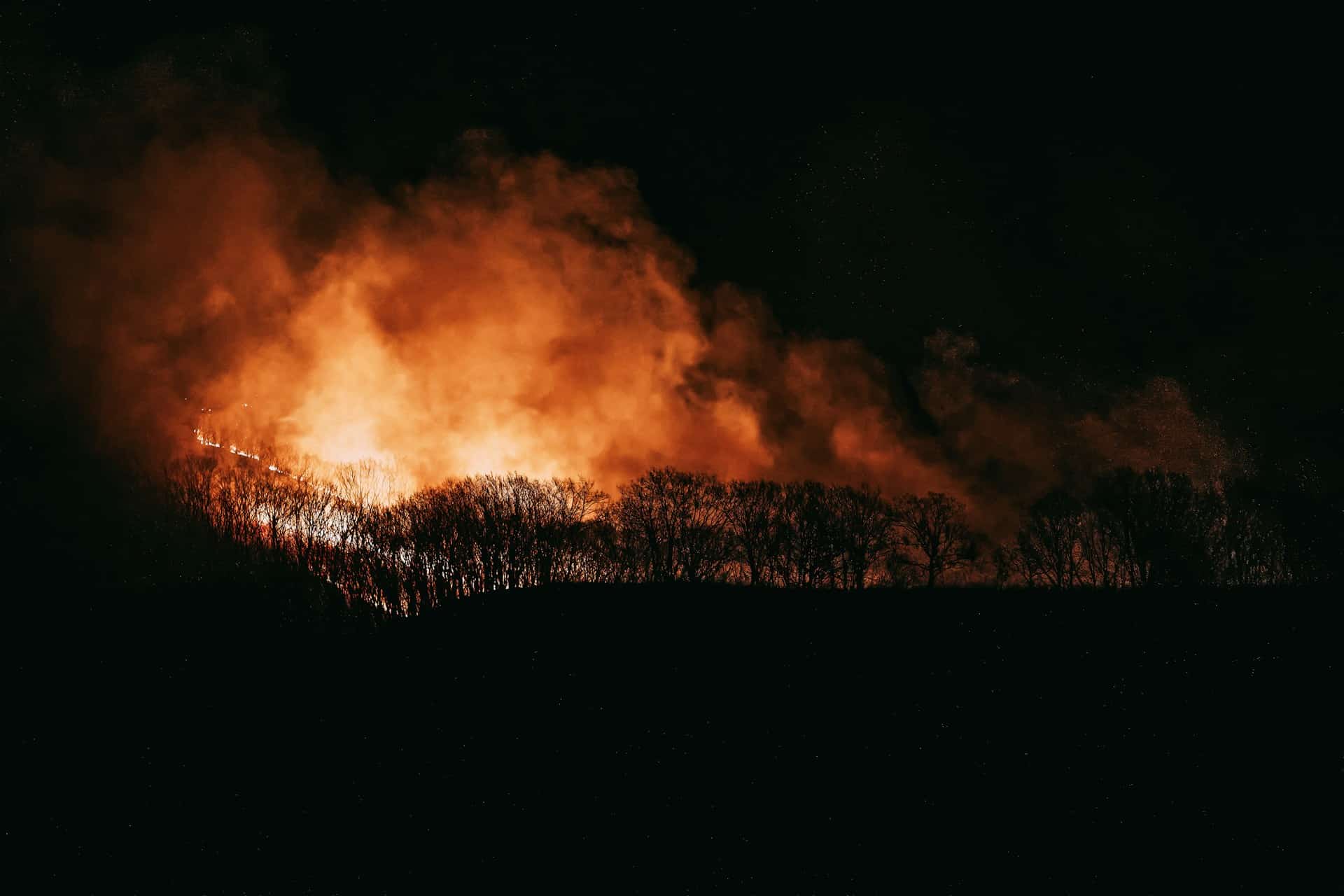
The occurrence of wildfires in the Arctic, a region warming up to four times more than anywhere else on Earth, is influenced by global warming and the reduction of humidity, but that is not the whole story.
A team of researchers led by the University of Zurich (Switzerland) reveals that the probability of fire occurrence in the region increases by about 2.5 times in areas with human presence.
The study, published in the journal ‘Communications Earth & Environment‘, analyzed the occurrence of fires in Arctic regions between 2001 and 2013. The aim was to determine whether fires were more frequent in areas of human activity than in other areas.
To overcome the difficulty of obtaining reliable and consistent data directly on human activities across the Arctic, the researchers used nighttime artificial light as an indicator of these activities. Thus, via satellites, they were able to identify areas of human presence, such as settlements and industrial zones, and cross-reference these data with fire occurrence information.
“Our results show that, in the Arctic, fires occurred 2.5 times more frequently in areas illuminated by artificial nighttime light than in unlit areas with similar climates,” explains Cengiz Akandil, the article’s first author.
Furthermore, the team also noted a higher incidence of fires near artificially lit areas, which, for the researcher, suggests “a strong spatial association between light-emitting human activity and the occurrence of fires in the Arctic.”
However, the researchers emphasize that they do not argue that human activities are the sole cause of fires in that region of the world, but that they are one of the factors contributing most strongly to these phenomena. The rise in temperature and the intensification of drought conditions continue to be significant factors.
The study also reveals differences between the regions studied with regard to fires near illuminated areas, and the authors interpret this as reflecting differences in fire management strategies, prevention measures, and firefighting capabilities.
“Better prevention and management of fires around towns, industrial areas, roads, and other illuminated areas can, therefore, reduce ignition risks and limit the damage caused by fire,” says Akandil, protecting ecosystems and biodiversity, human populations, and infrastructure.
Since Arctic fires release carbon into the atmosphere and accelerate the degradation of permafrost (the permanently frozen layer of the subsoil), their impacts go far beyond that region, contributing to an even greater global warming.