The footprints of a multi-species herd of dinosaurs discovered in Canada demonstrate social interaction between different dinosaur species dating back 76 million years, according to the results of a study published in the journal PLOS One.
The new tracksite is the first discovery of its kind in Dinosaur Provincial Park, in Alberta, Canada. The Park is world-renowned for its abundance of fossils, but dinosaur footprints were virtually unknown.
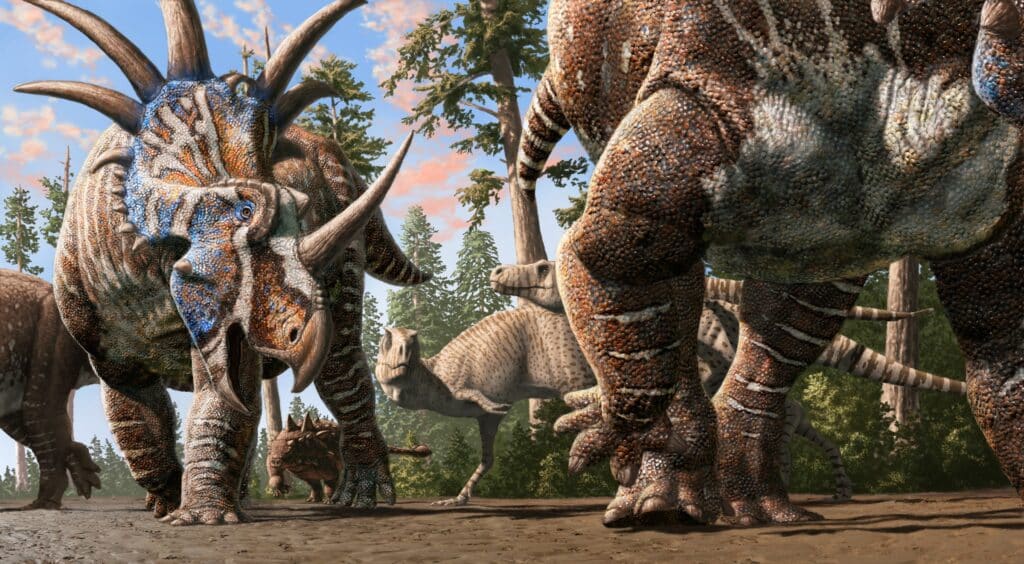
The discovery, made during an international field course in July 2024, includes footprints of several dinosaur species walking side by side — providing the first evidence of mixed-species herding behavior in dinosaurs, similar to how wildebeest and zebras today travel together across the African plains.
The researchers were also surprised to find tracks of two large tyrannosaurs that walked side by side and perpendicular to the herd, which raises the hypothesis that the multi-species grouping could have been a defense strategy against common top predators. However, more evidence is needed to confirm this fact.
The international team excavated 29 square meters of the site, revealing 13 footprints of ceratopsians (horned dinosaurs) from at least five individuals walking side by side, with a probable ankylosaur (armored dinosaur) walking among the others.
A footprint of a small carnivorous dinosaur was also discovered. The tracksite extends further into the hillside.
Phil Bell, from the University of New England, says: “I have collected dinosaur bones at Dinosaur Provincial Park for almost 20 years, but I had never given much thought to footprints. This rock edge looked like clay that had been squeezed between the toes, and I was immediately intrigued.”
“The tyrannosaur footprints give the sense that they were actually watching the herd, which is a rather chilling thought, but we do not know for sure if they actually crossed paths,” he adds.
Brian Pickles, from the University of Reading, notes that “it was incredibly exciting to walk in the dinosaur footprints 76 million years after they were left on the ground.”
“Using the new imagery of searching these footprints, we were able to discover several other tracksites in the park’s varied terrain, which will surely tell us even more about how these fascinating creatures interacted with one another and behaved in their natural environment,” he adds.
Caleb Brown, from the Royal Tyrrell Museum of Palaeontology, concludes: “This discovery shows how much there is still to discover in dinosaur paleontology. Dinosaur Park is one of the best-understood assemblages of dinosaurs worldwide, with more than a century of collecting and intensive study, but only now are we beginning to grasp its full potential for dinosaur tracks.”